What Boomers learned in childhood, Gen Z treats like a lost art.
A twenty-something stares at a paper map like it's written in Sanskrit. Their boomer parent navigates three states from memory, reciting landmarks that haven't existed since 1987. The generational skills gap isn't about intelligence—it's about growing up in completely different operating systems. One generation learned to survive without Google; the other can't imagine why anyone would need to.
What's fascinating isn't that these skills are difficult. It's that they've become archaeological artifacts in just one generation. Boomers carry around superpowers invisible to anyone born after 1995: existing without GPS, fixing things without YouTube tutorials, remembering phone numbers like party tricks. They're walking museums of practical knowledge, and they don't even know they're special.
1. Reading a paper map and giving directions
Ask a boomer for directions and prepare for a novel: "Head east on Main—you'll know it's east because the sun sets behind the Walmart—pass where the Sears used to be, it's a CrossFit now, or maybe a vape shop..." They navigate by landmarks and memory, building mental maps from decades of wrong turns. Meanwhile, Gen Z won't reverse out of their driveway without confirming with Waze.
The magic isn't just reading maps—it's understanding space without satellites. Boomers can fold maps (actual sorcery), estimate "about twenty minutes if you hit the lights right," and always know which way is north. They learned when getting lost meant staying lost, not waiting for recalculation. They are their own GPS, running on coffee and spite.
2. Writing in cursive (and reading it)
To Gen Z, boomer handwriting looks like doctors' prescriptions written during earthquakes. Schools stopped teaching cursive writing around 2010, creating a generation fluent in Python but illiterate to grandma's recipe cards.
Watch a boomer write—it's pure muscle memory, thoughts flowing directly through pen to paper at conversation speed. Their signatures are personal logos developed over decades. Gen Z prints like hostages writing ransom notes or just voice-texts everything. The cursive divide isn't just about pretty letters. It's about a time when handwriting was identity, when you could tell who wrote something by how they looped their Ls.
3. Balancing a checkbook and managing cash
"Balance your checkbook" might as well be "churn your own butter" to people who Venmo their roommates for breathing too much of the apartment's air. Boomers reconcile bank statements without apps, calculate tips without phones, and somehow track cash without photographing everything.
They understand money as physical reality, not numbers on screens. They learned financial literacy through arithmetic, not algorithms. They know their account number like their birthday, spot bank errors without notifications, and can tell you exactly how much interest they're earning. Gen Z has Robinhood and Mint but couldn't find their routing number with a map and flashlight.
4. Basic sewing and clothing repairs
Button falls off? Boomers reach for the sewing kit they've had since Carter was president. Gen Z adds it to cart. The chasm between "broken" and "trash" defines everything.
Before fast fashion made clothes disposable, people fixed things. Boomers can hem pants with their eyes closed, patch jeans that should've died in the '90s, and perform emergency surgery with safety pins. They see potential; Gen Z sees content for their "outfit fail" story. The irony? Gen Z sells "vintage" clothes on Depop that only survived because someone's grandma knew how to darn socks.
5. Making phone calls to solve problems
Boomers wield phones like diplomatic weapons. "Let me call and sort this out," they announce, dialing from memory. Ten minutes later, problem solved, speaking to managers achieved, discounts applied. They understand the cheat code: humans solve problems faster than chatbots.
Gen Z would rather eat glass than call customer service. Phone calls feel like psychological warfare. But boomers know the secret passages—when to escalate, which department actually helps, how to turn "policy" into "exception." They navigate phone trees like mazes they've memorized. One boomer phone call accomplishes what seventeen emails and three anxiety attacks cannot.
6. Remembering phone numbers and addresses
A boomer's brain contains more numbers than a phone book—their childhood home (still), their best friend from 1973 (moved twice since), their first job at the store that's now a parking lot. This isn't nostalgia. It's what happens when forgetting means losing people forever.
Their memory systems developed differently—encoding for permanence, not screenshots. Gen Z doesn't know their own phone number but can recall every TikTok sound from 2020. Different databases: one generation memorized because forgetting had consequences, the other screenshots because forgetting has backups.
7. Fixing things without YouTube tutorials
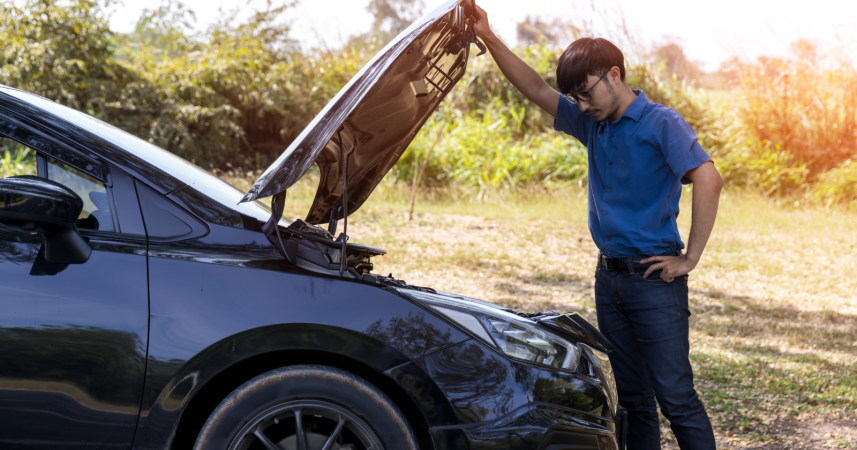
Toilet running? Drawer stuck? Weird noise from the car? Boomers just start fixing, no tutorial required. They understand objects intuitively—probably from taking apart everything as kids when parents weren't lawsuit-conscious. They own tools and know their names. WD-40 and duct tape are sacraments.
This transcends repair skills—it's about seeing how things work by looking at them. Boomers approach broken objects with confidence earned before planned obsolescence became business strategy. They fixed things because throwing away meant waste, not convenience. Gen Z can code apps but can't change a tire. Different worlds, different wizardry.
Final thoughts
We're watching analog natives interact with digital natives, each convinced the other is helpless. Boomers can't believe Gen Z can't read maps. Gen Z can't believe boomers print emails. Both are right. Both are missing everything.
These aren't just skills—they're different evolutionary adaptations. Boomers developed self-reliance through isolation: no internet meant solve it yourself or suffer. Gen Z developed collaboration through connectivity: why struggle when humanity's collective knowledge lives in your pocket?
The loss isn't that these skills are vanishing. It's that we've stopped recognizing their value. GPS replaced maps but also spatial awareness. Smartphones replaced memorization but also mental exercise. Every convenience has a cost we don't calculate until the wifi dies.
Maybe the real skill is appreciating what each generation offers. Boomers with their analog resilience, Gen Z with their digital fluency. Somewhere between "I don't need GPS" and "I don't need to know north," there's probably wisdom. Together, we might even figure out fitted sheets. (Nobody can do that. That's not generational. That's impossible.)
If You Were a Healing Herb, Which Would You Be?
Each herb holds a unique kind of magic — soothing, awakening, grounding, or clarifying.
This 9-question quiz reveals the healing plant that mirrors your energy right now and what it says about your natural rhythm.
✨ Instant results. Deeply insightful.