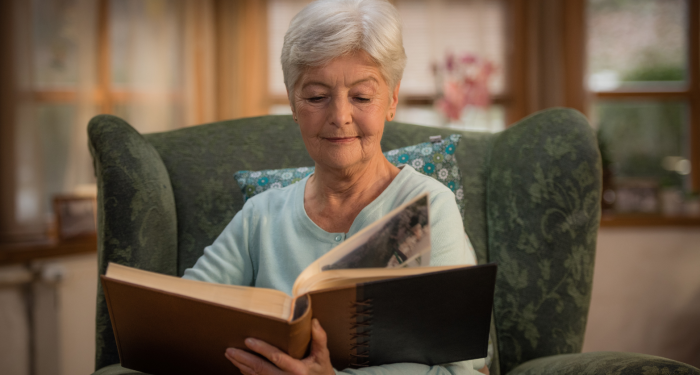
After decades of conversations with people in their seventies and eighties, I've discovered that their deepest regrets aren't about dramatic failures or missed fortunes—they're about the ordinary choices that quietly shaped entire lifetimes.

Add VegOut to your Google News feed. 
Last week, I found myself sitting in my doctor's waiting room next to a woman who must have been in her eighties. We struck up a conversation about the crossword puzzle she was working on, and somehow we ended up talking about life choices. "You know what I regret most?" she said, adjusting her reading glasses. "All those years I spent being afraid of what other people thought." Her words stayed with me long after my appointment, echoing conversations I've had with countless others in their seventies, eighties, and beyond.
There's something about reaching a certain age that brings clarity. The fog of daily urgencies lifts, and we can finally see the landscape of our lives with startling precision. Having spent decades listening to older friends, relatives, and even strangers share their stories, I've noticed patterns in what people wish they'd done differently. These aren't dramatic, headline-worthy regrets, but rather the quiet, persistent ones that seem to surface again and again.
1) Not taking more risks when the stakes were lower
How many times have you talked yourself out of something because it felt too risky? When I was thirty-two, I had the chance to teach abroad for a year. My boys were young, money was tight, and it seemed impossibly impractical. I said no. Now I realize that "impractical" was just another word for "scary." The older folks I know consistently wish they'd been braver about career changes, moves across the country, or starting that business everyone said would fail.
They understand now that the real risk was in playing it safe, in choosing the predictable path that led to a predictable life. One friend recently told me, "I spent forty years in a job I hated because I was afraid of losing my pension. Turns out, security isn't worth much if you're miserable every single day."
2) Working too much and missing irreplaceable moments
This one cuts deep for me. I missed my son's college graduation because I couldn't afford the plane ticket after working multiple jobs just to keep us afloat. Even now, years later, that absence feels like a stone in my chest. But I'm not alone in this regret. So many people over seventy talk about the school plays they missed, the family dinners they rushed through, the bedtime stories they were too tired to read.
They thought they were building something important with all those extra hours at the office. What they realize now is that presence was the real currency, and they spent it in all the wrong places.
3) Not telling people how much they mattered
"I never told my brother I loved him," a man at my book club said recently. "Not once. We just didn't do that in my family." His brother died five years ago, and those unspoken words have become a weight he carries everywhere. Why do we assume people know how we feel? Why do we treat expressions of love like finite resources that need to be rationed?
The tragedy isn't just in what goes unsaid to those who die, but in all the relationships that wither from emotional drought while both people are still alive.
4) Letting fear dictate major life decisions
Virginia Woolf wrote, "Life is not a series of gig lamps symmetrically arranged; life is a luminous halo." Yet how many of us try to arrange our lives in neat, safe rows? I started learning Italian at sixty-six for a trip I'd dreamed about since I was twenty. For over four decades, I let fear keep me from that dream. Fear of traveling alone, fear of looking foolish with the language, fear of spending the money.
The people I know in their seventies and eighties almost universally regret the chances they didn't take because fear was driving the car. They stayed in unhappy marriages, didn't pursue their passions, didn't speak up for themselves, all because fear felt safer than uncertainty.
5) Not taking care of their bodies
A friend recently said to me, "I treated my body like it was invincible until it proved me wrong." She's not talking about not having a perfect physique or running marathons. She means the basic maintenance we skip because we think we have infinite tomorrows. The yearly checkups postponed, the exercise routine that never quite started, the stress we carried in our shoulders for decades.
When I had a breast cancer scare at fifty-two, it taught me to stop postponing joy, but it also taught me that my body had been sending me messages I'd been too busy to receive. Now when I hear seventy-somethings talk about this regret, they're mourning not just health issues that might have been prevented, but all the activities their bodies can no longer do.
6) Holding onto grudges and resentments
Have you ever noticed how heavy old anger feels? I spent years resenting my ex-husband for things that, in retrospect, were just two imperfect people doing their imperfect best. That resentment didn't hurt him; it hollowed out spaces in me that could have been filled with something better.
The older people I know who still carry grudges look exhausted by them. They talk about family feuds that lasted decades over things no one can quite remember, friendships destroyed by pride, marriages that became cold wars. "I wasted so much energy being angry," one woman told me, "energy I'll never get back."
7) Not learning from mistakes as a parent
This might be the most tender regret I hear. After my divorce, I leaned too heavily on my eldest son, expecting him to be "the man of the house" when he was just a boy trying to figure out his own way. I've since apologized to him and his brother for the ways survival mode made me less present than I wanted to be. But that apology came decades late.
Parents in their seventies often talk about wishing they'd been less rigid, more playful, quicker to apologize, slower to anger. They see now how their own unhealed wounds shaped their parenting, and they wish they'd done that healing work sooner.
8) Waiting for "someday" to be happy
"When I retire, when the kids are grown, when we have more money, when things settle down..." Do these sound familiar? The saddest regret I hear from older people is that they kept postponing happiness, treating it like a destination rather than a way of traveling.
They waited for perfect conditions that never arrived. One woman told me she kept her good china locked away for thirty years waiting for occasions special enough. "Now my hands shake too much to use it," she said. The extraordinary rarely announces itself with fanfare. It usually shows up dressed as an ordinary Tuesday, and we miss it because we're waiting for something grander.
Final thoughts
These regrets aren't meant to be a catalog of sadness but rather a roadmap for those of us still in the middle of our journeys. Every person who shared these regrets with me did so hoping someone younger would hear them and choose differently. The beautiful truth is that it's never too late to stop accumulating regrets.
Today, right now, we can take the risk, say the words, release the grudge, embrace the joy. We can learn Italian at sixty-six or sixteen. We can stop waiting for someday and recognize that this day, imperfect as it is, holds everything we need.