None of these require a huge budget, but they do require something else: Self trust, patience, and a willingness to choose what feels right over what looks impressive.
If you grew up with hand me down furniture, plastic plates, and whatever decor was on sale, it is very easy to assume you have “no taste”.
You might even still feel a little intimidated walking into a well designed home store.
The prices, the styling, the buzzwords like “curated” and “bespoke” can make it seem like elegance belongs to other people.
Yet elegant taste is about what your eye and your body are drawn to now that you finally have more choice.
If you notice yourself gravitating toward certain kinds of home pieces, even on a budget, it is a sign that you have already done a lot of inner work.
You are choosing what feels calm, grounded, and quietly beautiful.
Let’s look at five specific pieces that often show up when that shift has happened:
1) Soft, intentional lighting
Did you grow up with bright, overhead lights that buzzed and flickered? I did.
Fluorescent kitchen light, aggressive ceiling light in the living room, maybe a single bedside lamp if you were lucky.
So when you notice yourself pausing in front of a simple table lamp with a linen shade, or a warm floor lamp that washes light up the wall, that matters.
Elegant taste loves soft, layered lighting because it creates a feeling.
It says, “This space is meant for resting, reading, connecting, not just surviving.”
From a psychological point of view, harsh light keeps your nervous system on alert.
Softer, warmer light helps your body exhale.
You stop feeling like you are in a waiting room and start feeling like you are in a sanctuary.
One good lamp from a thrift store, a warm LED bulb, and suddenly your place shifts from “temporary” to “intentional.”
If you are the kind of person who walks past the shiny chandelier and instead picks up a simple, well shaped lamp, that is taste.
You are paying attention to atmosphere, not flash.
Ask yourself: When I imagine my ideal evening at home, what does the light look like?
If your mind goes to pools of soft light instead of a single blinding overhead bulb, that is a sign you have already upgraded far more than your decor.
2) One quietly stunning thrifted or inherited piece
There is something powerful about the first time you choose a piece because it has character, not because it is “new”.
Maybe it is a vintage wooden dresser with slightly worn handles, a mid century chair with a tiny scratch on the arm, or a side table you rescued from a resale shop because the shape made you smile.
When you grow up with less, it is easy to chase “brand new everything” the moment you can.
It is a way of proving to yourself that you made it.
However, elegant taste often moves in the opposite direction and it starts to value weight, patina, story.
You notice that solid wood feels better than glossy particle board, even if the wood is older; you care more about how a piece is built than where it was bought.
That shift is huge as it means you are no longer decorating from a place of shame.
You are curating from a place of enoughness.
I remember the first “grown up” piece I ever bought after years of cheap flat pack furniture.
It was a secondhand dining table.
Slightly nicked, absolutely not trendy, but heavy, stable, and warm.
I ran my hand along the grain and thought, “This could outlast me.”
You have developed an eye for quality and longevity; you are thinking in decades, not in trends.
3) Real plants in simple pots
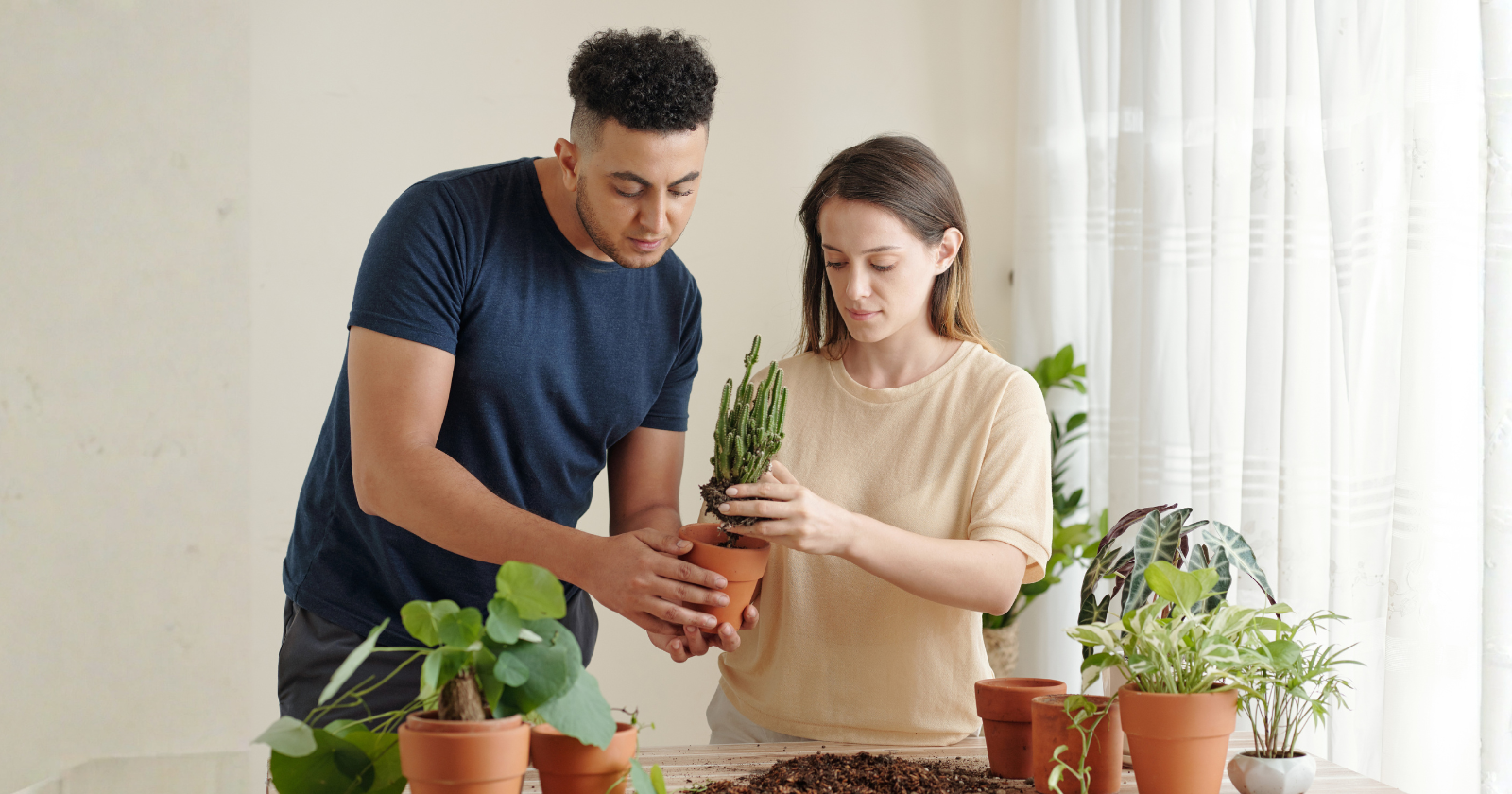
If someone walked into your home right now, would they see anything alive?
I mean a pothos trailing from a shelf, a spider plant in the kitchen, or a little basil plant on the windowsill.
Choosing to live with plants, especially in plain, unfussy pots, is quietly elegant.
It says a few things about where you are in your journey:
- First, you trust yourself to care for something: Scarcity can wire us into survival mode where everything feels too fragile or temporary. When you bring home a plant, you are telling yourself, “I plan to be here. I plan to water this. I can handle that responsibility.”
- Second, you are drawn to organic shapes and real textures rather than plastic fake greenery: Your eye is tuning itself to the way light hits a leaf, the calming effect of green against a neutral wall.
As someone who trail runs and gardens, I notice the same thing outdoors.
The beauty that really lands is often simple: Moss on a rock, dappled light through leaves.
Bringing even a tiny bit of that home is a form of elegance that has nothing to do with status.
If you gravitate toward a humble terracotta pot with a resilient plant instead of a neon-colored faux arrangement, that is taste.
That is intuition saying, “Less decoration, more life.”
4) Quality textiles you can actually feel
Growing up, many of us knew the scratchy towel, the pilly blanket, the sheet that felt slightly like sandpaper.
Things did their job, but they were about function, not feeling.
Pay attention if you now find yourself running your hand over a cotton throw in the store, or checking the label on a duvet cover to see if it is linen or breathable cotton.
Notice if you are suddenly picky about towels, preferring heavier ones that actually dry you and feel soft on your skin.
Soft, well made textiles are often the first place elegant taste shows up.
They are not always visible on Instagram, but you feel them every single day.
This is about nervous system regulation and self respect.
When you wrap yourself in a blanket that feels good, you are sending a constant message to your body: “You deserve comfort, not just the bare minimum.”
You can absolutely do this in stages on a budget: One good pillow, one set of sheets that feels like a hotel bed, and one throw that makes your sofa feel like a hug instead of a bus stop.
If you gravitate toward natural fibers and calmer textures rather than loud prints and cheap synthetics, that is elegance.
You are choosing how your life feels from the inside out.
5) A table set for connection, not performance
Think about your kitchen or dining area: Is there any spot that quietly says, “Sit. Eat. Talk. Stay a while”?
It might be a tiny bistro table with two sturdy chairs, a cleared corner of a counter with a couple of ceramic bowls and real glasses, or a coffee table that regularly hosts snacks and mugs instead of only remotes and clutter.
When you grow up with less, mealtimes can be rushed, chaotic, or purely functional.
Eating on the couch, plates balanced on knees, and food grabbed when and where you can.
Elegant taste shows up in how you prepare for those moments.
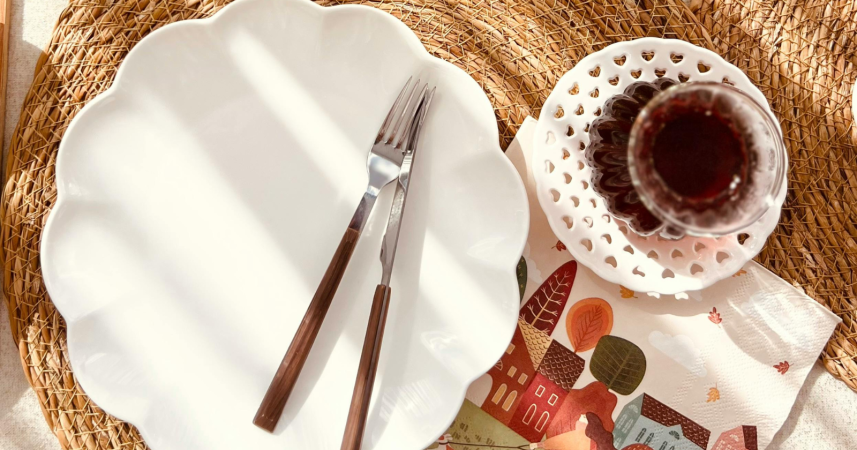
Maybe you do not have a full formal dining set, but you have a few pieces you love: Two mugs that feel perfect in your hands, a small set of white plates that make even a simple plant based pasta look beautiful, or a cloth napkin or two that you wash and reuse.
As a vegan, I care a lot about what goes on the table but I care just as much about the table itself.
A simple wooden surface, a candle, a couple of chairs that are actually comfortable.
That combination says, “This is a home where you will be fed and listened to.”
If your heart lights up at the idea of hosting a friend for coffee, placing their cup on a real coaster at a real table, that is a marker of elegant taste too.
You are prioritizing connection over spectacle.
Final thoughts
If you recognized yourself in even one of these pieces, give yourself some credit.
None of these require a huge budget, but they do require something else: Self trust, patience, and a willingness to choose what feels right over what looks impressive.
That is what elegant taste really is; it is about listening to your own body and values, then letting your home reflect that.
Growing up with less might have delayed that process, but it did not destroy your eye.
If anything, it sharpened it: You know how to spot value, you know how to stretch a budget, and now you are learning how to do that in service of beauty and ease.
The next time you catch yourself lingering over a lamp, a plant, a mug, or a throw, pause for a second.
Ask, “What about this speaks to me?”
Chances are, it is the same part of you that is slowly building a life that feels richer, calmer, and more aligned than anything you grew up with.
That is you, developing real taste, one piece at a time.
What’s Your Plant-Powered Archetype?
Ever wonder what your everyday habits say about your deeper purpose—and how they ripple out to impact the planet?
This 90-second quiz reveals the plant-powered role you’re here to play, and the tiny shift that makes it even more powerful.
12 fun questions. Instant results. Surprisingly accurate.