
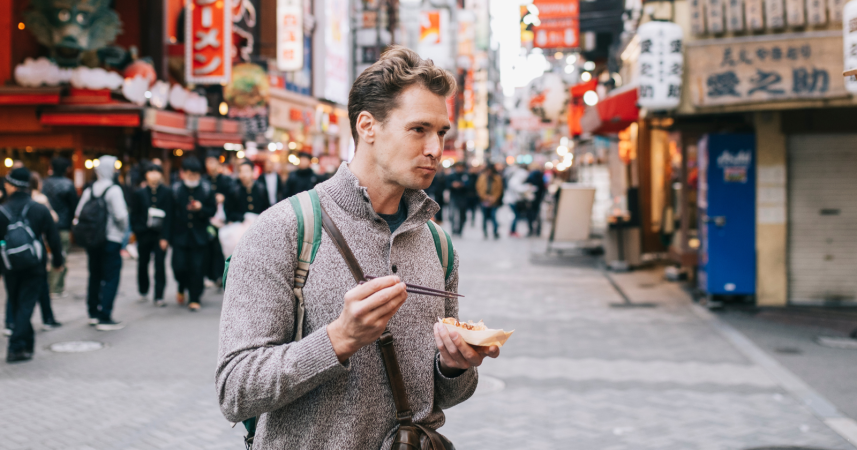
Your unstoppable urge to sample mysterious meat skewers and steaming dumplings from dodgy-looking carts isn't just about hunger—psychologists have discovered it reveals eight fascinating personality traits that set you apart from the tourist-trap crowd.

Add VegOut to your Google News feed. 
Picture this: the sizzle of meat on a hot griddle, the aroma of unfamiliar spices wafting through the air, and a vendor calling out in a language you barely understand. Your stomach growls, your curiosity peaks, and before you know it, you're pointing at something you can't even pronounce, ready to take that first adventurous bite.
If this sounds like you in every new country you visit, you're not alone. And according to psychology, your irresistible attraction to street food says something pretty fascinating about who you are as a person.
I used to think my obsession with trying every street cart, night market stall, and hole-in-the-wall food vendor was just about being hungry and curious. But after diving into the psychology behind food adventurousness, I've discovered that those of us who gravitate toward street food share some remarkably distinct personality traits.
Ready to find out what your street food habit reveals about you?
1) You have high openness to experience
Ever wonder why some people stick to familiar chain restaurants while traveling, while others (like us) head straight for the bustling food markets?
Research published in Appetite journal shows that people who seek out novel food experiences score significantly higher on the personality trait called "openness to experience." This is one of the Big Five personality traits psychologists use to understand human behavior.
What does this mean for you? Well, if you're drawn to street food, you likely approach life with genuine curiosity. You probably enjoy abstract thinking, appreciate art and beauty in unexpected places, and feel energized by new experiences rather than threatened by them.
I've noticed this in my own life beyond food. The same curiosity that leads me to try fermented shark in Iceland or fried insects in Thailand also pushes me to explore new hiking trails, experiment with creative projects, and strike up conversations with strangers at the farmers' market where I volunteer.
2) You're more tolerant of ambiguity
Let's be honest: ordering street food can be a leap of faith. You might not know exactly what ingredients are in that steaming bowl, how spicy it really is, or whether your stomach will thank you later.
People who thrive in these uncertain situations have what psychologists call "tolerance for ambiguity." You're comfortable not having all the answers upfront. You can handle the unknown without excessive anxiety.
This trait extends far beyond food choices. In your career, relationships, and daily life, you probably handle unclear situations better than most. While others might freeze when faced with incomplete information, you're comfortable making decisions and adjusting as you go.
3) You possess cultural intelligence
Street food isn't just about eating; it's about connecting with local culture at its most authentic level. Harvard Business Review defines cultural intelligence as the ability to relate and work effectively across cultures.
When you choose street food, you're not just feeding your body. You're showing respect for local traditions, supporting small businesses, and demonstrating that you value authentic experiences over sanitized tourist versions.
I learned this lesson powerfully during a trip to Vietnam. While cooking elaborate vegan meals is my meditation at home, abroad I discovered that sharing a meal from a street vendor created connections that transcended language barriers. The vendor's smile when I attempted to use chopsticks properly, the locals' nods of approval when I ordered in broken Vietnamese - these moments revealed how food becomes a universal language.
4) You have lower disgust sensitivity
This might sound strange, but hear me out. Disgust sensitivity is an evolutionary trait that originally helped humans avoid contaminated food and disease. But in our modern, sanitized world, having lower disgust sensitivity can actually be an advantage.
If you happily eat from street carts where hygiene standards might differ from what you're used to, you likely have lower disgust sensitivity than average. This doesn't mean you're reckless; it means you can assess actual versus perceived risks more objectively.
This trait often correlates with being more adventurous in other life areas too. You're probably less squeamish about getting your hands dirty (literally and figuratively) and more willing to engage with experiences others might avoid.
5) You're a sensation seeker
Do you get a little thrill when you bite into something completely new? That's your sensation-seeking personality at work. According to the American Psychological Association, sensation seekers are drawn to novel, complex, and intense experiences.
Street food offers all of this in spades. The unexpected flavor combinations, the varying textures, the sometimes extreme spiciness - it's a sensory adventure that sensation seekers crave.
But this trait isn't limited to food. You probably also enjoy activities that provide novel stimulation, whether that's traveling to off-the-beaten-path destinations, trying new sports, or constantly seeking out fresh challenges in your personal and professional life.
6) You value authenticity over comfort
Choosing a plastic stool at a street stall over a comfortable restaurant chair says something profound about your values. You prioritize authentic experiences over physical comfort or social status.
This preference for authenticity likely shows up everywhere in your life. You probably value genuine relationships over superficial ones, prefer honest feedback over empty compliments, and choose meaningful work over just a paycheck.
I've learned to sit with discomfort instead of immediately problem-solving it away, and this has taught me that some of life's best experiences come wrapped in less-than-perfect packaging. That amazing pad thai from a Bangkok street cart tasted better than any five-star meal precisely because of its authentic, unpretentious setting.
7) You're socially confident
Ordering street food often requires pointing, gesturing, and sometimes making a fool of yourself trying to communicate. If this doesn't faze you, you've got solid social confidence.
You're willing to look silly, make mistakes, and laugh at yourself. You don't need everything to be perfect or controlled. This social confidence means you're probably good at building relationships, networking, and adapting to different social situations.
A conversation with a stranger at a farmers' market reminded me why community matters, and I see the same principle at work with street food. These interactions, however brief, create human connections that transcend cultural boundaries.
8) You have cognitive flexibility
When your usual dietary restrictions or preferences meet foreign street food, something's got to give. If you can adapt your eating habits to new contexts, you're demonstrating cognitive flexibility - the mental ability to switch between thinking about different concepts or perspectives.
Maybe you're vegetarian at home but try meat dishes while traveling. Or perhaps you suspend your usual health consciousness to fully experience local cuisine. This flexibility suggests you can see situations from multiple angles and adapt your behavior to different contexts.
This skill is incredibly valuable in our rapidly changing world. It helps you solve problems creatively, adapt to new work environments, and maintain relationships with people who think differently than you do.
Final thoughts
If you recognized yourself in these traits, congratulations! Your street food adventures reveal a personality that's open, flexible, culturally aware, and refreshingly authentic.
These characteristics don't just make you a more interesting dinner companion. They're the same traits that help people succeed in our interconnected, rapidly changing world. Your willingness to step outside your comfort zone at a food stall translates into adaptability in your career, creativity in problem-solving, and richness in your relationships.
So the next time someone questions why you're eating from that questionable-looking cart instead of the safe restaurant next door, you can smile knowing that your choice reflects some pretty remarkable aspects of who you are.
Keep exploring, keep tasting, and keep embracing the beautiful uncertainty that comes with every new culinary adventure. After all, life's too short for boring food and predictable experiences.
If You Were a Healing Herb, Which Would You Be?
Each herb holds a unique kind of magic — soothing, awakening, grounding, or clarifying.
This 9-question quiz reveals the healing plant that mirrors your energy right now and what it says about your natural rhythm.
✨ Instant results. Deeply insightful.

Avery White
Formerly a financial analyst, Avery translates complex research into clear, informative narratives. Her evidence-based approach provides readers with reliable insights, presented with clarity and warmth. Outside of work, Avery enjoys trail running, gardening, and volunteering at local farmers’ markets.
More Articles by Avery










