
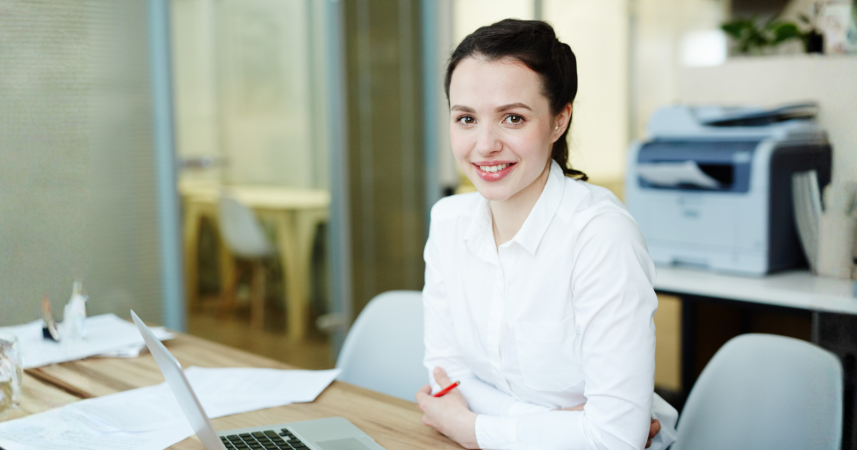
When validation no longer comes from appearance, a different kind of beauty starts to emerge.

Add VegOut to your Google News feed. 
Walk into any coffee shop and you'll see it. Some women arrive with perfectly contoured cheekbones and precisely drawn brows. Others show up with barely a trace of makeup, their natural features on full display.
Both approaches are valid, but there's something fascinating about the psychology behind minimal makeup choices. Research reveals that the relationship between cosmetics and confidence is far more complex than most people assume.
While makeup can certainly enhance appearance and boost mood, women who consistently opt for minimal makeup often possess distinct psychological traits. These aren't women who've given up on their appearance. They're women who've reached a different kind of confidence altogether.
After years of observing human behavior in various settings, I've noticed patterns that research confirms. The choice to wear little or no makeup often signals something deeper about a person's relationship with themselves and the world around them.
Let's explore what psychology tells us about women who embrace minimal makeup.
1) They're comfortable in their own skin
Here's something interesting I noticed while volunteering at the farmers' market on Saturday mornings. The women who showed up fresh-faced, with maybe just a swipe of lip balm, carried themselves differently.
Research backs this up. Studies show that women with higher overall self-esteem often feel secure enough to scale back their makeup routines. They've done the inner work to accept what they see in the mirror, imperfections and all.
This doesn't mean they're careless about their appearance. Far from it. These women simply don't need layers of foundation to feel worthy of being seen.
When you're genuinely comfortable with yourself, you stop performing for others. You stop feeling like your bare face is something that needs fixing.
That kind of security radiates outward. People pick up on it, even if they can't quite name what they're sensing.
2) They prioritize authenticity over approval
I spent years in finance watching colleagues apply full faces of makeup in the office bathroom before important meetings. The message was clear: your natural face isn't professional enough.
But something shifts when you stop chasing external validation. You realize that trying to meet everyone's expectations is exhausting and ultimately impossible.
Women who wear minimal makeup have often reached a point where being genuine matters more than being admired. They've learned that the right people will appreciate them regardless of their lipstick shade.
This authenticity extends beyond appearance. It shows up in how they communicate, the boundaries they set, and the relationships they maintain.
Research published in the Journal of Consumer Culture found that makeup can function as image management, helping women navigate social expectations. But those who've moved past constant approval-seeking have found freedom in letting go of that tool.
3) They have a strong sense of internal worth
The correlation between self-esteem and makeup usage is complex. Some research suggests women with lower self-esteem use more makeup to conceal perceived flaws, while others with high self-esteem use it strategically to attract attention.
But here's what I've observed: women who wear minimal makeup typically derive their sense of value from internal sources rather than external appearance.
They've built confidence through achievements, relationships, personal growth, and contributions that have nothing to do with how symmetrical their features are.
When your self-worth comes from within, you're less dependent on cosmetics to feel complete. You know your value exists independently of whether you're wearing mascara.
This internal foundation provides stability that external validation never can. It's the difference between needing compliments to feel okay and simply appreciating them when they come.
4) They reject perfectionism
Can we be honest about something? The flawless faces we see everywhere aren't real. They're filtered, edited, contoured, and lit within an inch of their lives.
Women who embrace minimal makeup have often made peace with imperfection. They understand that dark circles, uneven skin tone, and visible pores are normal parts of being human.
This rejection of perfectionism is actually a sign of emotional maturity. Studies indicate that chasing impossible beauty standards correlates with anxiety and diminished well-being.
By refusing to spend hours creating an airbrushed version of themselves, these women are essentially saying "I'm enough as I am."
That mindset spills into other life areas too. They're more likely to start projects even if the conditions aren't perfect, to speak up despite not having all the answers, and to try new things without fear of looking foolish.
5) They're confident in their professional competence
There's an interesting phenomenon documented in research where makeup is perceived to enhance professional credibility. Women wearing cosmetics are often judged as more competent and even having greater earning potential.
But women who opt for minimal makeup have typically built confidence in their abilities that doesn't require cosmetic reinforcement. They trust their skills, knowledge, and experience to speak for themselves.
I remember my first few years as a financial analyst when I felt I needed the full corporate uniform, makeup included, to be taken seriously. As I became genuinely good at my work, that need evaporated.
These women have learned that while appearance might open doors initially, it's substance that keeps you in the room. They've shifted their focus from managing perceptions to actually being excellent at what they do.
Their confidence comes from proven capability, not from the psychological armor that a full face of makeup can provide.
6) They have healthy boundaries with social media
Social media has dramatically intensified beauty pressures. Algorithms feed us endless images of filtered perfection, making our unfiltered faces feel inadequate by comparison.
Women who wear minimal makeup often maintain healthier relationships with these platforms. They're less likely to compare themselves to influencers or to internalize unrealistic beauty standards.
Research shows that social media participation in ideal appearance sharing significantly shapes cultural beauty norms and expectations. Women who minimize makeup have often consciously rejected this pressure.
They understand that what they see online isn't reality. They recognize the business model behind beauty content and refuse to let it dictate their self-worth.
This psychological distance from social media beauty culture protects their mental health and allows them to define beauty on their own terms.
7) They value efficiency and practicality
Finally, let's talk about time. A full makeup routine can take 20 to 60 minutes. That's up to seven hours a week, 30 hours a month, 365 hours a year.
Women who wear minimal makeup have often made a practical calculation: that time could be better spent elsewhere. Maybe on a morning trail run, extra sleep, reading, or simply a slower morning routine that doesn't feel rushed.
This isn't about judging anyone's choices. It's about recognizing that confidence sometimes looks like deciding your time is too valuable to spend perfecting winged eyeliner.
These women have identified their priorities and organized their lives accordingly. They're confident enough to reject the idea that extensive beauty routines are necessary for success or social acceptance.
They've learned that efficiency isn't laziness and that streamlined self-care routines can actually reduce daily stress and decision fatigue.
Final thoughts
If you recognize yourself in several of these traits, you're likely someone who's done significant inner work. You've moved past seeking validation through appearance and found more sustainable sources of confidence.
If you're still figuring things out, that's completely normal. The relationship between makeup and self-esteem is deeply personal and there's no single right answer.
What matters most is understanding your own motivations. Are you wearing makeup because you genuinely enjoy it, or because you don't feel acceptable without it? The first is self-expression; the second might be worth examining.
True confidence rarely looks the same on any two people. For some, it includes bold red lipstick. For others, it's showing up barefaced. Both can be equally valid expressions of self-assurance.
The goal isn't to abandon makeup entirely if you love it. The goal is to build confidence that exists independently of it.
What’s Your Plant-Powered Archetype?
Ever wonder what your everyday habits say about your deeper purpose—and how they ripple out to impact the planet?
This 90-second quiz reveals the plant-powered role you’re here to play, and the tiny shift that makes it even more powerful.
12 fun questions. Instant results. Surprisingly accurate.












