Sometimes the wisest teacher arrives in your life wearing an apron and carrying generations of quiet knowing.
Last spring, I found myself in a small Italian village in Tuscany, staying with my friend Sofia's grandmother for a week.
I'd gone there for a short break, originally planning to stay in a hotel, but Sofia suggested a room at her grandma's house instead.
It was Italy, so of course, I'd expected cobblestone streets and good pasta. What I didn't expect was how completely this seventy-eight-year-old woman would upend everything I thought I knew about living well.
Nonna Maria lives in the same house where she was born. She grows her own tomatoes, makes her own bread, and moves through her days with a kind of unhurried grace that felt almost radical to watch.
No smart watch tracking her steps. No productivity apps optimizing her mornings. Just a life built on rhythms that have sustained her family for generations.
I arrived exhausted from years of hustling, optimizing, and trying to squeeze more out of every hour. By the time I left, I'd filled an entire notebook with observations that had nothing to do with efficiency and everything to do with actually living.
Here's what she taught me.
1. Start your day slowly and with intention
Nonna's mornings began the same way every day, but calling it a routine feels wrong. She'd wake naturally as light filled her bedroom, then sit at the edge of her bed for a few moments before standing. No alarm. No phone. Just a gentle transition from sleep to waking.
By the time I'd stumble downstairs, she'd already be at the kitchen table with her espresso, looking out at her garden. The coffee was made in her old moka pot, the same one she'd used for decades.
She'd sip it slowly, sometimes for twenty minutes, watching birds and thinking about her day. When I asked what she was doing, she looked confused by the question. "I'm drinking my coffee," she said, as if that were obviously enough.
This wasn't some mindfulness practice she'd learned from a wellness guru. This was simply how she believed days should begin. With space to arrive into them.
I started joining her, and something shifted. My usual morning anxiety, that immediate mental sprint through my task list, began to quiet. Turns out your nervous system knows the difference between attacking the day and allowing it to unfold.
2. Cook like it's an act of love, not a task to complete
I've meal-prepped. I've batch-cooked. I've tried every strategy to make feeding myself more efficient. Watching Nonna cook made me realize I'd been missing something essential.
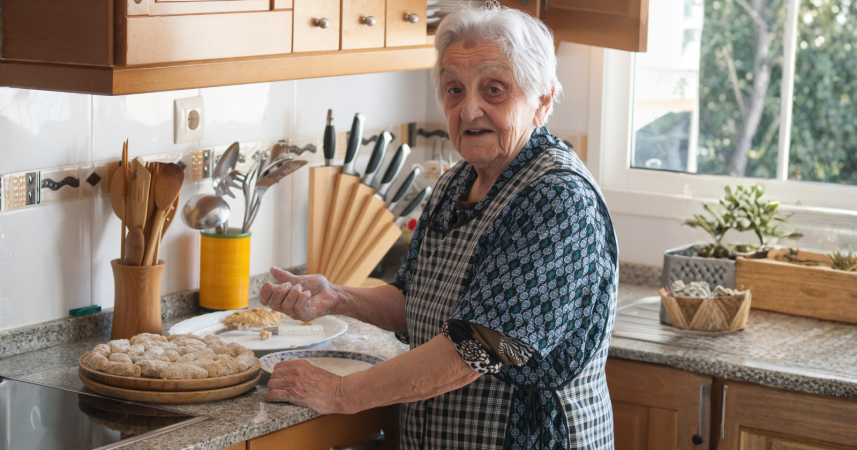
She'd spend an hour making sauce from the tomatoes in her garden, even though jarred sauce existed ten minutes away at the market. She'd hand-roll pasta on Sunday afternoons, her hands working the dough with a practiced rhythm while she told stories about her mother teaching her the same skill. The kitchen wasn't a place to get through quickly. It was where life happened.
One afternoon, she taught me to make her ragù. "You have to let it cook slowly," she said, stirring the pot. "If you rush it, it knows." I laughed, but she was serious. The patience you bring to cooking somehow transfers into the food itself.
When we finally sat down to eat that night, the pasta tasted different than anything I'd made in my own kitchen. It tasted like time and attention. Like something made for people you care about, including yourself.
3. Rest is not a reward, it's part of the rhythm
Every day around two o'clock, the house would go quiet. Nonna would close the shutters, lie down, and rest for an hour or two.
I really struggled with this at first. I'd lie there thinking of all the things I could be doing, mentally drafting emails, planning the rest of my trip. My nervous system was so conditioned to productivity that doing nothing felt almost painful.
But Nonna never wrestled with it. Rest was as natural to her as breathing. "The day is long," she'd say. "Why would you try to sprint through it?"
By the end of the week, I started to understand. Rest woven into the day creates a different quality of energy. You move through your waking hours with more presence because you're not running on fumes. Your body learns it can trust you to pause, so it stops sending panic signals.
The riposo wasn't laziness. It was wisdom about how human bodies actually work.
4. Take pride in caring for your space
Every morning, Nonna would sweep her floors. Not because they were particularly dirty, but because she liked the ritual of it.
She'd shake out the tablecloth, wipe down the counters, arrange fresh flowers from her garden in a small vase by the window. These weren't chores she rushed through while thinking about other things. They were part of how she wanted to live.
One morning, I offered to help clean up after breakfast. She handed me a cloth and showed me how she wiped the table, in slow circles, paying attention to the grain of the wood. "This table was my grandmother's," she said. "When you care for something properly, it lasts."
The way she touched objects in her home carried a tenderness I'd never brought to my own space.
There's something psychological that happens when you tend to your environment with genuine care. Your surroundings start to feel like a reflection of your inner life rather than just a backdrop for it.
I thought about my own apartment back home, how I'd optimized it for function but rarely stopped to make it genuinely beautiful. How I'd hire someone to clean rather than engage in the meditative practice of caring for my own space. Nonna's house felt alive because she treated it like a living thing.
5. Give generously, even when you have little
Does abundance create generosity, or does generosity create abundance? After watching Nonna, I'm convinced it's the latter.
She lived simply, on a modest pension. But her door was always open. Neighbors would stop by for coffee and leave with tomatoes, or fresh eggs from her chickens, or a slice of cake she'd baked that morning. She never seemed to calculate what she was giving away or whether she could afford it. There was always enough because she trusted there would be.
The psychology here runs deep. When you give freely, you signal to yourself that you live in a world of abundance rather than scarcity.
Your nervous system relaxes. You stop hoarding and start flowing. I spent so much of my life in that scarcity mindset, always worried about having enough, protecting my resources.
Watching Nonna give with an open hand made me realize how much that fear had cost me.
6. Don't fill silence, let it stretch
We were sitting on her back terrace one evening when I realized we hadn't spoken in almost twenty minutes. I'd been watching the light change on the hills. She'd been shelling peas. The silence felt comfortable, almost nourishing.
It's a far cry from how I normally operated in my regular life, where I used to fill every quiet moment. Podcasts while I cook. Music while I work. Conversations packed with words to avoid any awkward pauses. Silence felt like something to fix.
But Nonna moved through long stretches of quiet like it was the most natural thing in the world. She'd sit with her coffee, work in her garden, or rest in the evening without needing constant input.
"Americans always need noise," she observed one afternoon, not unkindly. She was right. That constant stimulation keeps you from hearing your own thoughts, from processing your experiences, from simply being with yourself.
The silence in her home created space for something deeper. For reflection. For noticing. For letting your mind wander where it needs to go without forcing it anywhere.
By the end of the week, I craved those quiet moments. My nervous system had remembered how to settle.
7. Measure life by joy, not output
On my last evening there, we sat outside after dinner and Nonna pointed to her garden. "You see those tomatoes?" she said. "I planted them in May. All summer I watered them, tied them up, picked off the bugs. Now look." The vines were heavy with fruit, and she was beaming.
Such a simple thing, but it afforded her so much pleasure. The tomatoes would feed her and her neighbors. They'd become sauce and salads and gifts.
But the real reward was those months of tending, of watching things grow, of getting her hands in the soil. The joy was in the process.
I thought about how I measured my own days. By what I'd accomplished, what I'd checked off, how much I'd produced. I'd trained myself to find satisfaction only in completion, never in the doing itself.
Nonna lived completely differently. She measured her days by whether she'd laughed with a friend, whether her food tasted good, whether the evening light on the hills took her breath away. She measured life by aliveness.
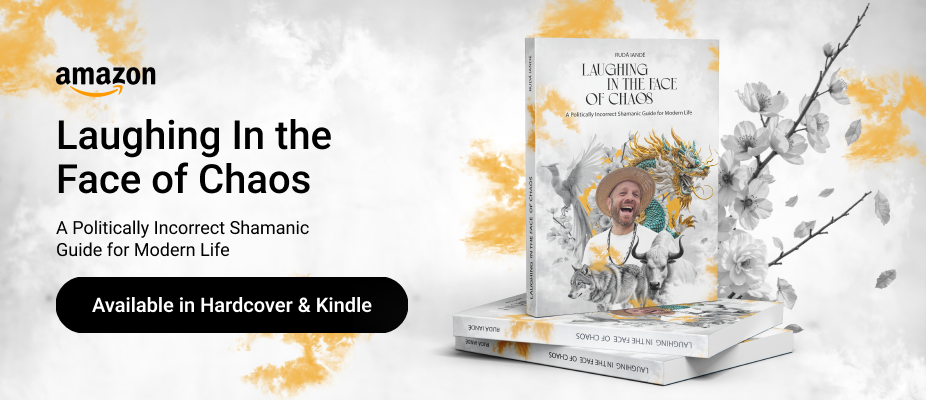
As Rudá Iandê writes in his new book "Laughing in the Face of Chaos: A Politically Incorrect Shamanic Guide for Modern Life," "When we let go of the need to be perfect, we free ourselves to live fully, embracing the mess, complexity, and richness of a life that's delightfully real."
That's exactly what Nonna had been showing me all week. She wasn't trying to optimize her life into some pristine version of perfection. She was living it, messy garden dirt under her fingernails and all.
When I hugged her goodbye, she pressed a jar of her tomato sauce into my hands. "Remember," she said. "Life is for enjoying." Six words that somehow contained everything she'd shown me that week.
I brought that jar home and kept it on my counter for months before finally opening it. When I did, I made the sauce slowly, the way she'd taught me. I invited friends over.
We ate together without rushing, and afterward, we sat around the table talking until the candles burned down. For those few hours, I wasn't trying to optimize anything. I was just living. And it felt like the most productive thing I'd done in years.
Final thoughts
The truth is, Nonna wasn't teaching me anything new. These ways of living have existed for centuries, passed down through generations who understood something we've forgotten in our rush to do more, be more, achieve more.
She was simply living the way humans lived before we convinced ourselves that rest was laziness and joy was something you had to earn.
I still catch myself falling back into old patterns sometimes. Rushing through breakfast to get to my desk. Measuring my worth by my output. Feeling guilty about afternoon naps.
But now I have those seven lessons written in my notebook, and more importantly, I have the memory of how it felt to live differently for a week.
Sometimes that's enough to make me pause, put down my phone, and just sit with my coffee a little longer. To let the day unfold instead of wrestling it into submission. To remember that a life well-lived has very little to do with productivity, and everything to do with presence.