
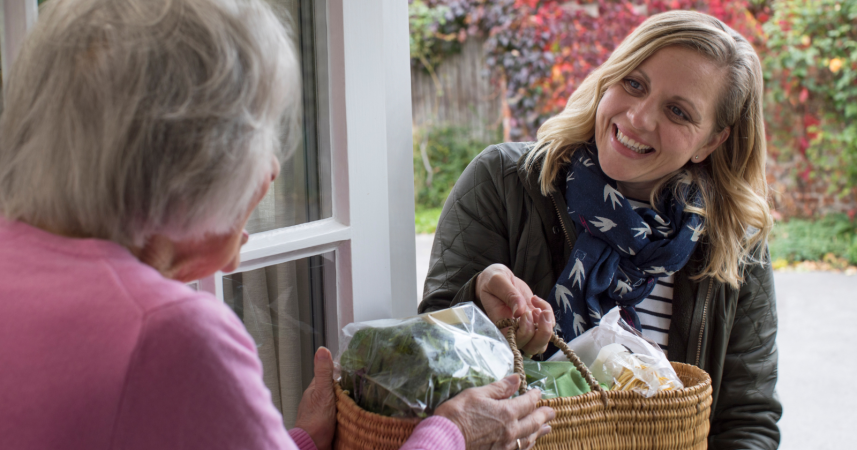
Leaving a small town doesn’t mean leaving behind its habits—you likely carry more of them into adulthood than you probably realize.

Add VegOut to your Google News feed. 
Growing up in a small town leaves its mark in ways you might not notice until later.
At the time, you probably thought of it as just normal life—knowing all your neighbors, having a handful of hangout spots, and being part of a community where everyone seemed to know your business.
But when you move away or start comparing your habits to people who grew up in cities or suburbs, the differences stand out.
Some of those habits are charming. Others are quirks that stick around because they’re so deeply ingrained. Either way, they follow you long after you’ve packed up and left Main Street behind.
Here are eight things you probably still do if you grew up in a small town.
1. You greet strangers like neighbors
A smile, a nod, or even a “hello” to someone you pass—it’s automatic. In a small town, where you see the same faces repeatedly, acknowledging people feels natural. Even if you didn’t know them personally, they were still part of your everyday backdrop.
In bigger cities, this habit can throw people off. I remember visiting New York City for the first time and instinctively smiling at strangers as I walked down the street.
The reactions ranged from confusion to suspicion, and it hit me that not everyone is wired to exchange casual greetings. But small-town roots are hard to shake.
The upside is that this habit often makes you more approachable and friendly. You may not realize it, but those simple gestures build bridges. People notice when someone takes the time to acknowledge them, especially in environments where anonymity is the default.
2. You measure distance in time, not miles
Ask someone from a small town how far away something is, and chances are they’ll answer in minutes, not miles.
“It’s about 20 minutes away” feels more natural than “it’s 15 miles down the road.” That’s because driving everywhere was part of daily life, and you measured the world by how long it took to get from point A to point B.
This habit sticks with you even when you move to places where traffic makes time harder to predict. You’ll still find yourself saying “it’s a 10-minute drive” even if Google Maps shows a range that depends on the hour. It’s a subtle but telling sign of small-town upbringing.
The truth is, this perspective shapes how you think about accessibility.
A 30-minute drive in a small town was nothing—just a regular trip to the nearest mall or movie theater. For city dwellers, 30 minutes might feel like an ordeal. That difference in mindset lingers.
3. You still crave the basics
Big-city life offers endless food trends, high-end dining, and specialty coffee shops. But if you grew up in a small town, there’s still something deeply comforting about the basics: a greasy diner breakfast, a Friday night pizza, or a plate of homemade cookies from a neighbor’s kitchen.
I notice this every time I go back to visit the small town where I grew up.
The first stop is always the diner with mismatched coffee mugs and hash browns that taste exactly the same as they did 20 years ago.
Part of it is nostalgia, but for me, it's also about grounding. Those familiar flavors and settings bring a sense of stability that no trendy restaurant can replace.
This craving for simplicity often bleeds into other areas of life. You might prefer straightforward routines over overly complicated ones, or find satisfaction in activities others overlook. It’s a reminder that sometimes the basics carry the most meaning.
4. You rely on word-of-mouth
Before online reviews dominated decision-making, small towns ran on recommendations.
You chose a mechanic because your neighbor trusted him, or you tried a restaurant because your cousin said it was good.
That reliance on word-of-mouth is something many small-town folks carry into adulthood.
Even now, you might find yourself asking people you know for suggestions before you look something up. It’s not that you don’t trust online sources—it’s that personal endorsement feels stronger. The memory of leaning on community networks for advice runs deep.
This habit has an interesting side effect: it makes you more community-minded. You don’t just consume; you share. When you find something worthwhile, you tell people about it because that’s how you learned to pass opportunities forward.
5. You notice when things change
Small towns don’t change quickly, which makes the changes that do happen all the more noticeable.
A new building, a shop closing, or a neighbor repainting their house—it all stands out. Growing up in that environment trains you to pay attention to shifts in your surroundings.
This carries into adulthood, even outside of small towns. You might be the first to notice when a coworker changes their hairstyle, when a favorite coffee shop tweaks its menu, or when a familiar route looks slightly different.
While others breeze past details, you pick up on them because that’s what life in a small town taught you: small changes are significant.
That awareness can be a real strength in relationships and work, where noticing the little things often sets you apart.
6. You value community over anonymity
What happens when you grow up knowing that your actions ripple through a community where everyone knows each other?
You start to value connection more than anonymity. Even if you’ve moved to a big city, you probably still look for ways to create smaller communities around yourself—whether it’s through friendships, coworkers, or hobbies.
This doesn’t mean you need to know everyone’s business the way you did back home. It means you naturally seek belonging.
You might prioritize neighborhood gatherings, or you’re the one who organizes potlucks at work. Small-town upbringing makes you more attuned to the importance of having people you can rely on.
And while anonymity has its perks, deep down, you probably feel more at ease when you’re part of a circle that feels personal, not faceless. That desire to belong doesn’t fade with geography.
7. You carry a slower pace into fast settings
What happens when your childhood was shaped by quieter streets, fewer options, and slower routines?
Well, even in a bustling environment, you carry a piece of that pace with you. While others rush to fill every minute, you’re more comfortable taking your time.
I’ve noticed this myself when working in fast-moving corporate settings. While colleagues scrambled to react immediately to every new email, I often stepped back to prioritize.
That instinct to slow down, breathe, and focus came from years of small-town life where things weren’t always urgent. It wasn’t laziness—it was perspective.
This slower pace can be grounding for people around you, too. In high-pressure environments, being the one who resists panic and keeps perspective is often invaluable.
8. You assume people are watching
As I said earlier, in a small town, anonymity doesn’t exist. Everyone knows everyone, and word travels fast.
Even minor choices—what you wore to the store, who you were seen with—could become a topic of conversation by dinner. That awareness doesn’t completely disappear, even when you leave.
You may find yourself second-guessing what people think, even in places where no one’s paying attention. It’s not paranoia—it’s conditioning. Years of growing up under community observation leave a mark.
The upside? This habit can make you more thoughtful about your actions. You carry an awareness that what you do matters, and that awareness often leads to integrity. Even if no one is actually watching, you live like they might be.
Final thoughts
The truth is, where we come from never really leaves us. Small towns have a way of shaping not just our memories but the rhythms we carry forward—the pace we keep, the values we hold, the way we see people.
You might leave the place, but pieces of it stay stitched into who you are.
That isn’t something to outgrow or hide. It’s something to recognize with a little gratitude. Because in a world that often feels disconnected and rushed, the quiet lessons of a smaller beginning can be the thing that keeps you steady.












