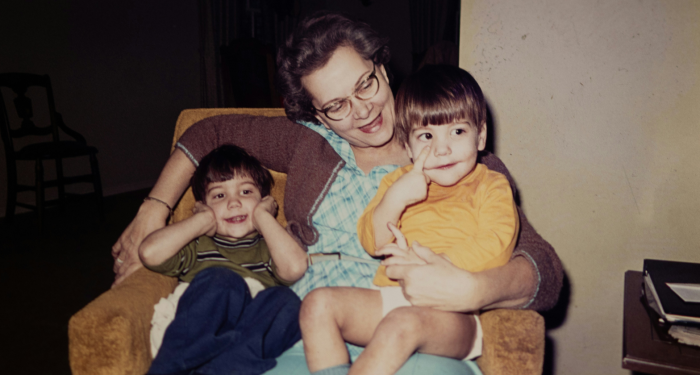
Your brain is constantly making predictions about what happens next—and those predictions become your reality.

Add VegOut to your Google News feed. 
I used to think people who talked about "mindset" were selling something. Like those LinkedIn posts about grinding at 5 AM or the endless parade of motivational quotes overlaid on sunset photos.
But then I noticed something odd in my own life: the months when I believed things would work out somehow did work out better than the months when I was convinced everything was falling apart.
Take Oprah Winfrey's famous words: "You become what you believe."
Coming from someone who grew up in poverty, faced discrimination, and built a media empire, this isn't just feel-good philosophy—it's lived experience.
Oprah believed her voice mattered when others dismissed her background. Her beliefs didn't magically erase the barriers she faced, but they shaped how she responded to them and what possibilities she pursued.
It wasn't just coincidence in my life either. When I dug into the research—because old habits die hard—I found that our beliefs don't just influence how we feel about our circumstances. They literally reshape what we experience.
Your brain is a prediction machine
Here's what I learned from my analyst days: patterns matter more than individual data points.
Your brain operates the same way. It's constantly making predictions about what's going to happen next, and those predictions are based on what you believe to be true.
If you believe you're bad at public speaking, your brain will focus on every stumble, every "um," every person who looks bored. It filters out the nods, the engaged faces, the moments when you actually nailed a point.
This isn't pessimism—it's confirmation bias in action.
Research shows that people who believe intelligence can be developed (a "growth mindset") literally perform better on cognitive tasks than those who believe intelligence is fixed.
The belief changes the behavior, which changes the outcome.
The stories we inherit
Most of our beliefs aren't even ours. They're hand-me-downs from parents, teachers, culture, that one comment a classmate made in third grade that somehow stuck.
I recently read Rudá Iandê's new book "Laughing in the Face of Chaos: A Politically Incorrect Shamanic Guide for Modern Life," and one insight hit me like a spreadsheet error you finally spot:
"Most of your 'truths' are inherited programming from family, culture, and society."
The book inspired me to audit my own belief inventory.
Where did I pick up the idea that I had to have everything figured out by 30?
Why did I assume that changing career paths meant I was flaky instead of adaptable?
These weren't conclusions I'd reached through careful analysis—they were stories I'd absorbed without question.
When I started questioning these inherited beliefs, something shifted. Not dramatically, not overnight, but like adjusting the contrast on a monitor. The same situations looked different.
The compound effect of daily thoughts
Think about your internal monologue for a typical Tuesday. How much of it sounds like encouragement versus criticism?
If you tracked your self-talk like expense categories, what would the breakdown look like?
I started paying attention to mine and realized I was running a deficit. For every "you handled that well," there were three "you should have done that differently."
Small shifts in daily thinking compound over time.
Instead of "I'm terrible at networking," try "I'm learning to connect with people."
Instead of "I always mess these up," experiment with "I'm figuring this out as I go."
These aren't empty affirmations—they're more accurate descriptions of reality.
Why your body knows before your brain does
Your beliefs don't just live in your head. They show up in your posture, your breathing, your gut reactions.
When you believe you belong somewhere, you walk differently. When you believe you're capable of handling whatever comes up, your shoulders relax.
I noticed this during job interviews. The ones where I believed I was a good fit went better, not because I said different words, but because I showed up differently. My energy was more open, my responses more authentic.
Your body is constantly sending signals about what you believe to be true. People pick up on these signals, often unconsciously.
Confidence isn't just a feeling—it's a physical reality that influences how others respond to you.
The flexibility of reality
Here's the part that used to make my analytical brain suspicious: reality is more malleable than we think.
Not in a magical thinking way, but in a practical, observable way.
When you believe opportunities exist, you notice them.
When you believe people are generally helpful, you're more likely to ask for help and receive it.
When you believe problems are solvable, you spend more energy looking for solutions instead of documenting why things can't work.
I'm not suggesting you can wish away genuine challenges or systemic barriers. But within the constraints of your actual circumstances, your beliefs about what's possible significantly influence what becomes possible.
How to work with beliefs instead of against them
The goal here isn't to become relentlessly positive. It's to become more conscious about which beliefs are serving you and which ones are running outdated software.
Start with observation. Notice the stories you tell yourself about your capabilities, your relationships, your future. Are these stories based on current evidence or old data?
Then experiment. Pick one limiting belief and test it gently.
If you believe you're not creative, try one small creative project. If you believe you're bad with money, track your spending for a week without judgment. Let the evidence speak.
The most powerful shifts happen when you stop fighting against unwanted beliefs and start building evidence for more useful ones. It's like debugging code—you don't delete the problematic function, you write a better version.
Final words
Oprah was onto something when she said "You become what you believe." But it's not about positive thinking your way to success.
It's about recognizing that your beliefs are tools, not truths. And like any tool, they can be upgraded when they're no longer serving their purpose.
Your circumstances matter. Your challenges are real.
But the story you tell yourself about those circumstances and challenges? That's where your agency lives. That's where change begins.
What story are you telling yourself today? And more importantly—is it one you'd want to live into tomorrow?
What’s Your Plant-Powered Archetype?
Ever wonder what your everyday habits say about your deeper purpose—and how they ripple out to impact the planet?
This 90-second quiz reveals the plant-powered role you’re here to play, and the tiny shift that makes it even more powerful.
12 fun questions. Instant results. Surprisingly accurate.