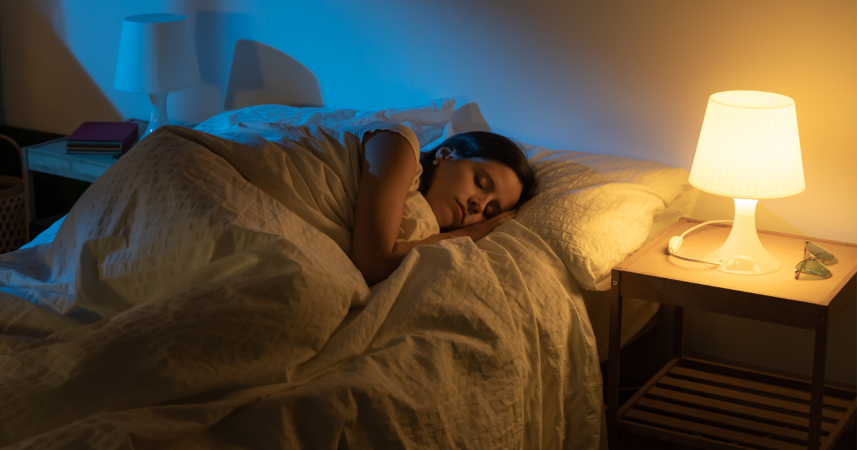
Adults who sleep with night lights aren't afraid of the dark—they're actually more creative, self-aware, and environmentally sensitive than you might think.
Ever think that adults who sleep with a night light are just scaredy-cats who never outgrew their childhood fears?
I used to think the same thing. Until I started digging deeper into the psychology behind this habit and discovered something fascinating: people who need that soft glow to drift off often share some surprisingly positive traits that have nothing to do with being afraid of the dark.
As someone who reads for an hour before bed every night, I've become curious about different sleep habits and what they reveal about us. And let me tell you, the night light phenomenon is far more complex than most people realize.
If you're someone who keeps a lamp on, uses a nightlight, or even leaves the bathroom light on with the door cracked, you might recognize yourself in these unexpected characteristics. And if you're not? Well, you might just gain a new appreciation for the night-light users in your life.
1. They're more sensitive to their environment
People who need a night light often have heightened environmental awareness. They notice subtle changes in their surroundings that others might miss entirely.
This isn't just about being physically sensitive to darkness. These individuals tend to pick up on shifts in mood, tension in a room, or even small changes in their daily environment. They're the ones who notice when you've rearranged your desk or gotten a haircut.
This environmental sensitivity can be a superpower in many situations. It makes them excellent at reading rooms, understanding unspoken dynamics, and creating comfortable spaces for themselves and others.
2. They value preparation and control
Here's something interesting: night light users often display exceptional preparedness in other areas of their lives.
Think about it. Having a light source readily available shows forward thinking. These folks don't want to stumble around in the dark if they need to get up. They've already thought ahead and created a solution.
This tendency extends beyond the bedroom. They're usually the ones with backup plans, emergency kits in their cars, and extra phone chargers. They think through scenarios and prepare accordingly.
A former colleague of mine always kept a small nightlight in her hotel room when traveling for work. She was also the person who always had tissues, band-aids, and snacks in her bag. Her preparedness saved us more times than I can count during conference trips.
3. They're often highly creative individuals
Contrary to what you might expect, many night light users have remarkably vivid imaginations and creative minds.
The soft lighting creates an ambiguous environment where shadows can become anything. This liminal space between full darkness and bright light can actually stimulate creative thinking and imaginative processing.
Artists, writers, and creative professionals often report needing some ambient light to sleep comfortably. They say complete darkness feels too final, too absolute. The gentle glow keeps their creative channels slightly open, even during rest.
I've filled 47 notebooks with reflections and observations over the years, and some of my best insights have come during those drowsy moments in soft lighting, when my analytical mind finally quiets down enough to let creativity flow.
4. They tend to be more open about their needs
Using a night light as an adult requires a certain level of self-acceptance. You have to be okay with having a need that society might judge as childish.
This self-awareness often translates into being more open about other needs too. These individuals are usually better at asking for help, setting boundaries, and communicating their preferences clearly.
They've already crossed the bridge of admitting they need something others might find silly. Once you've done that, asking for other accommodations becomes easier. Need a specific type of pillow? They'll request it. Prefer a certain communication style? They'll let you know.
5. They're comfort-seekers who prioritize well-being
People who sleep with night lights understand that comfort isn't a luxury; it's a necessity for good rest and overall well-being.
They're not trying to tough it out or prove anything to anyone. They know what helps them sleep better, and they prioritize that over appearing tough or independent. This practical approach often extends to other areas of self-care.
These are the people who invest in good mattresses, maintain consistent sleep schedules, and create bedtime routines that actually work for them. They understand that quality sleep affects everything else in their lives.
6. They often have stronger memory associations
Night light users frequently have powerful sensory memories and associations. The soft glow might remind them of safety, comfort, or positive experiences from their past.
This isn't about being stuck in childhood. It's about recognizing and honoring the connections between sensory experiences and emotional well-being. These individuals often have rich memory banks full of sensory details that others might forget.
They remember not just events, but how things felt, looked, smelled, and sounded. This attention to sensory detail makes them wonderful storytellers and empathetic listeners who can really put themselves in someone else's shoes.
7. They're practical problem-solvers
Finally, people who use night lights are often excellent at finding simple solutions to everyday problems.
Complete darkness causes them discomfort? They don't overthink it or feel ashamed. They simply add a light. This straightforward approach to problem-solving appears in other areas too.
They're the ones who find clever workarounds at work, create efficient systems at home, and come up with practical solutions when others are stuck in analysis paralysis. They value function over form and results over appearances.
Final thoughts
We all have our unique needs and preferences when it comes to sleep. Some people need complete silence, others need white noise. Some need total darkness, others need a gentle light. None of these preferences make us better or worse than anyone else.
What matters is that we're honest about what we need and brave enough to honor those needs, even when society might raise an eyebrow. Because at the end of the day, good sleep is good sleep, whether it happens in pitch black or soft light.