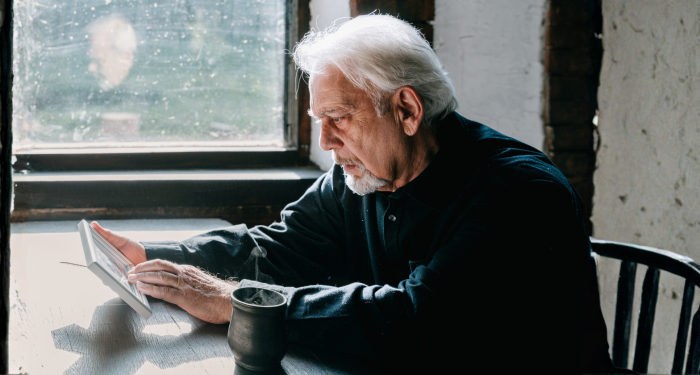
The ability to enjoy your own company for days on end says more about your strength than your social life.
Ever notice how some people can go an entire weekend without speaking to another soul and seem perfectly content?
Most of us assume these folks are shy, antisocial, or maybe struggling with something.
But here's what I've discovered after years of observing human behavior and, honestly, being one of these people myself: those who can happily spend 48 hours in their own company often possess some pretty remarkable qualities that the rest of us might overlook.
I used to think my ability to go solo for days was something I needed to fix. After transitioning from my corporate finance days to writing, I realized those quiet weekends weren't a bug in my system. They were a feature.
And the more I studied this pattern in others, the more fascinating traits I uncovered.
1. They have exceptional emotional regulation
You know that friend who never seems rattled by drama? There's a good chance they're comfortable spending weekends alone.
People who can handle extended solitude have usually developed an impressive ability to manage their emotions without external validation. They don't need to immediately text someone when they're upset or call a friend to process every feeling.
Instead, they've learned to sit with their emotions, understand them, and work through them independently.
I remember once getting devastating feedback on a manuscript. My first instinct was to call everyone I knew for reassurance. Instead, I spent the weekend alone, processing the criticism, and by Monday, I had a clear plan for improvement. No emotional dumping required.
This doesn't mean they never seek support. They just don't need constant external emotional regulation to function.
2. They possess remarkable self-awareness
Have you ever spent an entire day with just your thoughts? It's like having a front-row seat to your own mental patterns.
Weekend hermits tend to know themselves incredibly well. They understand their triggers, their values, and their genuine desires because they've spent countless hours in self-reflection.
While others might discover things about themselves through social mirrors, these individuals have done the internal work.
During my Sunday trail runs, which I consider my personal church time, I've had more breakthroughs about my life direction than in any therapy session. There's something about extended solitude that forces you to confront who you really are, not who you perform to be.
3. They have an unusually high tolerance for uncertainty
Most people fill silence with noise and solitude with company because being alone with uncertainty feels unbearable. But those who embrace solo weekends? They've made friends with the unknown.
Think about it: when you're alone for extended periods, you can't distract yourself from life's big questions or uncomfortable truths. You sit with them. You marinate in them. And eventually, you realize that not having all the answers isn't actually that scary.
This trait extends beyond their weekends. These are often the people who can make major life decisions without polling twenty friends, who can sit with ambiguity at work without panicking, and who don't need immediate closure in every situation.
4. They're often highly creative thinkers
Einstein famously said, "The monotony and solitude of a quiet life stimulates the creative mind."
There's solid research behind this. When we're constantly interacting with others, our brains stay in reactive mode. But extended solitude switches us into a different gear entirely. Ideas bubble up from nowhere. Connections form between seemingly unrelated concepts.
Since leaving finance for writing, I've noticed my best ideas rarely come during meetings or social gatherings. They emerge during those quiet weekend mornings when I'm gardening or preparing a simple vegan meal with no podcast playing in the background. The silence becomes a canvas for creativity.
5. They have incredible mental stamina
Spending a weekend alone with your thoughts requires serious mental endurance. No scrolling through social media for validation. No texting for entertainment. Just you and your mind.
People who do this regularly have trained their brains like athletes train their bodies. They can focus for extended periods, tackle complex problems without giving up, and persist through mental discomfort that would send others reaching for their phones.
During my regular digital detox weekends, I've noticed how quickly most people tap out when faced with pure, uninterrupted thinking time. But for those who've built this muscle? They can go the distance.
6. They're surprisingly secure in relationships
This might seem counterintuitive, but hear me out.
People who need constant social interaction often struggle with relationship insecurity. They need regular reassurance, frequent contact, and ongoing validation.
But those comfortable with solitude bring a different energy entirely to their relationships.
They don't panic when someone doesn't text back immediately. They don't need their partner to fill every emotional need. They can give others space without feeling abandoned.
After maintaining a huge network for career purposes, I've shifted to a small, close circle of friends, and the quality of these relationships has skyrocketed. Why? Because I'm not desperately clinging to connection. I choose it.
7. They have exceptional boundary-setting abilities
Want to know who's great at saying no? People who regularly choose solitude over social obligations.
Every time someone spends a weekend alone, they're essentially setting a boundary with the entire world. They're saying, "My time and energy are valuable, and right now, I'm investing them in myself."
This translates into every area of life. These individuals don't usually struggle with people-pleasing or overcommitment. They've already proven to themselves that they can disappoint others and survive. They can decline invitations without elaborate excuses. They can protect their time without guilt.
Growing up as an only child with high-achieving parents, I learned early that solitude wasn't lonely if you knew how to use it. But it took years to realize that this comfort with being alone was actually teaching me to establish healthy boundaries everywhere else.
Final thoughts
If you're someone who treasures solo weekends, stop apologizing for it. These aren't empty hours you're wasting. You're developing emotional intelligence, creativity, mental strength, and self-knowledge that many people spend thousands on therapy trying to achieve.
And if you're someone who can't imagine a weekend without social contact? Maybe it's worth experimenting. Start small. Try a solo morning or afternoon. See what emerges when you stop filling every moment with interaction.
The ability to be alone isn't about being antisocial or withdrawn. It's about being so comfortable with yourself that you don't need constant external input to feel whole. And in our hyperconnected world, that might be the most radical trait of all.
What’s Your Plant-Powered Archetype?
Ever wonder what your everyday habits say about your deeper purpose—and how they ripple out to impact the planet?
This 90-second quiz reveals the plant-powered role you’re here to play, and the tiny shift that makes it even more powerful.
12 fun questions. Instant results. Surprisingly accurate.