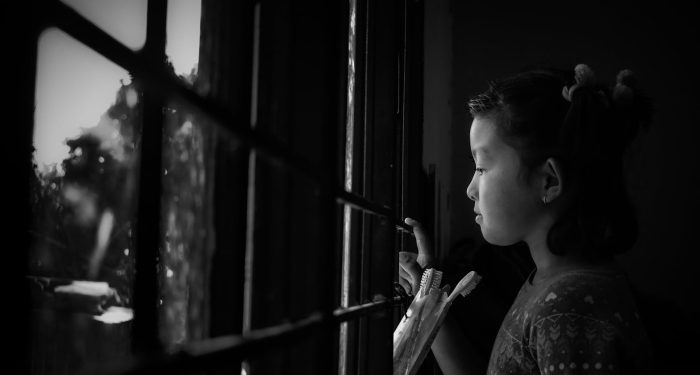
The difference between loneliness and solitude isn’t who’s around you—it’s how you see your own company.

Add VegOut to your Google News feed. 
Ever had that moment where you're surrounded by people at a party, yet feel utterly disconnected?
I spent most of my mid-20s there. Even though I was doing everything "right" by conventional standards, the loneliness felt crushing, especially when I was actually alone.
The turning point came during those warehouse breaks when I'd sit by myself, scrolling through philosophy articles on my phone. Something clicked: being alone wasn't the problem. The problem was that I'd never learned how to be my own companion.
Since then, I've discovered that solitude, when approached with the right mindset, can be transformative. It's not about becoming a hermit or convincing yourself you don't need people. It's about building a relationship with yourself that's so solid, being alone becomes a choice rather than a punishment.
These seven books completely changed how I experience solitude. They taught me that the difference between loneliness and peaceful solitude isn't about circumstances - it's about perspective.
1. "Solitude" by Anthony Storr
You know that voice telling you something's wrong with you for enjoying alone time? This book will shut it up for good.
Storr, a psychiatrist, dismantles the myth that we need constant connection to be psychologically healthy. He shows how some of history's greatest minds - from Beethoven to Einstein - relied on solitude for their breakthroughs.
What struck me most was his point about creativity requiring alone time. Those hours I spent feeling guilty for wanting to be alone? Turns out they were exactly what my brain needed to process, create, and grow.
The book doesn't romanticize isolation. Instead, it presents solitude as a skill - something you can develop and use strategically. Storr argues that our capacity to be alone determines the depth of our relationships. When you're comfortable in your own company, you stop clinging to others out of desperation.
2. "Hidden Secrets of Buddhism: How To Live With Maximum Impact and Minimum Ego"
Full disclosure: I wrote this one. But hear me out - the Buddhist approach to solitude fundamentally shifted how I understood being alone.
Buddhism teaches that loneliness comes from craving external validation and connection. The more desperately we grasp for others to fill our void, the lonelier we become. It's like trying to fill a bucket with a hole in the bottom.
The book explores how meditation and mindfulness transform solitude from something to endure into something to embrace. When you stop running from your thoughts and start observing them with curiosity, alone time becomes fascinating rather than frightening.
One practice I share involves treating yourself like you would a good friend. Sounds simple, but when was the last time you actually enjoyed your own company the way you enjoy being with someone you love?
You can find it here: Hidden Secrets of Buddhism: How To Live With Maximum Impact and Minimum Ego.
3. "How to Be Alone" by Sara Maitland
Maitland does something brilliant - she separates solitude from loneliness entirely. They're not on the same spectrum; they're different experiences altogether.
The book reads like a practical manual. She covers everything from taking yourself to dinner (without scrolling your phone) to spending days in nature alone. Each chapter builds your "solitude muscles" gradually.
What I love most is her honesty about the challenges. She doesn't pretend that learning to be alone is easy. There's a whole section on dealing with the "white noise" of your mind when external distractions disappear.
She also explores the cultural prejudice against solitude. Why do we pity people eating alone in restaurants? Why is "loner" an insult? Once you see these biases, you stop internalizing them.
4. "Solitude: In Pursuit of a Singular Life in a Crowded World" by Michael Harris
This award-winning book directly speaks to millennials navigating the tension between constant connectivity and genuine alone time.
Harris examines how social media and smartphones have created what he calls "strangely crowded loneliness" – we're always connected, but only shallowly so. Sound familiar? That feeling of being surrounded by people yet somehow isolated is the defining contradiction of our generation.
The book explores the neuroscience behind why we reach for our phones within 15 minutes of waking up (89% of 18-24 year-olds do this immediately). Harris unpacks the "ludic loops" – those addictive reward cycles in apps that give us dopamine hits and keep us perpetually distracted from real solitude.
What makes this particularly relevant is Harris's focus on reclaiming solitude in modern urban life. He doesn't ask you to retreat to a cabin in the woods permanently. Instead, he provides practical insights on finding genuine quiet within the chaos of city living and constant digital noise.
The book combines personal narrative with research from neuroscientists and psychologists, exploring how true solitude improves creativity, relationships, and self-knowledge. Harris examines everything from how wandering without GPS opens us to discovery, to why silence has become so uncomfortable we'll do anything to avoid it.
5. "Laughing in the Face of Chaos" by Rudá Iandê
Just finished this one last week, and Rudá Iandê's shamanic perspective on solitude blew my mind. As I've mentioned before when discussing his work, his approach cuts through typical self-help fluff.
The book argues that loneliness is actually resistance to being with yourself. Iandê writes: "We are all wanderers in a strange and inscrutable world, fumbling our way through the darkness with only the faintest glimmer of light to guide us."
His insights pushed me to examine why I'd historically avoided being alone. Turns out, I was terrified of meeting myself without masks or distractions. The book inspired me to see solitude as a sacred space for dropping the performance and discovering who I actually am beneath all the roles I play.
What makes this different from typical mindfulness books is the shamanic element. Iandê treats alone time as vision quest territory - a place where profound transformation happens if you're brave enough to stay present.
6. "Journal of Solitude" by May Sarton
Reading Sarton's diary of a year spent mostly alone in New Hampshire felt like eavesdropping on someone's deepest thoughts. And that's exactly what makes it powerful.
She doesn't sugarcoat solitude. Some entries are dark, dealing with depression and creative blocks. Others celebrate the freedom of not having to consider anyone else's needs or schedules. It's the most honest portrait of alone living I've found.
What stayed with me was her observation that solitude reveals who you really are. Without an audience, without anyone to impress or accommodate, your true self emerges. Sometimes that's beautiful. Sometimes it's uncomfortable. Always it's necessary.
The book helped me understand that feeling lonely while alone doesn't mean you're doing it wrong. These feelings are part of the process of befriending yourself.
7. "The Lonely City" by Olivia Laing
Laing moves to New York, goes through a breakup, and finds herself profoundly alone in a city of millions. Instead of fighting it, she dives deep into the experience.
The book weaves her personal story with profiles of artists who channeled loneliness into art - Edward Hopper, Andy Warhol, David Wojnarowicz. She shows how their solitude, though painful, produced work that connects millions of lonely people.
This reframing changed everything for me. Loneliness isn't a problem to solve but a universal human experience to explore. When you stop seeing it as failure and start seeing it as data about your inner world, everything shifts.
Laing also tackles modern loneliness - how technology promises connection but often delivers its opposite. Her insights on social media as "performative intimacy" explained why scrolling through friends' posts often left me feeling more isolated.
Final words
These books taught me that mastering solitude isn't about becoming someone who doesn't need people. It's about becoming someone who chooses connection from wholeness rather than desperation.
The paradox? The better you become at being alone, the richer your relationships become. When you stop needing others to complete you, you can finally love them freely.
Start with whichever book speaks to you most. Take your time. Being comfortable alone isn't a race - it's a lifelong practice that gets richer with age.
Remember, every person you admire for their confidence and authenticity has spent serious time alone, figuring out who they are when nobody's watching. Your solitude isn't empty space waiting to be filled. It's sacred territory where your truest self lives.
The next time you find yourself alone, instead of immediately reaching for your phone or making plans, try sitting with yourself. You might be surprised by the person you meet there.