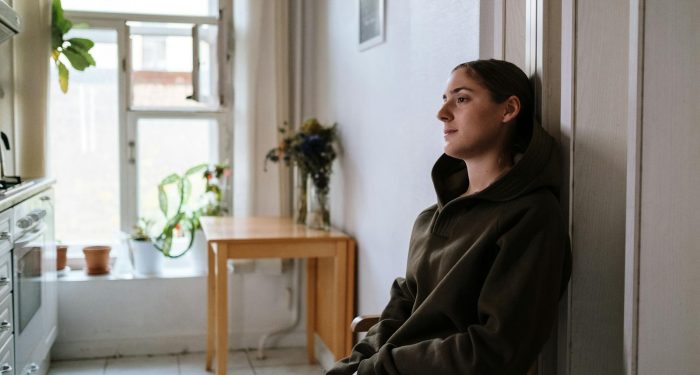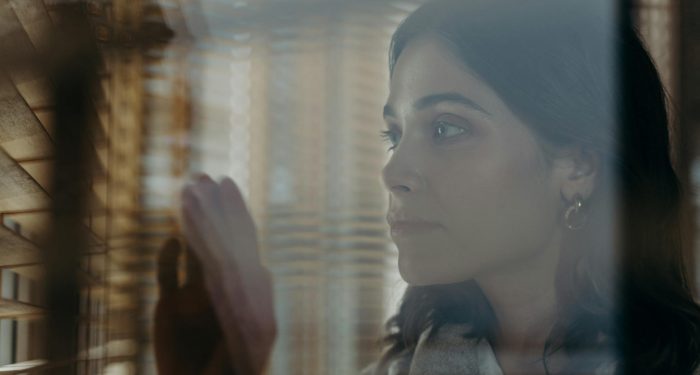
They're the parents who hear their mother's harsh voice escape their own lips during a meltdown, feel their father's dismissiveness creeping into their tone, and somehow find the strength to pause mid-sentence and choose differently—not because they've healed from their own childhood wounds, but because they refuse to pass them on.
A growing body of research on intergenerational trauma suggests something counterintuitive about the parents who break cycles of emotional neglect. According to data from the CDC's Adverse Childhood Experiences (ACEs) study, roughly 61% of adults report at least one adverse childhood experience, and nearly 1 in 6 report four or more. Yet many of these individuals go on to raise children in environments markedly different from the ones they survived. The interesting part isn't that they healed first. Most of them didn't.
The most fiercely loving parents in the research literature — and in ordinary life — are often the ones who grew up feeling invisible, unheard, or emotionally abandoned. They didn't wait for some therapeutic finish line before becoming attentive caregivers. They decided, somewhere in the middle of their own unresolved pain, that their children would have what they never did. And that decision, made imperfectly and without ceremony, may be among the most psychologically significant acts a person can undertake.
The myth of healing first
We live in a culture that tells us we need to fix ourselves before we can help anyone else. Put on your own oxygen mask first, right? But what happens when you're raising kids while still gasping for air yourself?
Psychology Today notes that "Studies show that unresolved trauma in a person's life can negatively affect his or her children." And yes, that's true. But here's what the research doesn't always capture: the everyday heroism of parents who know they're carrying unresolved trauma and choose, moment by moment, to do things differently anyway.
The pattern is observable across a wide range of people. Parents who grew up with emotional neglect often become the most attentive, present caregivers in their peer groups. They're not perfect. They mess up. They yell sometimes when they promised themselves they never would. But they keep showing up, and the consistency of that showing up is, in itself, a form of data — evidence that conscious decision-making can override inherited behavioral scripts, even without full resolution of the underlying wound.
Making the decision in real time
Think about what it means to break a cycle while you're still caught in its undertow.
You're exhausted from work, your kid is having a meltdown, and suddenly you hear your parent's voice coming out of your mouth. That dismissive tone. That impatience. And in that split second, you have to choose. Do you follow the script that was written for you, or do you pause, breathe, and write a new one?
Zuri White-Gibson explains that "Trauma can be passed on to future generations through how a parent interacts with their children, the behaviors and patterns children see their parents engaging in, or even through genetics or DNA."
Knowing this, these parents wake up every morning aware they're fighting against their own programming. They're rewriting code that's been running for generations.
The weight of unwitnessed courage
Nobody sees the late-night battles these parents fight with themselves.
Consider what it actually requires: white-knuckling through bedtime stories when no one ever read to you, learning to say "I love you" out loud because you never heard it yourself, sitting with a child's distress when your own distress was met with silence or hostility. The emotional labor involved is substantial and largely invisible, which may be part of why it goes unrecognized. There's no metric for it, no performance review, no external validation system. The parent who grew up emotionally abandoned and now holds space for a toddler's feelings about a broken crayon is performing an act of psychological reversal that most developmental researchers would call remarkable — and yet it happens in kitchens and living rooms and parked cars every single day, observed by no one who fully understands its significance.
Beverly Engel, therapist and author, describes how "Emotional abuse has been described as an assault on the soul and in some cases, has been described as 'soul murder.'"
Surviving that kind of childhood wound and then choosing to pour love into another human being — to give what you never received — isn't just parenting. That's alchemy.
The science of breaking patterns
Here's something worth noting: research from the Journal of Adolescent Health indicates that parents with adverse childhood experiences can break the cycle of abuse by fostering safe, stable, and nurturing relationships with their children. The study highlights how positive social relationships can actually prevent maltreatment from continuing across generations.
But what does "fostering safe relationships" look like when you've never experienced one yourself? It looks like googling "how to validate your child's feelings" at 2 AM. It looks like practicing phrases in the mirror that feel foreign in your mouth: "Your feelings matter" or "I'm here for you no matter what."
The question worth sitting with is how many parents are simultaneously grieving the childhood they didn't have while trying to construct a better one for their kids. The overlap between those two processes — mourning and building — doesn't get enough analytical attention.
Living with contradictions
Kaytee Gillis, LCSW, points out that "In reality, many value family so much that they refuse to repeat harmful patterns and want to break the cycle."
This refusing, this wanting, it happens in the messiest possible circumstances. These parents are learning to comfort their children through tantrums while never having had their own emotions validated. They're helping with homework while carrying shame about their own education. They're building traditions from scratch because the ones they inherited were toxic.
What's observable in many of these families is a kind of real-time translation effort — parents converting their own painful experiences into emotional vocabulary they're still learning themselves. The fluency isn't there yet. The intent is.
The daily choice nobody celebrates
You know what deserves a standing ovation? The parent who was ignored as a child sitting through their kid's third retelling of a Minecraft story. The parent who grew up walking on eggshells now creating a home where mistakes are okay. The parent whose own needs were dismissed now asking their child, "What do you need right now?"
These small moments don't make headlines. There's no graduation ceremony for learning to regulate your emotions so you don't pass your dysregulation to your kids. Nobody throws a party when you successfully comfort your child through a nightmare even though nobody ever comforted you through yours.
Final thoughts
But here's the uncomfortable question that most cycle-breaking narratives avoid: is the decision enough?
The research is genuinely mixed on this. Some longitudinal studies suggest that unhealed parents, no matter how well-intentioned, transmit stress responses through their nervous systems — through tone of voice, through micro-expressions, through the things they can't quite control. Deciding the cycle stops with you doesn't guarantee it actually does. It's possible to love fiercely and still leak damage in ways you can't see from the inside.
So if you're one of these parents, the harder truth might not be that you're brave — though you are — but that bravery alone may not be the whole answer. The cycle might stop with you. Or it might just change shape. And the willingness to keep asking which one is happening, even when the answer is uncertain, might matter more than the original decision ever did.
What’s Your Plant-Powered Archetype?
Ever wonder what your everyday habits say about your deeper purpose—and how they ripple out to impact the planet?
This 90-second quiz reveals the plant-powered role you’re here to play, and the tiny shift that makes it even more powerful.
12 fun questions. Instant results. Surprisingly accurate.