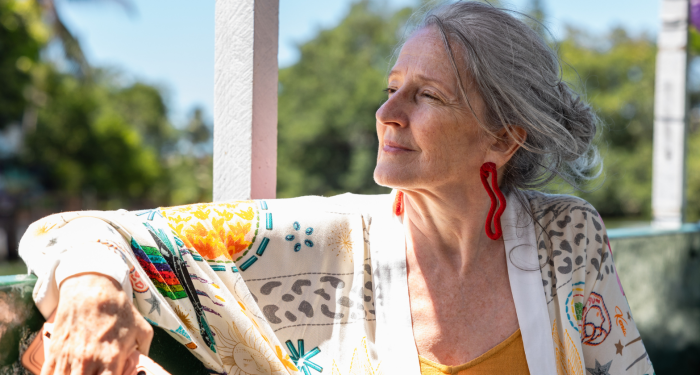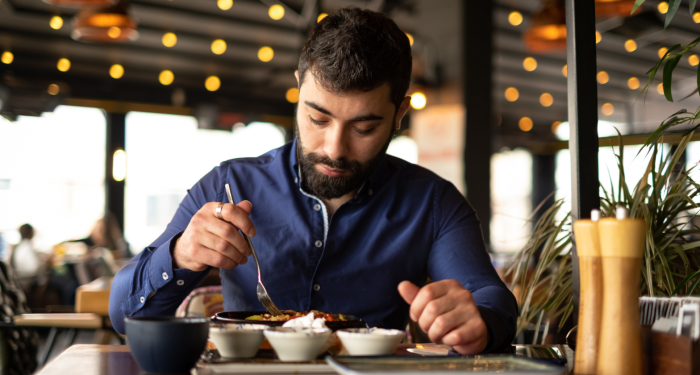
Not everyone who pulls back is disappearing. Some people are simply arriving, more fully, in the places and with the people where they actually want to be.
A few years ago, I watched someone I respect decline an invitation without explaining himself.
Not rudely. Not coldly. Just cleanly, with no apology trail behind it.
The person who invited him looked slightly confused, the way people do when they expected a performance of regret and didn't get one. He just said he wouldn't be there, smiled, and that was the end of it.
I thought about that moment for a long time afterward. I wasn't sure whether I admired it or whether it unsettled me, or both.
I think I was raised to believe that social availability was a form of goodness. That saying yes was generous and saying no was something you had to earn the right to, preferably by being very tired or very sick. Choosing not to spend time with someone, when you were technically free, was a kind of failure. Something to be hidden or dressed up.
It took me years to begin questioning that belief. And the questioning always started with the same observation: the people I knew who seemed most at peace weren't the ones saying yes to everything. They were the ones who seemed to have quietly decided something.
What it actually looks like from the outside
When someone starts becoming more deliberate about their time and company, it rarely announces itself as wisdom.
What you see instead is: fewer group texts answered. Fewer events attended. Less availability for conversations that go nowhere and friendships that stopped growing years ago.
From the outside, this can read as coldness. Withdrawal. A personality change. Sometimes people say the person has become distant, or difficult, or that they think they're better than everyone else now.
But there's another way to read the same behavior, and psychology supports it more than most people realize.
Research on social selectivity across the lifespan shows that as people get older, they become increasingly motivated to invest time in relationships they find emotionally meaningful, and less willing to spend that same time maintaining connections that feel hollow or draining. The psychologist Laura Carstensen, whose socioemotional selectivity theory has shaped how we understand aging and social motivation, found that this isn't indifference. It's prioritization. It tends to correlate with greater emotional wellbeing, not less.
The person who stops overextending isn't retreating from life. They're refining it.
The cost nobody talks about
Something happens when you say yes to everything for long enough.
Your time fills up, but not necessarily with things that feel like you. You stay at the party an hour longer than you wanted to. You agree to lunch with someone who leaves you feeling quietly erased. You keep a friendship alive through obligation while the genuine warmth between you has been gone for years.
None of this is dramatic. That's precisely what makes it difficult to name.
It doesn't feel like a crisis. It feels like ordinary social life. Until you notice a low-grade fatigue underneath it, the kind that isn't fixed by sleep, because it isn't about sleep. It's about the accumulation of time spent in ways that are slightly out of alignment with who you actually are.
Carstensen's framework points to something broader than aging: the capacity to protect your own emotional resources, to actively reduce time spent in connections that deplete rather than replenish, is part of what it means to regulate your emotional life well. It's less discussed than empathy or resilience, but it matters just as much.
The people who keep stretching themselves across every relationship, every group, every invitation, often do it out of a belief that their worth depends on their availability. That's worth looking at.
Why this gets misread as withdrawal
Part of the reason deliberate social choosing looks like withdrawal is that we don't have good language for it.
We have language for the social butterfly and for the loner. We have language for burnout and for introversion. But the particular experience of someone who is warm, present, and deeply relational — and who also knows exactly where their time and emotional energy belong — doesn't have a clean category.
So it gets filed under the wrong thing.
There's also the guilt that makes people assume something must be wrong. If someone was once available and is now less available, the social reading is often: they're pulling away. They're unhappy. Something happened.
Sometimes something did happen. Sometimes a person just got clearer.
Clarity about what you want doesn't require a catalyst. It can arrive slowly, through accumulated experience, through enough mornings of feeling depleted after contact that promised to be connecting, through enough months of showing up for people who were not showing up for you.
The shift isn't always dramatic. Sometimes it's just noticing, one day, that you are tired of performing ease you don't feel.
The version of you that finally stops apologizing for it
I notice this shift in myself and I don't always know what to call it.
There are people in my life I would make room for at any hour. There are others where I feel, when I see their name on my phone, a slight and familiar heaviness that I have learned to take seriously.
I used to override that signal constantly. I told myself it was anxiety, or a bad day, or unfairness on my part. And sometimes it was. But often it was information. The body knows a lot about where your energy actually goes and what it gets in return.
Learning to trust that information, rather than arguing yourself out of it every time, is one of the stranger forms of self-respect. It's quiet. It doesn't make a statement. It looks, from the outside, like someone who is just a little harder to reach now.
But from the inside, it feels like finally living closer to what's true for you.
What this doesn't mean
None of this is a case for walls or for the kind of protection that keeps everyone at an identical distance.
The research on close relationships is clear enough: human beings need genuine connection. Isolation is damaging in well-documented ways. The point is not to stop being open or available, it's to stop being available indiscriminately, as though your time and attention have no value and no cost.
There's a meaningful difference between the person who stops investing in relationships because they're afraid of closeness, and the person who stops overinvesting in relationships because they've developed a clearer sense of what closeness actually means to them. Both look quiet from the outside. The inside is completely different.
The second person isn't closed. They're just specific.
And specific, over time, starts to feel less like loss and more like the only honest way to be present for the people who actually matter to you.
A final thought
I keep thinking about that person who declined the invitation without performing regret.
I understand it differently now. It wasn't distance. It was a kind of integrity. He had decided something about how he wanted to use his time, and he wasn't ashamed of the decision, and he didn't need the other person to feel good about it in order for it to be valid.
There's something worth sitting with in that.
Not everyone who pulls back is disappearing. Some people are simply arriving, more fully, in the places and with the people where they actually want to be.
That isn't withdrawal. It might be one of the clearest-eyed things a person can do.