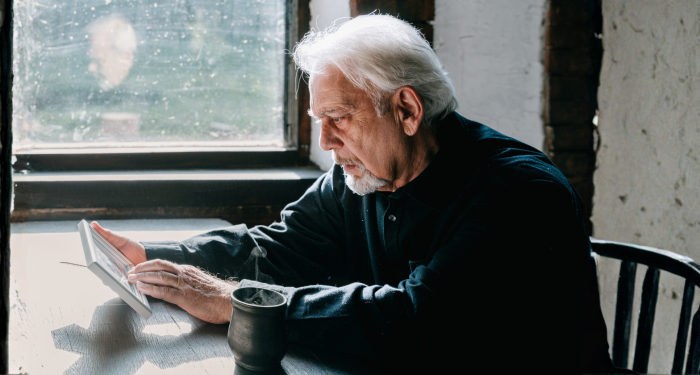
Sometimes, emotional disconnection doesn’t come with a fight or a farewell—it arrives quietly. You start to notice the missing curiosity, the empty conversations, the calm that doesn’t feel peaceful. In this piece, Avery explores seven subtle but powerful signs that someone may have emotionally checked out, even if they haven’t said a word. It’s a gentle reminder to listen not just to what people say, but also to what they stop saying.
Sometimes, silence speaks louder than words.
We often think that if someone hasn’t explicitly told us they’re upset or checked out, everything must be fine.
But in reality, emotional withdrawal rarely announces itself with fireworks.
It creeps in quietly, in the pauses, the small changes, the missing warmth.
In my experience, emotional disconnection isn’t always dramatic. It’s subtle.
You might not even notice it at first, but over time, the relationship starts to feel a little emptier, like a room with the furniture removed one piece at a time.
If you’ve been sensing that something feels off with someone close to you, here are seven quiet signs they may be emotionally done, even if they haven’t said a word.
1) Conversations become mechanical
Have you ever noticed when a conversation starts to feel more like checking off a to-do list than connecting with another person?
That’s often one of the first quiet signs of emotional withdrawal.
When someone is emotionally invested, conversations flow. There’s curiosity, laughter, and a natural back-and-forth.
But when they’ve started to pull away, their replies might shrink to one-word answers. “Yeah.” “Sure.” “Okay.”
Even their tone changes. It’s flatter. You might catch yourself asking follow-up questions just to keep the dialogue alive.
I once had a close friend who used to call me every Sunday morning. We’d talk about everything—work frustrations, favorite recipes, our latest running goals.
But then her texts became shorter, and the calls stopped altogether. When we did talk, it felt empty.
The connection was gone long before she admitted she was going through a tough time and needed space.
Sometimes, emotional distance hides in those small silences—not in what’s said, but what’s no longer being shared.
2) They stop asking about your life
When someone genuinely cares, they’re curious about your world.
They want to know how your presentation went, what you planted in your garden, or how your weekend yoga class turned out.
But when someone has checked out emotionally, that curiosity fades.
They might still respond when you talk, but they rarely initiate questions anymore. Your updates are met with polite nods or distracted “that’s nice” comments.
If you think about it, curiosity is a form of care. When we stop caring, we stop being curious.
This doesn’t always mean they’re angry or resentful. Sometimes it’s simply emotional exhaustion.
But either way, when someone no longer invests in your story, it’s often because they’re rewriting their own without you in it.
3) Their empathy disappears
One of the hardest things to experience is when someone who once supported you emotionally now seems unmoved by your feelings.
You might share something painful, and instead of comfort, you get indifference or even mild irritation. “I don’t know what to tell you,” they might say.
Or worse, they change the subject.
This emotional flatlining can be confusing because you remember how different things used to be. It’s like hugging a statue.
The shape is familiar, but the warmth is gone.
Empathy requires emotional energy. When someone is emotionally done, they stop extending that energy toward you.
They’re conserving it—for themselves or for someone else.
And if you find yourself feeling like your emotions have become “too much” for them, that’s not about you being too emotional. It’s about them having checked out.
4) Their effort fades in quiet, practical ways

Emotional detachment often shows up not in big fights or slammed doors, but in everyday actions that suddenly stop happening.
They used to send a good morning text. Now you’re the only one reaching out.
They used to make plans. Now everything’s “we’ll see.”
They used to remember the little things—your favorite snack, your upcoming appointment, your birthday plans—and now those details slip by unnoticed.
I remember when my partner and I were going through a rough patch years ago. I noticed one morning that he’d stopped making me coffee.
It was something small, but it used to be his quiet way of showing care.
When it stopped, so did the unspoken affection that came with it.
Effort is the lifeblood of emotional connection. When the effort fades, so does the intimacy.
5) They seem calmer, but not in a good way
This one can be tricky because on the surface, it might look like peace. No more arguments. No more tension. But sometimes that calm isn’t resolution—it’s resignation.
If you’ve noticed that someone who used to care deeply about resolving issues now seems indifferent, it might not mean things are better.
It might mean they’ve emotionally checked out.
I’ve seen this dynamic play out in couples who say, “We just don’t fight anymore,” but their tone isn’t relieved—it’s hollow.
When someone stops reacting, it’s not always a sign of maturity or growth. Sometimes, it’s a quiet surrender.
Psychologists often refer to this as emotional disengagement. It’s the stage where people detach to protect themselves from further disappointment or pain.
The problem is, that emotional wall can become permanent if left unaddressed.
6) Their body language tells a different story
You can learn a lot about where someone stands emotionally just by observing their nonverbal cues.
When people care, their bodies lean toward you. They make eye contact, mirror your movements, and seem present in the space you share.
But when they’ve emotionally checked out, their body starts to say what their words won’t.
They might turn slightly away during conversations, keep their phone in hand while you’re talking, or sit farther apart than usual.
Even subtle gestures like avoiding touch, crossing arms, or not smiling as much can signal emotional distance.
I once read that body language accounts for over 70% of communication. That means silence isn’t empty—it’s full of meaning.
When someone’s body says, “I’m not here with you anymore,” believe it. They might still be in the room, but emotionally, they’ve already left.
7) You start to feel like you’re the only one trying
Here’s the thing: relationships are rarely balanced 50/50 all the time. Life happens, and sometimes one person carries more weight for a while.
But when that imbalance becomes permanent—when you’re the only one initiating, the only one caring, the only one showing up—that’s a quiet sign something deeper has shifted.
You might tell yourself it’s just a phase. You make excuses for their distance. “They’re busy.” “They’re stressed.”
But deep down, you can feel the energy isn’t mutual anymore.
I’ve been there too. I once found myself constantly chasing connection with someone who had emotionally checked out months earlier.
It took me a long time to realize I was trying to resuscitate something they’d already buried.
It’s painful to admit, but sometimes, the effort to “fix” things alone becomes its own form of self-neglect. Love shouldn’t feel like a solo performance.
Final thoughts
When someone is emotionally done with you, it’s rarely about one big event. More often, it’s a gradual fading—a quiet retreat of attention, empathy, and energy.
And because it’s quiet, it’s easy to miss until it’s almost complete.
But recognizing these signs early can save you from pouring into a relationship that no longer has space for mutual care.
It doesn’t mean you have to walk away immediately. Sometimes, it’s an opportunity to talk openly and reset expectations.
Other times, it’s the wake-up call you need to accept that things have changed.
Either way, awareness is empowering.
You can’t control when someone chooses to disconnect emotionally, but you can choose how you respond.
You can choose to value your emotional energy, to stop chasing indifference, and to create space for relationships that feel reciprocal and alive.
Because the truth is, silence might mean an ending, but it can also be the beginning of something new.
A season where you prioritize your peace, your self-worth, and your own emotional clarity.
And that, in my view, is never a loss.