Taking pictures from an airplane window is not trivial. That's a deeply human need being met in one of the few ways modern life reliably allows.

Add VegOut to your Google News feed. 
I used to joke that I took the window seat on flights purely out of habit. But a few years back, while somewhere over the Atlantic, I found myself pressing my phone against the glass for what must have been the tenth time in an hour. Clouds below, nothing above, and something in my chest I hadn't felt in years. Quiet. Real, uncomplicated quiet.
I wasn't photographing a view. I was trying to hold onto a feeling I couldn't name yet.
If you've ever done the same thing, you know exactly what I'm talking about. And if you've ever scrolled through someone's Instagram and wondered why half their feed is grainy airplane window shots, I'd gently suggest you dig a little deeper before writing it off as basic travel content.
Because what's really going on up there is far more interesting than aesthetics.
1) The modern world doesn't offer many truly unreachable moments
Think about the last time you were completely, genuinely unreachable. Not just "quiet mode on" or "I'll check my messages later." I mean actually beyond reach.
For most of us, those moments are vanishingly rare. There's always a notification, a message, someone who needs something. The expectation of availability is relentless, and most of us have quietly accepted it as the cost of modern life.
A flight is different. Once that cabin door closes, you are, for a few hours, officially off the grid. No one expects an immediate response. Your inbox is technically right there, but reaching it feels like effort enough that most people just... don't.
Psychologists call this kind of enforced disconnection a "permission structure." We're not ignoring our responsibilities, we're structurally prevented from meeting them. And that distinction matters enormously to people who otherwise find it impossible to switch off.
The window photograph is a marker. It says: I was here. I was unreachable. And it felt like something.
2) Altitude changes how the brain processes time and obligation
There's a reason so many people report thinking more clearly on flights. Research in cognitive psychology points to something called "psychological distance," the idea that physical elevation quite literally changes how we think about our problems.
When you're 35,000 feet up, your anxieties don't disappear, but they shift. The thing you were catastrophizing about this morning suddenly looks more manageable from above. Deadlines feel less urgent. The mental chatter slows down.
I spent close to two decades in finance with my brain running at a pace that I thought was just normal. It wasn't. I had normalized a level of cognitive overload that was genuinely damaging. It took burning out completely before I understood what an uncluttered mind actually felt like.
Flights were some of the few places where I'd get a glimpse of it.
That's not nothing. For someone whose brain rarely slows down, the altitude isn't just altitude. It's relief.
3) It's a rare pocket of time that belongs entirely to you
Here's something worth sitting with: when was the last time you had two, four, or six uninterrupted hours that weren't scheduled, expected, or accounted for by anyone else?
For a lot of people, a flight is exactly that. Nobody can book a meeting during it. Your kids can't ask you for anything. Your boss can't drop something urgent in your lap. The time is structurally yours in a way that almost no other modern circumstance allows.
And the mind recognizes that. Even before the plane takes off, something in us starts to loosen.
I've noticed this with my own mornings, too. The early trail runs I do before the rest of the world wakes up carry a similar quality. Not because they're particularly meditative or productive, but because they belong to me. The airplane window captures that same thing, just at 30,000 feet with better clouds.
When people photograph that view, they're instinctively reaching for something that resonates with a deep need that most of us can't articulate clearly. The need for time that isn't extracted from us by obligation.
4) The view represents a physical break from identity
Here's the psychological piece that I think gets overlooked the most.
On the ground, you are somebody specific. You have a job title, a role in your family, a set of expectations you carry around like luggage. You are a parent, a manager, a partner, a reliable person who responds to emails promptly. Your identity is relentlessly reinforced by your environment.
In the air, that scaffolding falls away for a bit. Nobody up there knows what you do or what's expected of you. You're just a person in a seat, watching clouds.
This kind of identity suspension is something researchers have linked to increased creativity, emotional processing, and even better decision-making. When the ego gets a break, the brain does interesting things.
I came to understand this properly only after leaving my corporate career. For years my professional identity had been so tightly wrapped around what I did that I'd lost track of who I was outside of it. Burnout has a way of forcing that reckoning. The altitude does it more gently, and just for a few hours, but the underlying mechanism is similar.
Photographing the view is a way of anchoring that suspended state. Capturing proof that you existed, for a moment, outside your usual context.
5) It's a form of sensory grounding that we rarely practice
Most of us spend our days in our heads. Ruminating, planning, problem-solving, anticipating. The body is just the thing that carries the brain from meeting to meeting.
Looking out an airplane window is, in the most basic sense, a sensory experience. The light changes constantly. Clouds have texture and depth. The landscape below shifts from cities to farmland to coast. There's something visually absorbing about it that pulls attention out of the mental loop and into the present moment.
This is essentially what mindfulness practices are trying to do, and people have been doing it for years from 3B without realizing it's a thing.
The Kaplans' Attention Restoration Theory describes exactly this: natural scenes with shifting, effortless visual input, like clouds and landscapes, allow our overworked directed attention to recover because we're no longer forcing focus. The view out the window does the same job as a walk in the park, just 30,000 feet up.
I was deeply skeptical of meditation for a long time. Too analytical, too impatient. But what I eventually realized is that I'd been doing it accidentally on trail runs and, yes, in window seats. The repetitive visual input, the narrowed focus, the absence of interruption. It all adds up to something the nervous system recognizes as rest.
Photographing the moment is a way of honoring it. Of saying: this was real, this mattered, I want to remember it felt like this.
6) For people who struggle to rest, it's the only guiltless pause
This one hits close to home.
I spent the better part of my thirties unable to rest without feeling like I was wasting time. Productivity had become so tied up with my sense of worth that stillness felt like failure. Taking a nap felt irresponsible. A slow weekend made me anxious. I had to be doing something, always.
A lot of people carry this exact same weight, and they don't even know it.
On a flight, though, the cultural permission to do nothing is built in. You're not being lazy, you're traveling. You're not avoiding your to-do list, you're literally airborne. The excuses are handed to you.
Psychologists who study rest and recovery note that for high-achieving, anxiety-prone people, this kind of permission structure is often the only way they allow themselves to truly decompress. The external constraint removes the internal guilt.
The window photograph, in this context, is almost a souvenir of their own permission. A reminder that they were allowed to pause, and they did, and it was okay.
7) It's the brain's way of marking a threshold between states
Airports and flights exist in their own psychological category. Anthropologists call these "liminal spaces", thresholds between one state and another, one place and another, one version of yourself and the next.
Humans have always placed special significance on liminal moments. We mark them with rituals. Weddings, graduations, New Year's Eve. They signal transition, possibility, the sense that things might be different on the other side.
A flight is inherently liminal. You're between departure and arrival, between the life you left and the one you're heading toward. Suspended, literally and psychologically, in a space that belongs to neither.
Photographing the window is a quiet ritual, a way of marking that in-between state as significant. Of saying: something is changing. I am between one version of my life and another, and I want to remember this moment of suspension.
I've taken some of my most important decisions at altitude. Something about being untethered from daily context makes it easier to think clearly about what actually matters. I don't think that's a coincidence.
8) It might be the closest many of us get to genuine awe
Psychologist Dacher Keltner has spent years studying the emotion of awe, and what he's found is striking. Awe, defined loosely as the feeling triggered by encountering something vast and beyond our current framework of understanding, has measurable effects on wellbeing. It lowers inflammation markers, reduces self-focused thinking, and increases feelings of connection and meaning.
Most of us don't encounter enough of it. Our daily lives are deliberately scaled to human size, familiar, manageable, predictable.
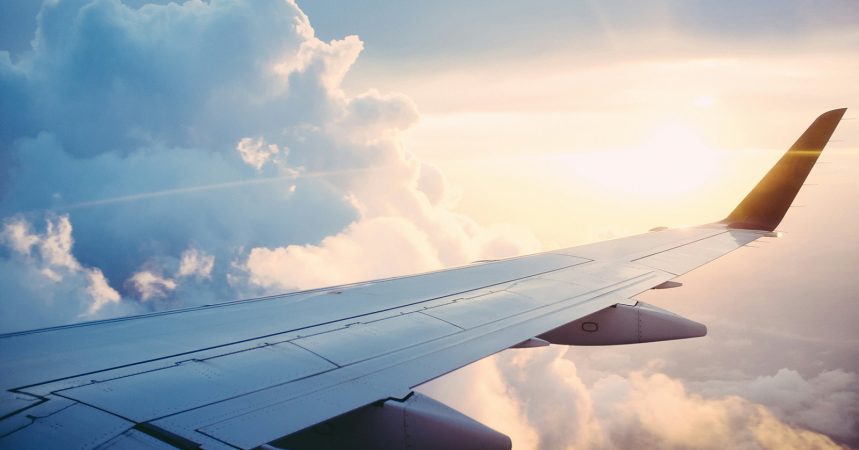
Looking out an airplane window at a cloudbank that stretches to the horizon, or at a city reduced to a tiny grid of light below, or at a sky that shifts from blue to violet to black, can genuinely trigger awe in a way that few everyday experiences match.
The people photographing it aren't being sentimental. They're responding to something real. Something the brain has been waiting for.
Final thoughts
The next time you see someone pressing their phone against an airplane window, I'd resist the urge to roll your eyes.
What you're actually looking at is someone who found a rare pocket of time that belongs entirely to them, in a space where their obligations cannot reach them, looking out at something too vast to reduce to a to-do list.
That's not trivial. That's a deeply human need being met in one of the few ways modern life reliably allows.
And if you've never done it yourself, maybe the next flight you're on is worth putting the laptop away for. Press your forehead against the glass. Watch the clouds. Let the altitude do its thing.
The email can wait. The view is better, and so is the feeling.
If You Were a Healing Herb, Which Would You Be?
Each herb holds a unique kind of magic — soothing, awakening, grounding, or clarifying.
This 9-question quiz reveals the healing plant that mirrors your energy right now and what it says about your natural rhythm.
✨ Instant results. Deeply insightful.

Avery White
Formerly a financial analyst, Avery translates complex research into clear, informative narratives. Her evidence-based approach provides readers with reliable insights, presented with clarity and warmth. Outside of work, Avery enjoys trail running, gardening, and volunteering at local farmers’ markets.
More Articles by Avery