Living with just 100 possessions stripped away clutter—and showed me my identity wasn’t in my things but in how I use them.
When I told friends I was cutting my life down to 100 possessions, most thought I was joking.
A few asked if I’d joined a monastery.
But I was curious—what would life feel like if I stripped away almost everything I owned? I wasn’t moving cross-country, starting over, or making a public statement.
I was testing what psychologists call a “constraint experiment”: putting artificial limits around my choices to see what new insights emerge.
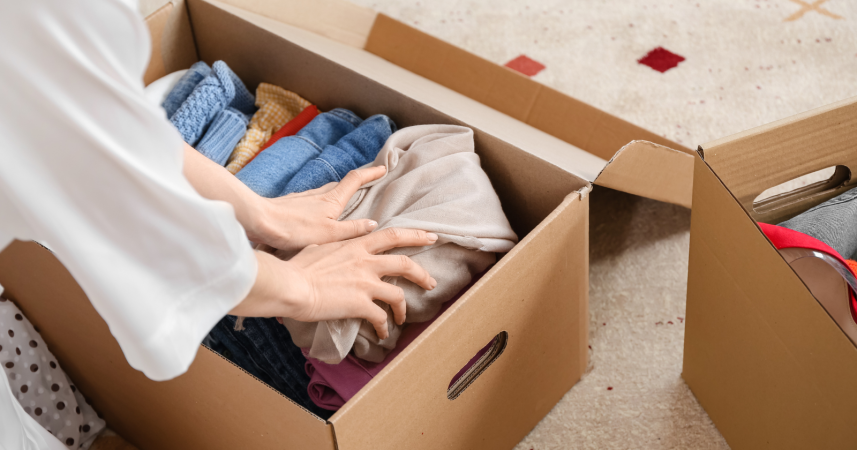
I counted honestly: clothes, shoes, tech, notebooks, kitchenware, even the bike in the hallway. If I owned it, it counted. Consumables (toothpaste, food) didn’t.
I hit 100 with more compromises than I expected and moved through my days with less than a third of what I once thought was “normal.”
The lessons weren’t tidy or instant—but they’ve left marks I can’t ignore.
The weight I didn’t know I was carrying
The first week, I noticed a quiet absence of background stress. Normally, mornings were cluttered: a closet of options I barely wore, gadgets that needed charging, stacks of half-used notebooks.
By cutting down, I gave myself less to choose from, and the relief felt physical.
Psychologists studying decision fatigue have long argued that our brains tire quickly when forced to pick between too many options, and I felt that truth firsthand.
With five shirts instead of twenty, I was out the door faster and oddly calmer.
But it wasn’t just about mornings. Walking into my apartment, there was no pile of “someday” stuff staring me down—no guitar I never played, no shoes that hurt but looked great in theory.
The absence of those tiny guilt-triggers felt like reclaiming a little square of mental peace. I thought minimalism was about style. Turns out it was about breathing space.
How I learned what I actually value
With only 100 slots to play with, sentimentality got tested.
That box of old birthday cards? Lovely, but did I want them more than my cast-iron skillet? A sweater my mother bought me?
Practical and personal—easy yes.
Through the process, I discovered that usefulness became its own form of sentimentality. The pen I wrote with daily meant more to me than ten keepsakes I never touched.
I started asking: does this possession actively support the life I want to live now?
If not, it belonged in someone else’s hands. That framing made me less ruthless and more compassionate toward my stuff. I wasn’t discarding memories.
I was giving them back their weight, acknowledging that the past lives in me, not in the objects. The things I kept grew in meaning.
Every item had a role.
The awkward social moments
Friends asked why I was wearing the same boots again.
My family wondered why my kitchen looked “unfinished.” Minimalism sounds Instagram-clean until you show up to three different dinners in the same shirt. Here’s what surprised me: after the first comment, people stopped noticing. I was the one hyper-aware of repeating outfits or missing décor.
Psychologists call this the “spotlight effect”—we overestimate how much others notice us. In practice, most people are too busy worrying about their own shoes to track mine. Once I realized that, the embarrassment softened into freedom.
My energy shifted from maintaining appearances to showing up fully. The experiment made visible how much middle-class identity is tied up in rotation: new outfits, seasonal homeware, the sense of “fresh.”
Letting go of that cycle showed me respect and warmth come from presence, not props.
Finding calm inside chaos
One lesson I didn’t expect from living with 100 possessions was how much chaos actually remained.
Flights were delayed, bills still arrived, people still judged, and life stayed messy in ways no decluttering could fix.
The shift was in how I related to that mess.
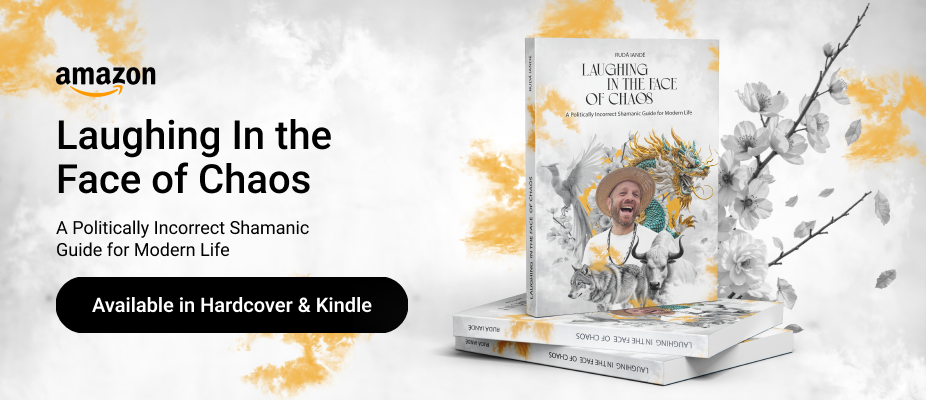
A book I read during the experiment — Rudá Iandê's Laughing in the Face of Chaos — framed it perfectly: the goal isn’t to eliminate disorder but to stop giving it all your energy. When you shrink the number of things around you, the leftover noise becomes easier to laugh at instead of fight.
That laughter is powerful. It keeps you flexible, curious, and less likely to reach for possessions as armor.
Minimalism taught me simplicity. Rudá reminded me that chaos doesn’t vanish — it just gets funnier, lighter, and more livable when you meet it with a grin.
Money, space, and unexpected abundance
Cutting down to 100 things didn’t make me rich. But it did reroute how money flowed.
Without the option to keep buying “just in case,” I stopped “target runs” that ended with $80 of random.
I spent less because there was no room for impulse. What I did buy, I bought better: one excellent frying pan instead of three average ones, one high-quality backpack instead of two that would rip in a year.
The bigger surprise was how space felt. My apartment didn’t just look bigger — it functioned bigger. Fewer dishes meant the sink never buried me.
Fewer knickknacks meant cleaning was faster.
With less, I wasn’t deprived. I was supported. The paradox: having fewer possessions made me feel more abundant. The things I had earned attention, and that attention translated into gratitude.
What came back when the experiment ended
I don’t live with exactly 100 possessions anymore. The number crept back up—books, hobby gear, a jacket I needed when the weather turned. But the experiment rewired how I relate to stuff.
I no longer add things casually. If I bring something in, it has to displace something else or clearly solve a problem.
The deeper shift was internal. Living with 100 things showed me that identity is portable.
I didn’t dissolve without décor or options. I felt clearer. I’m still middle-class, still working, still buying groceries—but I carry less fear of being “less than” without things around me to prove otherwise.
The experiment wasn’t about asceticism — it was about reminding myself that who I am isn’t in the closet or on the shelf.
Final thoughts
I set out thinking I’d do a quirky declutter challenge. What I got was a perspective reset.
Living with 100 possessions wasn’t sustainable forever, but it revealed how possessions can quietly run our schedules, our money, and even our sense of self.
Psychologists call it “the extended self” — the idea that we attach our identity to objects. Shrinking that extension for a while reminded me where my self actually lives.
Now, when I look at what I own, I ask: Is this a tool, a joy, or a weight? If it’s a weight, I let it go.
The lesson isn’t that fewer things equal more virtue. It’s that fewer things gave me the clearest mirror I’ve ever had. And once you’ve seen yourself that way, you don’t forget.