
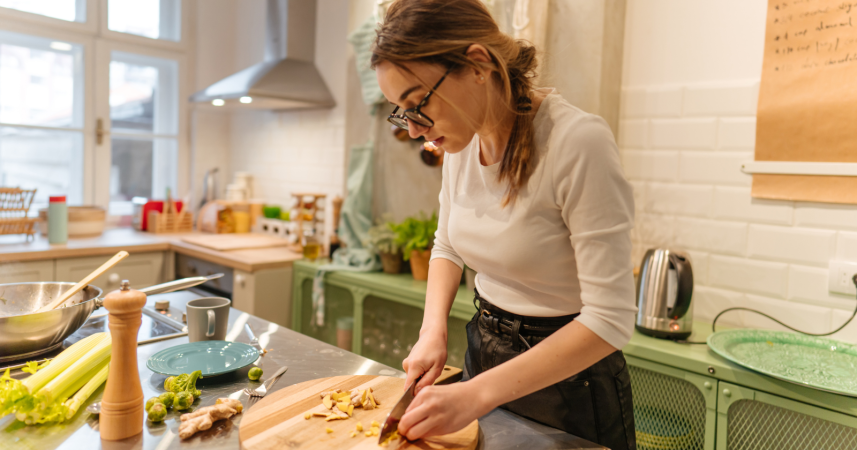
A month of vegan meal prep didn’t just change how I eat—it changed how I think about time, energy, and ease.

Add VegOut to your Google News feed. 
Every Sunday for nearly a year, I told myself I’d start meal prepping “next weekend.” I’d scroll through rainbow-colored grain bowls, tidy glass containers with turmeric tofu, and perfectly chopped produce nestled beside hummus in Bento-style trays.
It looked efficient. Organized. Calm.
I imagined a version of myself who opened the fridge on Wednesday and found perfectly portioned nourishment instead of half an avocado wrapped in foil and a questionable jar of lentil soup.
And yet—I kept pushing it off.
Why?
Because it looked exhausting. And as a vegan, I had extra doubts: Would it all turn mushy by day three? Would reheated tofu still taste like food? Would I get bored?
Eventually, after one too many nights of oatmeal-for-dinner, I committed. Thirty days. Four weeks. Just me, my kitchen, and a goal to figure out if meal prepping as a vegan was worth the effort.
What I learned wasn’t revolutionary, but it was clarifying — and now, it’s a system I actually want to stick with.
Week one: too many containers, not enough rhythm
I came in hot. I made quinoa, brown rice, lentils, roasted chickpeas, steamed broccoli, marinated tofu, tahini dressing, roasted sweet potatoes, and three days’ worth of overnight oats. It took almost four hours. My kitchen looked like a lab experiment gone rogue. I labeled everything, stacked it all in the fridge, and felt like a god.
Until Tuesday.
The lentils turned pasty. The quinoa dried out. The broccoli smelled faintly of regret. And I couldn’t eat the same bowl combo one more time without imagining myself chewing cardboard.
By Thursday, I gave up and ordered Thai food.
Lesson learned: making everything at once does not equal a satisfying week. It equals fatigue. And boredom.
Week two: component-style prep changed everything
Determined to try again, I shifted my approach: instead of pre-making full meals, I prepped components.
That meant choosing a few cooked bases (brown rice, sweet potatoes), two proteins (baked tofu and canned chickpeas), one big sauce (peanut-lime), and raw elements I could assemble fresh.
Suddenly, the game changed.
Each day, I had options. A warm grain bowl on Monday. A chopped salad with chickpeas and dressing on Tuesday. Tofu lettuce wraps on Wednesday. No full meal was locked in. Nothing felt stale.
The prep took about 90 minutes, including cleanup. And—maybe most importantly—I didn’t dread opening the fridge. I looked forward to seeing how I could remix what I’d made.
What worked here wasn’t just variety.
It was agency. The ability to improvise made all the difference.
Week three: unexpected fatigue, and what I adjusted
By week three, I noticed something surprising: I was getting tired of chopping. Not tired of eating healthy. Not tired of the food itself. Just tired of the prep labor. Even with 90-minute blocks, the kitchen felt like a second job.
So I started leaning on convenience upgrades:
- I bought pre-chopped veggies for stir-fries.
- I swapped dry lentils for canned ones.
- I embraced frozen peas, frozen mango, and pre-washed greens.
These tweaks made a big difference. I also gave myself permission to repeat more meals. I used to think “good meal prep” meant constant innovation. It doesn’t. In fact, repeating a meal you love—say, tofu tacos or a killer curry—is an act of kindness, not laziness.
My mantra by the end of that week: Repeat and rest.
Week four: travel days, cravings, and a little real talk
I traveled twice during week four. One trip was a two-day conference where catered food was unpredictable. The other was a quick family visit where everyone ate differently. I thought my prep streak would snap—but it didn’t.
Why?
Because I finally prepped with flexibility in mind. Instead of full meals, I brought snacks that filled gaps: a small container of trail mix, chia pudding, cut-up veggies with hummus, and shelf-stable cartons of soy milk.
I also got honest with myself about cravings. There were days I didn’t want quinoa or tofu or kale, no matter how “balanced” it was.
On those days, I pivoted. I made chickpea pasta with jarred tomato sauce. I roasted potatoes and ate them with ketchup. I ordered veggie sushi. I kept the spirit of prep—having something ready—but let the rules bend.
That honesty kept me consistent, because the process finally felt sustainable.
The habits that stuck—and the ones I dropped
By the end of the month, I wasn’t meal prepping perfectly. But I was prepping better. My system had become both simpler and more personalized. Here’s what stuck:
What worked:
- Component prep over full-meal prep (hello, remix freedom)
- Batch sauces and dressings (the unsung heroes)
- A “grain + green + protein” formula that I could mix and match
- Snack bins with roasted nuts, fruit, and protein bites
- Planning just 3–4 days ahead, not the full week
What didn’t work:
- Prepping full meals on Sunday for the entire week
- Big-batch soups that turned mushy or monotonous
- Trying to be a food stylist (I don’t need Instagram to approve my lunch)
- Skipping prep entirely for weekends (led to hangry delivery orders)
The emotional payoff I didn’t expect
This might sound silly, but the biggest benefit of vegan meal prepping wasn’t the food.
It was the mental clarity.
Before, I spent so much energy deciding what to eat. Should I cook? Should I forage? Should I cave and eat cereal again? That low-grade decision fatigue ate away at my creativity and my patience.
With prep, that bandwidth came back. I wrote more. I responded to texts faster. I had fewer moments of “ugh, I forgot to eat.” Food was no longer a friction point. It was just there—ready, satisfying, non-dramatic.
That peace has become a new baseline I don’t want to lose.
Final thoughts: perfection is overrated, rhythm is everything
If I could give past-me a single tip, it would be this:
Don’t aim to meal prep like a YouTuber. Aim to meal prep like someone who wants less friction and more energy.
That means asking what feels doable. Skipping the food guilt. Prepping for the person you are — not the version of you that wakes up craving kale chips and loves washing five pots.
After 30 days, I don’t prep rigidly. But I do block 90 minutes twice a week to make food I actually want to eat. I lean on shortcuts. I forgive my skipped days.
And I trust that simple food, prepped with care, is more nourishing than any “perfect” plan.
What’s Your Plant-Powered Archetype?
Ever wonder what your everyday habits say about your deeper purpose—and how they ripple out to impact the planet?
This 90-second quiz reveals the plant-powered role you’re here to play, and the tiny shift that makes it even more powerful.
12 fun questions. Instant results. Surprisingly accurate.












