In an age of endless optimization and productivity hacks, one writer discovers why Oscar Wilde's simple recipe for happiness—freedom, books, flowers, and the moon—might be the most radical life philosophy you'll ever need.

Add VegOut to your Google News feed. 
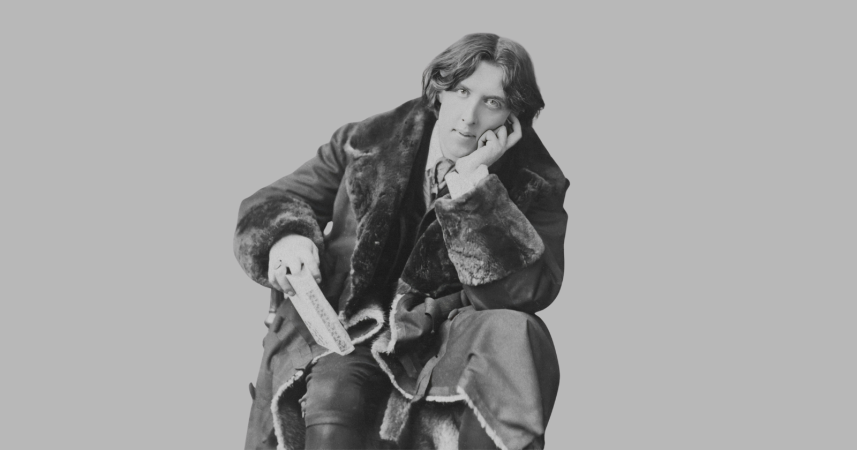
Oscar Wilde had it figured out, didn't he?
Picture this: you're sitting in a garden at dusk, book in hand, surrounded by the sweet scent of jasmine. The moon rises slowly above the horizon, casting silver light across the pages. No deadlines, no notifications, just you and the simple pleasures that make life worth living.
Wilde's words hit different when you realize how complicated we've made happiness. We chase promotions, scroll endlessly through feeds, and convince ourselves that joy lives somewhere in the future, after we've achieved just one more thing.
But what if happiness isn't that complex? What if it's as simple as having the freedom to choose, something beautiful to look at, and something meaningful to engage with?
I've spent years overthinking what it means to be happy. Trust me, I've read every self-help book, tried every productivity hack, and still found myself wondering why contentment felt so elusive. It wasn't until I started paying attention to the basics that things clicked.
The freedom to choose your own path
Freedom isn't just about grand gestures or dramatic life changes. Sometimes it's as simple as choosing to spend your lunch break reading instead of doom-scrolling. Or deciding to wake up 20 minutes earlier to sit with your coffee in peace.
I remember working in a warehouse years ago, feeling trapped by the monotony of it all. But during those breaks, when I'd pull out my phone and read about Buddhism and mindfulness instead of checking social media, I realized something powerful. Even in the most restrictive circumstances, we have choices.
The Buddhist concept of liberation isn't about escaping your life. It's about finding freedom within it. When you stop letting external circumstances dictate your inner state, that's when real freedom begins.
Think about it. When was the last time you exercised your freedom to just... not? Not respond immediately to that text. Not fill every moment with productivity. Not justify your existence through constant achievement.
Freedom means giving yourself permission to be unproductive sometimes. To read for pleasure, not self-improvement. To sit in your garden (or local park) without photographing it for Instagram.
Books as windows to infinite worlds
There's something magical about getting completely lost in a book. You know that feeling when you look up and realize three hours have passed, and you've been living in someone else's world entirely?
Growing up, I was that kid who'd rather spend Saturday afternoons at the library than anywhere else. I'd get so absorbed in books about philosophy and human behavior that my mom would have to practically drag me out when it closed.
Books taught me things school never could. A random book about Eastern philosophy I found at the local library as a teenager completely shifted my perspective on life. It planted seeds that would bloom years later into a completely different way of seeing the world.
In my own book, "Hidden Secrets of Buddhism: How To Live With Maximum Impact and Minimum Ego", I explore how such ancient wisdom can transform modern life. But honestly, every book has that potential if you approach it with curiosity.
The beauty of books is that they cost almost nothing but give you everything. A library card is free. Used bookstores are treasure troves. Even digital books can transport you anywhere for the price of a coffee.
When Wilde mentions books, he's not talking about cramming more productivity guides into your routine. He's talking about the pure joy of discovery, the pleasure of losing yourself in stories, ideas, and possibilities.
Finding beauty in simple things
Flowers might seem frivolous in our optimization-obsessed culture. They probably won't help you crush your goals(though there is some research suggesting they improve productivity!). But that's exactly the point.
Beauty for beauty's sake is revolutionary in a world that demands everything serve a purpose. When you stop to appreciate a flower, you're rebelling against the idea that every moment must be monetized or optimized.
The Japanese have a concept called "mono no aware" - the bittersweet awareness of the impermanence of all things. A flower embodies this perfectly. It blooms, it's beautiful, it fades. No amount of productivity hacking will change that cycle.
I've started keeping fresh flowers on my desk. Not for Instagram. Not because some study said it increases focus by 12%. Just because they make me happy when I look at them.
Simple pleasures don't need justification. The smell of rain, the texture of old book pages, the way afternoon light falls across your floor - these things matter precisely because they don't matter in any measurable way.
The moon as a reminder of perspective
Have you ever stood outside at night, looked up at the moon, and felt your problems shrink? There's something about celestial bodies that puts our daily drama into perspective.
The moon has watched billions of humans stress about things that seemed earth-shattering at the time. It's seen empires rise and fall, witnessed love stories and heartbreaks, observed our species evolve from hunters to Instagram influencers. And through it all, it just keeps doing its thing, pulling tides and marking time.
When Wilde mentions the moon, I think he's pointing to something bigger than ourselves. Something that reminds us we're part of an incomprehensibly vast universe, and maybe our quarterly performance review isn't quite as crucial as it feels.
Next time you're spiraling about something, go outside and look at the moon. Really look at it. Let it remind you that most of what keeps you up at night won't matter in a year, much less in the grand scheme of things.
Final words
Wilde's quote isn't just poetry. It's a prescription for contentment that's more relevant now than ever.
In our race to optimize everything, we've forgotten that happiness might be found in doing less, not more. In choosing what to engage with rather than trying to consume everything. In appreciating what's freely available rather than constantly chasing what we lack.
You don't need a complete life overhaul to test this. Start small. Read a book for pleasure this week, not for self-improvement. Buy yourself flowers from the grocery store. Take five minutes tonight to stand outside and look at the moon.
These aren't productivity hacks or optimization strategies. They're invitations to remember what actually makes life worth living. The freedom to choose your own path, the worlds that books open up, the unnecessary beauty of flowers, and the cosmic perspective of the moon.
Who could not be happy? Well, those of us who've forgotten that happiness was never meant to be this complicated. But the beautiful thing is, we can remember. We can choose differently. We can pick up a book, smell a flower, gaze at the moon, and realize that maybe we already have everything we need.
The question isn't whether these simple things can make us happy. The question is whether we'll give ourselves permission to let them.