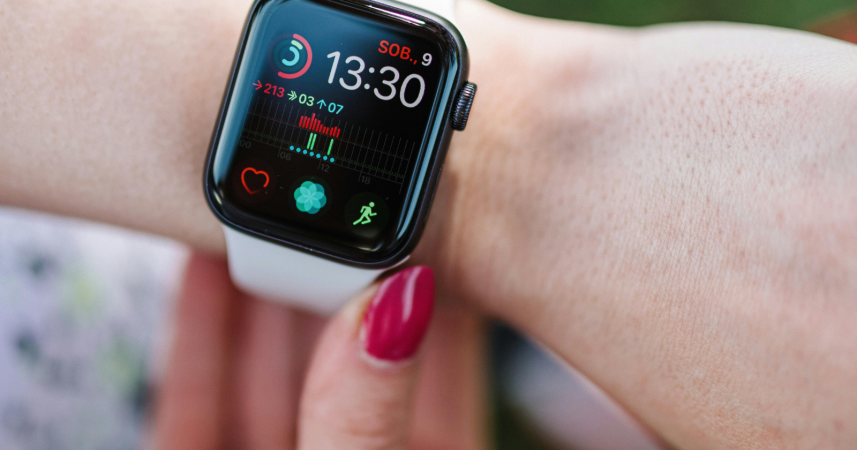
While millions obsess over their daily metrics and wear their tracking habits like medals of honor, they're often just sophisticated procrastinators avoiding the one thing no app can measure: the uncomfortable truth of who they are when the numbers stop.
Ever catch yourself refreshing your step counter at 11:47 PM, frantically pacing around your bedroom to hit that 10,000 mark? I used to do that almost every single night.
For years, I wore my data obsession like a badge of honor. Steps, calories, water intake, sleep scores, productivity metrics, meditation streaks. My phone was basically a command center of self-improvement apps, each one promising to optimize another corner of my existence. I thought I was the picture of discipline.
But here's what I discovered: I wasn't disciplined at all. I was running from something.
When numbers become a hiding place
Think about the last time you sat still with absolutely nothing to track, measure, or optimize. How did that feel?
If you're like I was, the answer is probably "deeply uncomfortable."
There's something almost addictive about watching those numbers tick up. Every completed ring, every logged meal, every tracked habit gives us a tiny hit of accomplishment. We feel productive. We feel in control. Most importantly, we feel like we're doing something.
But what happens when we stop? That's when the real feelings show up. The anxiety about whether we're enough. The fear that we're falling behind. The nagging sense that if we're not actively improving, we're somehow failing.
I discovered this truth the hard way when my phone died during a weekend camping trip. No step counter. No calorie tracker. No sleep analysis waiting for me in the morning. Just me and the uncomfortable realization that without my metrics, I had no idea if I was "doing well" or not.
The psychology behind our tracking obsession
Vicki Morwitz, a Marketing Professor at NYU, coined the term "The mere-measurement effect". This effect shows how simply measuring something changes our behavior around it. But what starts as awareness can quickly morph into dependence.
When I first started running at 28, I tracked every mile, every pace, every elevation gain. The data felt empowering at first. But somewhere along the way, the numbers became more important than the actual experience. I'd finish a beautiful trail run through the woods and immediately check my stats, as if the run didn't count unless the data validated it.
The tracking wasn't making me a better runner. It was keeping me from feeling the discomfort of simply being with myself for an hour.
When measurement becomes self-worth
Here's what nobody tells you about constant tracking: it slowly rewires how you value yourself.
Miss your step goal? You're lazy. Eat over your calorie limit? You lack willpower. Sleep score drops below 80? You're not taking care of yourself properly. Every metric becomes a judgment, and every day becomes a test you can pass or fail.
I remember deleting a meditation app after realizing I was more stressed about maintaining my streak than I was relaxed from actually meditating. The irony wasn't lost on me. The tool meant to reduce anxiety had become a source of it.
The feelings we're avoiding
So what exactly are we running from when we obsessively track everything?
Often, it's the messy, uncomfortable emotions that surface when we slow down. Boredom. Restlessness. That vague sense of "is this all there is?" The fear that we're not living up to our potential. The worry that without constant improvement, we're somehow worthless.
For me, it was deeper than that. After years in finance, where everything was quantifiable and success was measured in clear metrics, I'd internalized the belief that my value as a person could be calculated. When I left that world to become a writer, I just transferred that same mentality to my personal life.
Journaling helped me see this pattern. Once I started filling notebooks with actual thoughts and feelings instead of just data points, I realized how much emotional processing I'd been avoiding. Forty-seven notebooks later, I can tell you that facing those feelings directly is far more transformative than any tracking app ever was.
Breaking free from the measurement trap
Does this mean you should throw away your fitness tracker and delete all your apps? Not necessarily.
The problem isn't measurement itself. It's when measurement becomes a substitute for genuine self-awareness and emotional processing.
Start by picking one area where you track obsessively and take a week off. Notice what comes up. Do you feel anxious? Guilty? Lost? Those feelings are information. They're telling you something about what you're using the tracking to avoid.
When I stopped counting calories for a month, I initially panicked. But then something interesting happened. I started paying attention to how food actually made me feel. I noticed when I was eating out of hunger versus boredom or stress. I developed a relationship with my body that wasn't mediated by numbers.
Finding balance with data
These days, I still use some tracking tools, but the relationship has completely changed. I check my running app maybe once a week, and I'm more interested in how the run felt than what pace I maintained. My evening gratitude journal has replaced most of my tracking apps, and honestly, it tells me far more about my wellbeing than any metric ever could.
That fear of laziness, of not being enough without constant optimization, is what keeps so many of us trapped in the measurement cycle.
The real work starts when the tracking stops
True discipline isn't about hitting every metric every day. It's about sitting with discomfort when it arises. It's about facing the feelings we've been using data to avoid. It's about discovering that you're valuable and worthy even on the days when you don't close all your rings.
The next time you feel that compulsive urge to check your stats, pause. Ask yourself what you're really looking for. Validation? Distraction? Proof that you're doing enough?
Then try something radical: put the phone down and just be with whatever feelings are present. Yes, it's uncomfortable. Yes, it's harder than tracking. But that's where the real growth happens.
Because at the end of the day, no amount of perfect data can tell you what it feels like to be truly present in your own life. And that feeling? That's the one metric that actually matters.