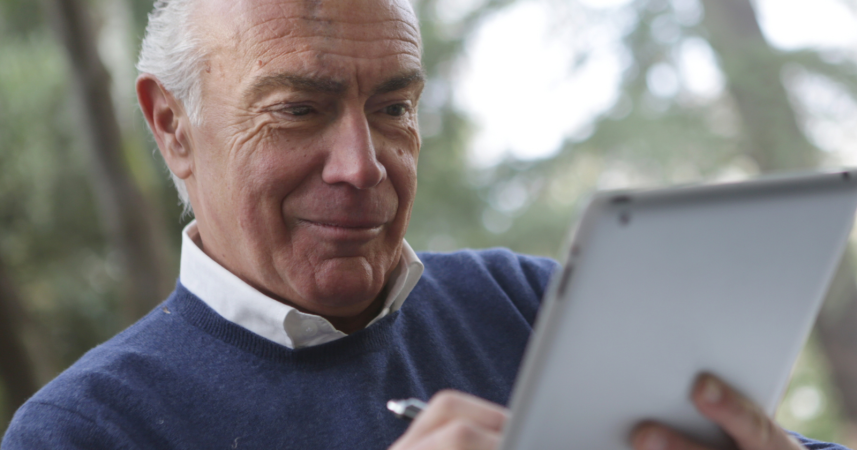
If you're reading this and recognizing yourself in these regrets, here's the thing: it's not too late. Skills can be learned at any age. Mindsets can shift. Growth doesn't have an expiration date.
Ever notice how wisdom often arrives fashionably late to the party?
I was chatting with my neighbor last week, a recently retired accountant in his late sixties, and he said something that stuck with me: "I spent forty years perfecting skills I thought mattered, only to realize the real game-changers were the ones I ignored."
His words got me thinking about all the conversations I've had over the years with folks from the boomer generation. Behind their success stories and career achievements, there's often this quiet undercurrent of "if only I'd known then what I know now."
The truth is, we all have our blind spots. But there's something particularly poignant about hearing someone with decades of experience share what they wish they'd figured out sooner. Not because they failed, but because they see how much richer their journey could have been.
So what are these elusive skills that keep coming up in coffee shop conversations and retirement party reflections?
Let's explore the seven that I hear about most often.
1. Digital literacy beyond the basics
"I thought computers were just fancy typewriters."
That's what a former colleague told me when we reconnected last year. She'd spent the last decade of her career watching younger employees zip through tasks that took her three times as long, not because she lacked intelligence, but because she'd never invested time in truly understanding technology.
It's not just about sending emails or using Word. The regret I hear most often centers around missing out on how technology could have amplified their work, connected them with communities, or opened entirely new career paths. One friend admitted she passed up a dream consulting opportunity because the role required proficiency in digital collaboration tools she'd never bothered to learn.
The kicker? Most of these tools aren't actually that complicated. They just require curiosity and practice. But when you've spent decades believing tech proficiency is for "young people," that mental barrier becomes the real obstacle.
2. Emotional intelligence and vulnerability
Remember when showing emotion at work was considered weakness? Yeah, that mindset did a number on an entire generation.
A mentor of mine, now in his seventies, recently shared how he wishes he'd learned to read the room emotionally, not just strategically. "I was so focused on being the smartest person in the meeting," he said, "that I missed all the human moments that actually move projects forward."
The ability to understand your own emotions and recognize them in others isn't soft. It's strategic. Research shows that emotional intelligence accounts for 58% of success in all job types. Yet many boomers spent their careers believing that feelings had no place in professional settings.
The real tragedy? This skill deficit often spilled into personal relationships too. How many marriages might have thrived if partners had learned to name their emotions instead of stuffing them down? How many parent-child relationships could have been deeper?
3. Financial literacy beyond traditional saving
Here's an interesting paradox: boomers are often excellent savers but surprisingly limited investors.
Growing up with parents who lived through the Depression, many boomers learned to squirrel away money in savings accounts. Noble intention, limited execution. While they were earning 1% interest, inflation was eating away at their purchasing power.
I've lost count of how many times I've heard variations of "I wish I'd understood compound interest earlier" or "If only I'd known about index funds in my thirties." One woman told me she kept $200,000 in a checking account for fifteen years because investing felt like gambling.
The missed opportunity isn't just about money. It's about the freedom that financial literacy provides. The ability to take calculated risks, pursue passion projects, or retire when you want to, not when you have to.
4. Setting and maintaining boundaries
"Yes" was the magic word for career advancement in the boomer generation. Yes to overtime. Yes to relocating. Yes to sacrificing weekends.
But what happens when saying yes to everything means saying no to yourself?
A former financial analyst once told me her biggest regret was not learning to set boundaries until her sixties. By then, she'd missed countless family dinners, her kids' soccer games, and her own wellbeing had taken a backseat to corporate demands.
Setting boundaries isn't selfish. It's self-preservation. Yet for a generation raised on "work hard and don't complain," this concept feels foreign, even rebellious. The cost of this delayed learning? Burnout, resentment, and relationships that never fully recovered from years of absence.
5. Stress management and mindfulness
Meditation was for hippies. Therapy was for people with "real problems." Stress was just part of life.
These beliefs shaped how boomers approached mental health for decades. The result? A generation that wore stress like a badge of honor while their bodies kept score.
I recently spoke with a retired executive who had his first heart attack at 52. "My doctor asked about my stress levels," he recalled, "and I literally didn't know how to answer. High stress was just... normal."
Learning to pause, breathe, and check in with yourself isn't new age nonsense. It's preventive healthcare. But when you've spent forty years in fight-or-flight mode, switching gears feels impossible.
6. Adaptability and embracing change
"We've always done it this way" might be the most expensive sentence in business history.
The pace of change has accelerated dramatically over the past few decades, but many boomers built their careers on mastering one way of doing things. When industries shifted, technologies evolved, or markets transformed, those who couldn't adapt got left behind.
Adaptability isn't about abandoning your principles. It's about recognizing that methods can evolve while values remain constant. The colleagues who thrived were those who saw change as opportunity, not threat.
7. Asking for help
This might be the big one.
Independence was currency in boomer culture. Asking for help meant admitting weakness. Seeking support suggested incompetence. So they struggled alone, reinvented wheels, and carried burdens that could have been shared.
A neighbor recently told me about spending three months trying to figure out Excel formulas that a colleague could have taught her in an afternoon. Pride prevented her from asking. Another shared how depression nearly destroyed his marriage because seeking therapy felt like failure.
Here's what I've learned from my own journey and countless conversations: asking for help is actually a sign of wisdom. It shows you're secure enough to admit you don't know everything and smart enough to leverage other people's expertise.
The most successful people I know, regardless of generation, are masterful at asking for help. They build networks, seek mentors, and understand that collaboration beats isolation every time.
Final thoughts
Looking at this list, you might notice something interesting. None of these skills are particularly complex or require special talent. They're all learnable at any age. The barrier was never ability; it was permission.
Permission to show emotion. Permission to not know everything. Permission to prioritize wellbeing over productivity.
If you're reading this and recognizing yourself in these regrets, here's the thing: it's not too late. Skills can be learned at any age. Mindsets can shift. Growth doesn't have an expiration date.
And if you're younger and thinking this doesn't apply to you, look closer. What skills are you dismissing today that you might regret not learning twenty years from now? The beauty of learning from others' hindsight is that it can become your foresight.
If You Were a Healing Herb, Which Would You Be?
Each herb holds a unique kind of magic — soothing, awakening, grounding, or clarifying.
This 9-question quiz reveals the healing plant that mirrors your energy right now and what it says about your natural rhythm.
✨ Instant results. Deeply insightful.