Real wealth in a home isn’t measured by price tags or flash. It’s in how comfortable you feel there, how welcome others feel when they walk in, and whether your space reflects who you are—not who you want people to think you are.
We all want our homes to feel inviting and stylish.
But let’s be honest—there’s a fine line between decorating with intention and filling a space with things that silently shout, “Look at me, I’ve got money!”
In my opinion, some decor choices fall into the second camp. They’re less about genuine taste and more about performance. And while I don’t expect everyone to agree with me, I think you’ll see where I’m coming from.
So let’s talk about seven home decor items that, to me, come across as trying a little too hard to project wealth.
1. Overly ornate chandeliers
Lighting makes a huge difference in a home. A simple pendant light or a warm lamp can set the tone instantly.
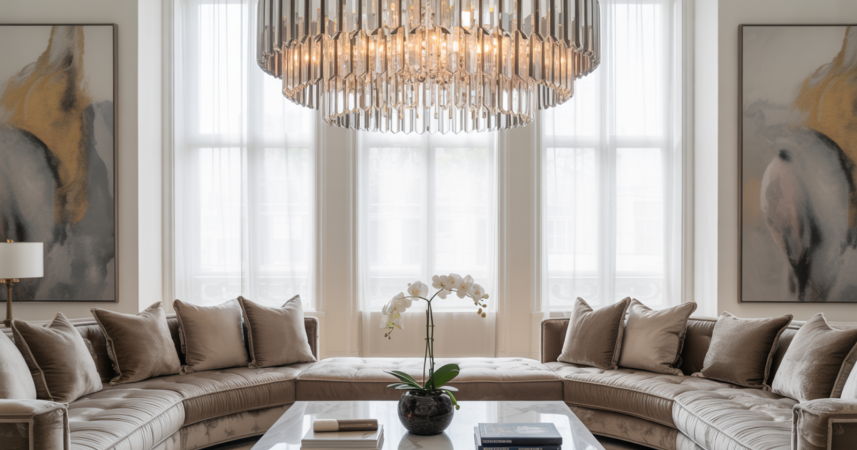
But when you walk into a living room and the first thing you see is a massive, glittering chandelier that looks like it belongs in Versailles, it can feel more like a statement of status than a choice of style.
Unless you live in a home designed for such grandeur, these fixtures tend to overpower everything else. They don’t say sophisticated—they say spectacle.
2. Rooms staged like showrooms
You know the kind. Perfectly coordinated throw pillows. Art that clearly came as a package deal. Sofas no one dares sit on.
It’s less “home” and more “furniture catalog.”
A home should feel lived-in, layered with personality and quirks. When every single detail looks meticulously staged, it can feel like you’re more concerned about appearances than comfort.
As interior designer Nate Berkus once said, “Your home should tell the story of who you are, and be a collection of what you love.” A showroom look rarely achieves that.
3. Gold-plated everything
A little metallic accent can be gorgeous. A mirror with a gold frame, or a subtle brass lamp? Stylish.
But when every accent is dripping in gold—from side tables to cutlery to picture frames—it quickly shifts from elegant to gaudy.
Instead of wealth, it often reads as insecurity. Like the space needs to announce luxury rather than quietly suggest it.
4. Excessive designer logos
Yes, some designer pieces are timeless investments. A classic chair or rug can anchor a room beautifully.
But when your decor starts doubling as a billboard—pillows stamped with Gucci, chairs plastered with Louis Vuitton patterns—it’s less about design and more about brand signaling.
I once visited a home where even the tissue box cover had a designer label stitched into it. I couldn’t focus on anything else in the room.
Sometimes, the most tasteful homes are the ones where you have no idea what brands are behind the pieces—you just know they work.
5. Faux antiques and knockoffs
There’s nothing wrong with mixing old and new. In fact, a vintage piece here and there can add character and charm.
But when homes are filled with reproduction antiques or knockoffs meant to look expensive, the effect often backfires.
It’s not the lack of authenticity that bothers me—it’s the intent. It communicates, I want you to believe I have a collection of heirlooms, when really it’s just an overstock order.
True style isn’t about imitation. It’s about curation.
6. Extravagant “statement” art pieces
Art is deeply personal. But sometimes, homeowners buy oversized, flashy pieces simply because they look expensive, not because they resonate with them.
I’ve been in homes where a giant abstract canvas dominated an entire wall. It was clearly chosen for its price tag, not for the story it told. And that makes a difference.
If the art doesn’t connect to you, it can feel hollow—no matter how much it cost.
7. Rooms that are too "minimalist"
I know some people love a minimalist, immaculate space. But there’s a difference between clean and untouchable.
When you walk into a home and everything feels so perfect you’re afraid to sit down or place a glass on the table, it stops feeling warm. Instead, it feels like you’ve stepped onto a movie set.
Real homes have a little softness to them. A blanket tossed on the couch. A stack of books on the nightstand. A bit of messiness that says, people actually live here.
Final thoughts
Of course, all of this is just my opinion. Maybe you love your chandelier or your designer-stamped pillows—and if they bring you joy, that’s what really matters.
But here’s the thing: real wealth in a home isn’t measured by price tags or flash. It’s in how comfortable you feel there, how welcome others feel when they walk in, and whether your space reflects who you are—not who you want people to think you are.
And in my experience, that kind of authenticity never goes out of style.