Sometimes the most revolutionary act is knowing when to say no to the latest trend and yes to what actually works
Have you noticed how Gen Z has started raiding thrift stores, buying vinyl records, and actually picking up pens to write in journals?
It's funny how life comes full circle, isn't it?
As someone who lived through the transition from analog to digital, I've watched with interest as younger generations rediscover habits that Gen X never fully abandoned. People my age were pretty much the last to experience childhood without smartphones, the bridge between rotary phones and iPhones, between mixtapes and streaming.
We embraced technology but never completely let go of certain analog practices. And now? Gen Z is catching on to what we've quietly known all along—that some of the "old ways" actually serve us better.
From the simple act of putting pen to paper to the ritual of actually being alone with our thoughts, these aren't just nostalgic habits. They're practices that offer real psychological and practical benefits that our hyper-connected world desperately needs.
1. Embracing boredom and solitude
Remember when you used to just... sit? Maybe stare out the window during a long car ride or lie on your bed doing absolutely nothing?
We grew up in the spaces between scheduled activities. We had hours to fill with our own imagination, and we learned that boredom wasn't something to immediately fix—it was just part of life.
Fast forward to today, and 75% of Gen Zers admit to spending too much time on their smartphones. But something interesting is happening. More young people are starting to recognize the value of unplugged time.
I see it when my friend's teenage daughter deliberately leaves her phone in another room to read. Or when my neighbor's Gen Z son started taking walks without earbuds, just to think.
This isn't about being anti-technology. It's about understanding that our brains need downtime to process, create, and simply be. Gen X learned this by default—we didn't have a choice but to be bored sometimes. Now Gen Z is actively choosing it, and that's pretty powerful.
2. Writing things down by hand
When's the last time you grabbed a pen and actually wrote something down? Not typed, not voice-noted, but physically moved your hand across paper?
Well as far as I can see, Gen X never fully abandoned this habit. We might use digital calendars, sure, but many of us still keep notebooks, write grocery lists on actual paper, or jot down thoughts in margins of books. It wasn't a conscious choice to be different—it's just how we learned to process information.
I still keep a handwritten journal beside my bed. When I'm working through a complex problem at work, I reach for a notepad, not my laptop. There's something about the physical act that helps me think more clearly.
Turns out, there's solid science behind this trend. As noted by Scientific American, writing by hand is better for learning and memory. .
It seems younger folks are starting to notice this too. Walk into any coffee shop near a college campus and you'll spot students with bullet journals, hand-lettered planners, and good old-fashioned notebooks alongside their laptops.
It's not about being old-fashioned or rejecting technology. It's about using the right tool for the job.
3. Collecting physical media
Walk into any record store (or at least my local record store) these days and you'll see something fascinating—teenagers flipping through vinyl bins.
People of my age might stream music daily, but many of us kept our CD collections, held onto favorite DVDs, and some never stopped buying vinyl. There is something satisfying about holding an album, reading liner notes, and owning something tangible, right?
For years, this seemed like stubborn nostalgia. Why clutter your space when everything's available digitally? But Gen Z has started to get it.
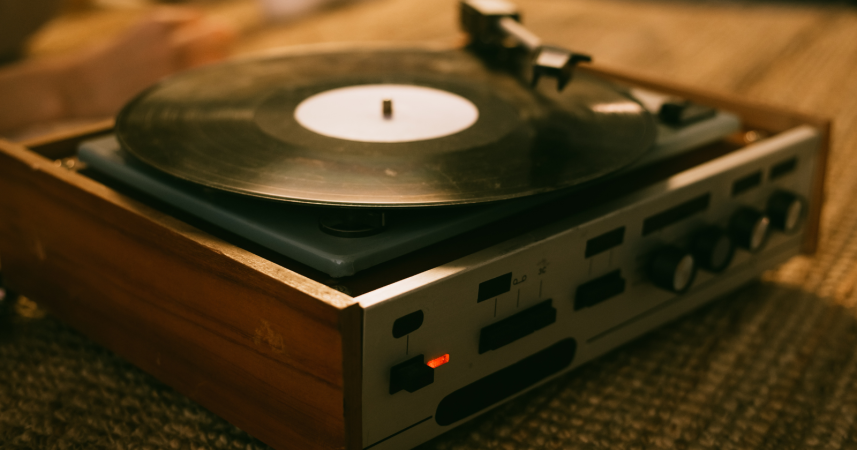
Vinyl sales have been steadily increasing in recent years, and it's not just older generations driving this trend. Young people are discovering that there's value in the ritual—carefully selecting an album, placing it on the turntable, experiencing music as the artist intended from start to finish.
I think it's about ownership in a world where everything feels rented. When your streaming service loses an album or your account gets suspended, your physical collection remains. There's comfort in that permanence, and Gen Z is learning what Gen X never forgot—sometimes you want to truly own the things you love.
4. Actually talking on the phone
Remember when phone calls were just... normal? When you'd pick up the phone without overthinking it, have meandering conversations that lasted hours, and hang up feeling more connected to someone?
Gen X grew up with this. We had no choice but to call if we wanted to make plans, catch up with friends, or work through problems. We learned to read tone, navigate awkward silences, and have real-time conversations without the safety net of editing our words first.
Then texting took over. Suddenly, phone calls became this big, formal thing. People started saying, "I hate talking on the phone" like it was a personality trait. Everything moved to quick messages, emojis, and carefully curated responses.
But I'm noticing something shift. More young people are choosing to call instead of text, especially for important conversations. They're realizing that some things just can't be communicated through a screen.
A few weeks ago, I overheard a college student on the trail saying to her friend, "Let's just call each other tonight instead of texting about this." It struck me because that's exactly what we used to do—recognize when a conversation needed actual voices.
There's something irreplaceable about hearing someone's laugh in real-time, catching the subtle changes in their tone, or working through a misunderstanding on the spot instead of letting it fester through misinterpreted texts.
5. Making things last instead of constantly upgrading
How long have you owned your oldest piece of furniture? Your favorite jacket? That reliable coffee mug you reach for every morning?
While consumer culture pushed faster upgrade cycles and cheap fast fashion, many of us quietly held onto our well-made jeans, our sturdy kitchen appliances, and our comfortable shoes until they literally couldn't be worn anymore.
Now Gen Z is starting to embrace this approach too. They're shopping secondhand not just for budget reasons, but because they're tired of constant consumption. They're learning to repair clothes, refinish furniture, and choose quality over quantity.
Final thoughts
Isn't it interesting how wisdom tends to circle back around?
What seemed like Gen X stubbornness—our refusal to fully digitize everything, our attachment to "inefficient" habits—turns out to have been intuition all along. We held onto these practices not because we were resistant to change, but because they served us in ways we couldn't always articulate.
Now, as Gen Z navigates the burnout of constant connectivity and endless consumption, they seem to be rediscovering the value in slowing down, being intentional, and choosing substance over speed.
This isn't about one generation being right or wrong. It's about recognizing that progress doesn't always mean leaving everything behind. Sometimes the most revolutionary act is knowing when to say no to the latest trend and yes to what actually works.
The beautiful thing is watching Gen Z make these choices consciously. They're not just falling back on old habits—they're actively choosing practices that support their mental health, creativity, and authentic connection with the world around them.
Maybe that's the real lesson here: every generation has something valuable to offer. And sometimes, the best way forward is to look back and ask, "What did we get right the first time?"