
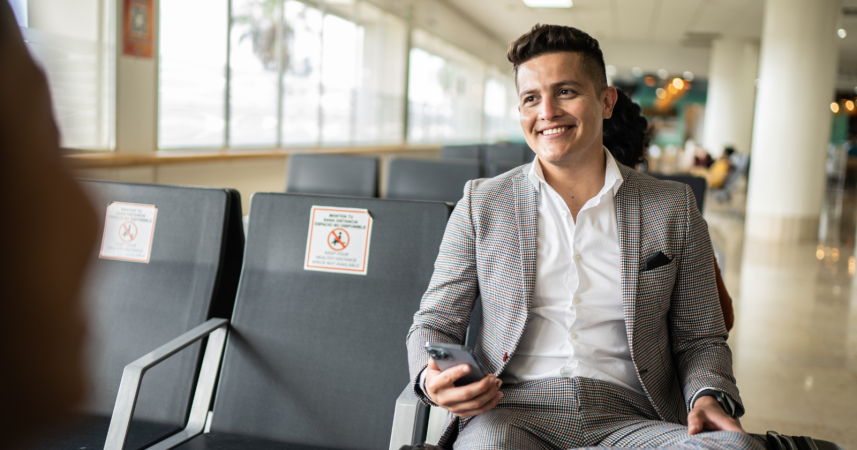
While older travelers frantically demand answers and reschedule meetings during flight delays, the "impatient" generation everyone criticizes simply shrugs, settles in with their phones, and reveals a paradoxical truth about who really knows how to wait.

Add VegOut to your Google News feed. 
Ever noticed how the most connected generation in history seems to handle disconnection the best?
Last month, I watched a fascinating scene unfold at the airport. A flight to Chicago got delayed by three hours.
The older gentleman next to me immediately marched to the gate agent, demanding answers.
A middle-aged woman frantically rescheduled meetings on her phone. Meanwhile, a group of twenty-somethings simply shrugged, pulled out their phones, and settled in like they'd expected this all along.
That's when it hit me. The generation everyone calls impatient, the ones who supposedly can't wait five seconds for a webpage to load, were the calmest people in that terminal. And according to psychology, there's a reason for that.
The way we react when our flight gets delayed isn't random. It's a window into our deepest personality traits, our coping mechanisms, and yes, even our generation's collective mindset.
After spending nearly two decades as a financial analyst, I've learned that human behavior follows patterns, whether we're talking about market crashes or missed connections.
1) Your sense of control becomes crystal clear
Do you immediately storm the gate desk demanding answers? Or do you accept what you can't change and find a quiet corner to wait it out?
Your response reveals how much you believe you can control your environment.
Some people truly think that if they push hard enough, complain loud enough, or speak to enough managers, they can somehow make that plane appear faster. Others recognize the futility and adapt.
I learned this lesson the hard way during the 2008 financial crisis. Watching colleagues frantically try to control uncontrollable markets taught me something valuable: Recognizing what's beyond your influence isn't giving up. It's wisdom.
The interesting part? Those who accept the delay often find creative solutions, like rebooking through a different hub, while the "controllers" waste energy on what can't be changed.
2) Your flexibility shows its true colors
Think about the last time your plans got disrupted. Did you roll with it or did your whole day feel ruined?
Flight delays strip away our illusion of certainty, forcing us to adapt in real-time.
The rigid planners among us struggle most. They had everything timed perfectly: The rental car pickup, the dinner reservation, the meeting schedule. When that first domino falls, they can't recover.
Flexible people, on the other hand, see delays as plot twists rather than disasters. They're the ones you'll find exploring airport shops they'd normally rush past or striking up conversations with strangers.
They understand what Psychology Today points out: "Airports are liminal zones where notions of place and time can start to feel vague."
This flexibility often correlates with overall life satisfaction. Those who can pivot when plans change tend to navigate life's bigger curveballs with more grace too.
3) Your risk tolerance reveals itself
Here's where things get interesting. Anton Radchenko, Founder and CEO of AirAdvisor, advises to "Stay close to your gate and check for regular updates."
But not everyone follows this advice. Some passengers immediately wander off to restaurants or shops, risking missing sudden boarding calls. Others plant themselves at the gate, afraid to even use the bathroom.
This behavior mirrors how we handle risk in other areas of life. The gate-wanderers are often the same people who change careers without a safety net or invest in volatile stocks.
The gate-huggers? They're probably the ones with six months of emergency savings and comprehensive insurance policies.
Neither approach is wrong, but recognizing your pattern helps you understand your broader decision-making style.
4) Your patience threshold becomes measurable
We all think we're patient until we're tested. Flight delays are that test.
Some people can sit for hours without visible frustration. Others start pacing after fifteen minutes. This isn't just about temperament; it's about how we process uncertainty and delayed gratification.
Growing up in a world of instant everything has actually made younger generations better at this particular waiting game. They've learned to create their own entertainment bubbles anywhere.
A delayed flight just means more time for the podcast they wanted to finish anyway.
The truly impatient ones? They're often dealing with deeper issues around control and anxiety. When you can't sit still with uncertainty, it usually means you're uncomfortable with your own thoughts.
5) Your social tendencies emerge
Flight delays create instant communities. Some people immediately start chatting with fellow passengers, sharing delay horror stories and travel tips. Others retreat deeper into their personal space, earbuds in, avoiding eye contact.
This isn't just introversion versus extroversion. It's about how we seek comfort during stress.
Social processors need to verbalize their frustration, to feel heard and validated. Solo processors need quiet to manage their emotions internally.
Watch closely and you'll notice the social ones often end up with useful information, like which airline desk has shorter lines or where the good coffee is. But the solo processors often maintain better emotional regulation throughout the delay.
6) Your actual priorities surface
Nothing reveals what really matters to you like a flight delay when you have somewhere important to be.
Some people immediately catastrophize about missed meetings or ruined vacations. Others shrug and figure it'll work out.
This response shows what you truly value: Control over outcomes, other people's opinions, or your own peace of mind.
During my years analyzing financial behavior, I noticed the same pattern.
People's true priorities only emerged during market downturns. Similarly, flight delays strip away the polite veneer and show what actually drives us.
The generation that handles delays best, those supposedly impatient millennials and Gen Zers? They've redefined priorities. Missing a few hours isn't catastrophic when you can work, socialize, and entertain yourself from anywhere.
The bigger picture
After witnessing the 2008 crash and spending decades studying how fear drives irrational decision-making, I've realized something profound.
The generation everyone criticizes for being impatient has actually mastered a different kind of patience. They're not waiting for external circumstances to entertain them or validate them. They carry their world with them.
Maybe that's why they handle flight delays so well. They've learned that waiting doesn't mean wasting time. While older generations see delays as stolen time, younger ones see it as unexpected free time.
The truth is, how you handle that delay reveals more about you than any personality test could. It shows your relationship with control, uncertainty, and time itself.
And perhaps most surprisingly, it shows that the generation we thought couldn't wait for anything might actually be the best at waiting of all.
Because real patience isn't about tolerating boredom. It's about being so comfortable with yourself that external delays don't disturb your internal peace.
So next time your flight gets delayed, pay attention to your reaction. What you discover might surprise you.












