This seemingly quaint ritual reveals six profound psychological traits that separate those who understand human connection at its deepest level from those who merely go through the motions of social interaction.

Add VegOut to your Google News feed. 
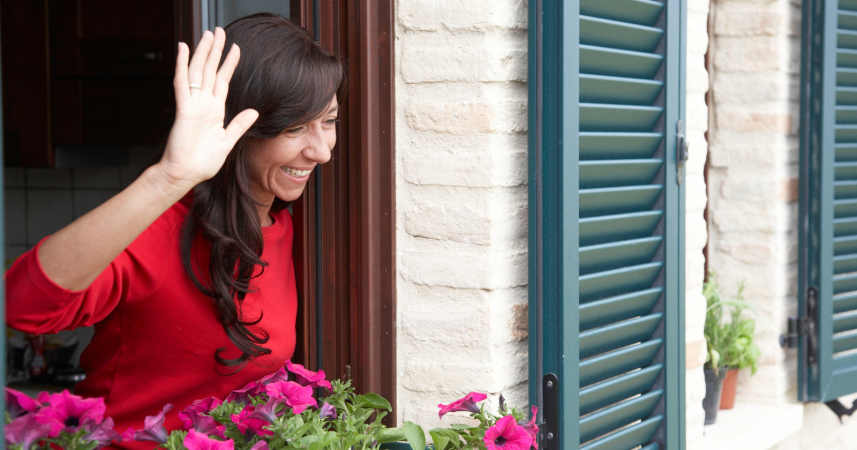
Picture this: you're pulling away from your parents' house after Sunday dinner, and there they are, standing at the front window, waving steadily as your car backs down the driveway.
You wave back, put the car in drive, and slowly roll down the street. A quick glance in the rearview mirror shows them still there, still waving, getting smaller and smaller until you turn the corner and they disappear from view.
If this scene feels familiar, you probably grew up with people who understood something profound about human connection.
This ritual of waving until someone is completely out of sight reveals far more about a person than simple good manners. It speaks to deeper psychological traits that shape how we connect with others and how we view relationships themselves.
Growing up, I watched my mother do this every single time anyone left our house. Teacher that she was, she'd stand at that window until the last possible second, often with a cup of tea going cold in her hand. Back then, I thought it was just one of those quirky parent things. Now I understand it was something much more meaningful.
1) They possess exceptional emotional attunement
People who wave from windows until you're gone have an almost uncanny ability to read and respond to emotional needs. They sense that departures can feel abrupt or incomplete, and they instinctively provide that extra moment of connection.
I see this in the farmers' market where I volunteer. There's an older gentleman who helps with teardown every week, and he never just leaves when his shift ends. He makes sure everyone knows he's going, says individual goodbyes, and yes, waves from his truck window as he pulls away.
One Saturday, a newer volunteer mentioned how that simple gesture made her feel like she truly belonged to our little community.
This emotional attunement goes beyond social awareness. These window-wavers seem to understand that transitions matter, that the space between being together and being apart deserves attention and care. They recognize what many of us miss: that how we say goodbye affects how we'll feel about the entire visit.
2) They understand the value of presence
Tinney Davidson, an 88-year-old woman who waved to students for 12 years, captured this perfectly when she said, "I just liked the look of the children." Her daily ritual of waving from her window wasn't about obligation or routine. It was about being fully present in that moment of connection.
Window-wavers grasp something fundamental about presence. They know that being there, really being there, extends beyond physical proximity. It includes those transitional moments when someone is leaving but hasn't quite left yet. They refuse to mentally check out the second the goodbye hug ends.
Think about it. How many times have you closed the door immediately after someone leaves, already thinking about what you need to do next? Window-wavers resist this pull toward the next thing. They stay in the moment, honoring the visit right up to its natural conclusion.
3) They carry deep generational wisdom
This habit often comes from generations who viewed time differently. Before smartphones and constant connectivity, visits were events. They had clear beginnings, middles, and ends. The goodbye ritual was as important as the greeting.
My parents, with their emphasis on education and doing things properly, taught me that cutting a goodbye short was like leaving a sentence unfinished. You wouldn't stop reading a book three pages before the end, would you? The same logic applied to visits. The wave from the window was the punctuation mark, the proper ending that gave the whole experience its shape.
This generational wisdom recognizes that rituals matter. They create meaning and memory. Years later, what we often remember most vividly about visiting someone isn't just what we talked about, but how they made us feel as we arrived and as we left.
4) They prioritize connection over convenience
Standing at a window waving isn't convenient. It means pausing whatever you were about to do. It means standing there even when it's cold, even when you're tired, even when you have a sink full of dishes calling your name.
People who do this consistently are making a statement about their values. They're saying that the relationship matters more than their to-do list. They're choosing connection over efficiency, presence over productivity.
I learned this lesson the hard way after years of working as a financial analyst, where every minute was monetized and efficiency was king. It took conscious effort to unlearn the habit of mentally moving on before someone had physically left. But when I started staying at the window, something shifted. The visits felt more complete, the connections deeper.
5) They exhibit extraordinary patience
Watching someone slowly back out of a driveway, adjust their mirrors, fiddle with the radio, and finally drive away requires patience. Window-wavers have this in abundance. They don't tap their foot waiting for you to leave so they can get on with their day. They're genuinely content to stand there, waving, for as long as it takes.
This patience extends beyond the window. These are often the same people who let conversations reach their natural end rather than cutting them short, who sit with you in silence when words aren't enough, who understand that meaningful connections can't be rushed.
6) They recognize the power of transitions
Kate Fox, author studying social behavior, observed: "When the final, final, final goodbyes have been said, and everyone is loaded into the car, a window is often wound down to allow a few more parting words."
This perfectly captures what window-wavers intuitively understand. Transitions aren't just empty spaces between activities; they're opportunities for connection. The moment of departure is charged with meaning. It's when we feel the weight of separation, the anticipation of reunion, the bittersweet mix of satisfaction from time well spent and sadness that it's ending.
By extending the goodbye with their window wave, these people are honoring this transition. They're acknowledging its importance and giving it the space it deserves. They understand that rushing through goodbyes doesn't save time; it diminishes the experience.
The lasting impact
When someone waves from their window until you're out of sight, they're giving you a gift. They're telling you that you matter enough for them to stand there an extra minute or two. They're saying that your presence was valued right up until the last possible second.
This simple act creates a ripple effect. We carry that feeling of being valued with us. We're more likely to extend the same courtesy to others. We begin to understand that the little things, these small rituals of connection, are actually the big things.
If you grew up with window-wavers, you carry their wisdom with you. If you didn't, it's never too late to start. The next time someone leaves your home, try it. Stand at that window. Wave until they're gone. Feel the bittersweetness of the transition. Honor the visit with a proper ending.
Because in a world that's constantly rushing us toward the next thing, choosing to stand at a window and wave is a radical act of presence. It's a declaration that relationships matter, that transitions deserve attention, and that the goodbye is, indeed, part of the visit.