While the rest of us tap and swipe our way through transactions, psychology reveals that cheque writers aren't technologically challenged—they're actually demonstrating superior impulse control, conscientiousness, and a healthier relationship with money that most of us have sacrificed for convenience.

Add VegOut to your Google News feed. 
Ever heard someone joke about the person who still writes cheques at the grocery store, holding up the line while the rest of us tap our cards? We tend to assume they're just stubbornly clinging to the past, unable to adapt to modern technology.
But what if I told you that's not actually what's going on?
After nearly two decades analyzing financial behaviors at an investment firm, I learned something fascinating: how people handle money reveals far more about their personality than their tech savviness. Those cheque writers? They're not dinosaurs. They're displaying specific psychological traits that have nothing to do with being behind the times.
Psychology research backs this up. The way we interact with money tells a story about who we are, what we value, and how we navigate the world. And those folks still pulling out their chequebooks? They might just be onto something the rest of us are missing.
1) They have exceptional impulse control
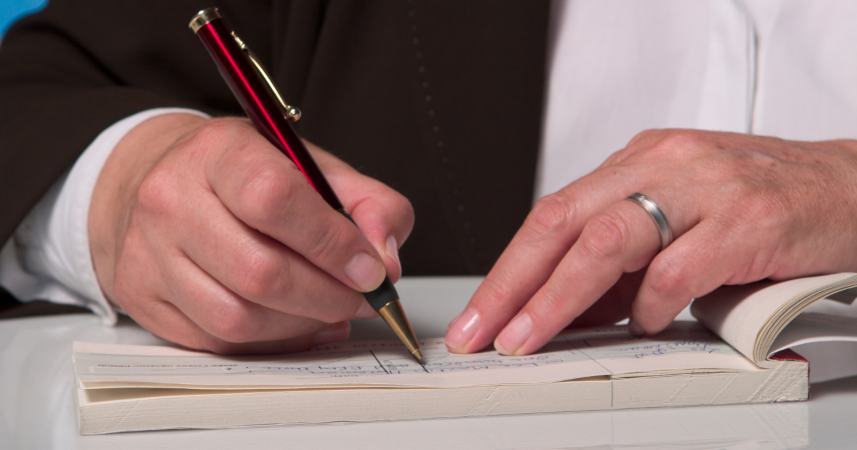
Think about how easy it is to tap your card or phone without really registering the purchase. Now imagine having to write out "seventy-three dollars and forty-two cents" by hand. That physical act creates what psychologists call a "pain point" that makes you more aware of your spending.
I noticed this firsthand when reviewing client portfolios. The cheque writers consistently had better savings rates than the card tappers. Writing a cheque forces you to slow down, consider the purchase, and physically commit to the transaction. It's like the financial equivalent of counting to ten before responding to an angry email.
These individuals have trained themselves to resist instant gratification. While the rest of us are one-clicking our way through impulse buys, they're creating natural speed bumps in their spending process.
2) They value tangible connections over convenience
Remember the last time you received a handwritten thank you note versus a quick text? There's something different about it, right?
William Leith, author, captures this perfectly: "Money is weird, anyway. We're supposed to instinctively understand it. But we really don't."
Cheque writers understand this weirdness and choose to make their financial transactions more concrete. They want that physical record, that carbon copy, that moment of connection when they hand over payment. It's not about being old-fashioned; it's about maintaining a tangible relationship with their money.
3) They exhibit lower risk-taking behavior
Here's something interesting from my analyst days: clients who preferred cheques were significantly less likely to fall for investment scams or make risky financial decisions.
Why? Dr. James R. Langabeer, Professor at the University of Texas Health Science Center, explains: "Scammers love to prey on our trust."
Cheque writers create natural barriers against this. They can't be phished for their PIN at an ATM. They can't accidentally authorize a recurring payment they forgot about. Every transaction requires deliberate action, protecting them from both external threats and their own impulsive decisions.
4) They demonstrate higher conscientiousness
The Federal Reserve Bank of Boston found that individuals with higher levels of conscientiousness are more likely to have better financial outcomes and less likely to carry revolving credit card debt.
Cheque writers embody this trait. They balance their chequebooks, track their spending manually, and maintain detailed records. During my years reviewing financial statements, I saw how this conscientiousness extended beyond just payment methods. These clients typically had comprehensive budgets, organized tax documents, and clear financial goals.
It takes effort to maintain a cheque-based system in 2024. That effort itself is a marker of conscientiousness.
5) They possess stronger delayed gratification skills
When you write a cheque, you're essentially saying, "I'll pay for this, but the money won't leave my account for a few days." That requires trust in yourself to maintain the balance and not overspend before the cheque clears.
Research published in Sustainability indicates that individuals with higher numeracy skills and knowledge of the time value of money are less likely to engage in risky borrowing behaviors.
Cheque writers understand this time value intuitively. They're comfortable with the delay, the float, the need to mentally track pending transactions. This comfort with delayed processes translates to better long-term financial planning and investment patience.
6) They have healthier boundaries with money
Brad Klontz, Financial Psychologist, notes: "Money scripts can also stand in for complex feelings that people are either unaware of or unwilling to acknowledge."
Cheque writers tend to have clearer money scripts. The physical act of writing forces them to confront their financial reality regularly. Unlike those who might avoid checking their bank balance after a tap-happy weekend, cheque writers maintain constant awareness of their financial position.
This isn't about being controlling or anxious. It's about having a healthy, conscious relationship with money rather than an avoidant one.
7) They exhibit resistance to money avoidance behaviors
Max Alberhasky, Ph.D., Assistant Professor at California State University Long Beach, describes money avoidants: "Money avoidants do not check their account balances regularly, are unlikely to budget, and prefer to ignore or run away from any money problems."
Cheque writers are the opposite. You can't write cheques without knowing your balance. You can't ignore your spending when you're manually recording each transaction. This forced engagement prevents the kind of financial denial that leads to serious money problems.
I've seen this play out countless times. The clients who got into trouble were rarely the cheque writers; they were the ones who set everything to autopay and tried to forget about it.
Final thoughts
After leaving my analyst role to pursue more meaningful work, I gained a new appreciation for doing things the "slow" way. Just like I choose trail running over treadmills because the connection to nature matters more than the convenience, cheque writers choose connection over speed.
Are cheques practical for everything? Of course not. But dismissing cheque writers as technophobic misses the deeper story. These individuals have developed psychological traits that many of us could benefit from: impulse control, conscientiousness, healthy money relationships, and the ability to delay gratification.
Maybe next time you're stuck behind someone writing a cheque, instead of rolling your eyes, consider what they might know that you don't. In our rush to embrace every new payment technology, we might be losing something valuable: a mindful, deliberate relationship with our money.
The real question isn't why some people still write cheques. It's whether the rest of us are moving too fast to notice what we're giving up in the name of convenience.