
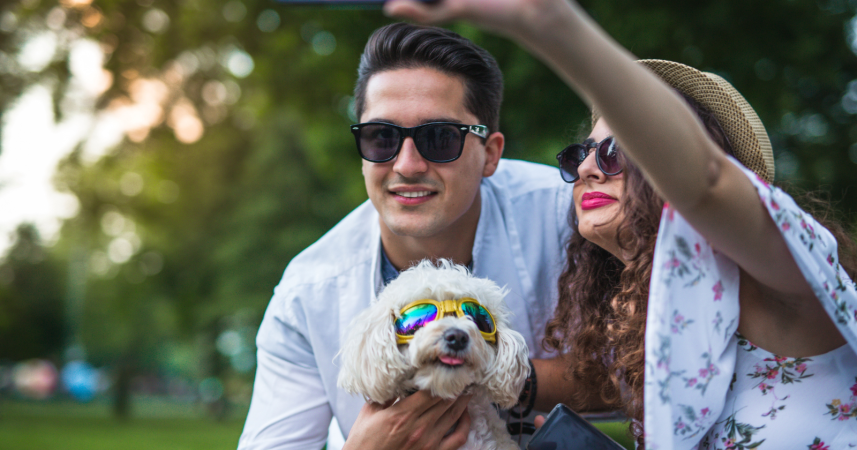
While millions chase validation through perfectly filtered selfies, psychologists have discovered that those who rarely post photos of themselves often exhibit seven surprising behaviors that reveal a deeper, more authentic form of confidence.

Add VegOut to your Google News feed. 
Have you ever noticed how some of the most confident people you know rarely post selfies?
I was at a coffee shop last weekend, catching up with an old colleague who's now running her own successful consulting firm.
As we scrolled through our phones to share contact info, I noticed her Instagram feed had exactly zero selfies. Just landscapes, book recommendations, and the occasional photo of her rescue dog.
Meanwhile, I knew people constantly seeking validation through carefully curated face shots who seemed far less secure in themselves.
This got me thinking about the connection between selfie habits and genuine confidence. Turns out, psychology backs up what I observed that day. Research suggests that people who avoid the constant selfie parade often demonstrate specific behaviors that signal deep, authentic confidence.
After transitioning from my financial analyst days to writing about psychology, I've become fascinated by these subtle markers of self-assurance.
The analytical skills I developed crunching numbers now help me break down complex psychological concepts, and what I've discovered about the selfie-confidence connection is pretty revealing.
1. They seek meaningful connections over surface-level interactions
When was the last time you had a conversation that left you feeling genuinely understood?
People who skip the selfie routine tend to invest their energy in building real relationships rather than collecting likes from acquaintances.
They're the ones who remember your partner's name after meeting them once, who follow up on that job interview you mentioned weeks ago, and who actually listen when you talk instead of mentally composing their next Instagram caption.
I learned this lesson the hard way. For years, I maintained this massive professional network, thinking more connections meant more success. But when I started taking regular digital detox weekends, something shifted.
Without the constant pressure to document and share, I started having deeper conversations. My circle got smaller, but the friendships became infinitely more meaningful. These days, I have maybe five close friends compared to the hundreds of "connections" I used to maintain, and I've never felt more supported.
The psychology here is straightforward: when you're not constantly seeking validation through images, you have more emotional bandwidth for authentic engagement. You're present in the moment rather than thinking about how to capture it for social media.
2. They validate themselves internally rather than seeking external approval
Think about the last compliment you received. Did it stick with you, or did you need another one pretty quickly to maintain that good feeling?
Those who avoid frequent selfie-posting often have a stronger internal validation system. They don't need 47 likes to feel attractive or accomplished. Their self-worth comes from within, from their values, achievements, and personal growth rather than from double-taps and fire emojis.
This hits close to home for me. I used to be completely addicted to achievement and the recognition that came with it. Every accomplishment needed to be shared and celebrated publicly.
But here's what I discovered: external validation is like junk food for your confidence. It gives you a quick high but leaves you hungry for more shortly after. The real nourishment comes from knowing your own worth, regardless of who's watching or applauding.
3. They focus on experiences rather than documentation
Remember the last concert you attended where half the audience watched through their phone screens?
People confident enough to skip the selfie game tend to be fully immersed in their experiences.
They're the ones actually tasting their food at restaurants instead of spending 10 minutes getting the perfect shot. They watch sunsets with their eyes, not through a camera lens. They dance at parties without worrying about how they look in someone else's Instagram story.
There's solid psychological research behind this. Studies show that constantly documenting experiences can actually reduce our enjoyment and memory of them. When we're focused on capturing the perfect image, we miss out on the sensory and emotional richness of the moment.
4. They maintain consistent self-presentation
Ever met someone whose real-life personality is completely different from their online persona?
Confident non-selfie-posters typically show up as the same person across all contexts. They don't have a "work self," an "Instagram self," and a "real self." This consistency signals strong self-awareness and acceptance. They know who they are and don't feel the need to manufacture different versions for different audiences.
Looking back, I realize I spent years performing friendships rather than experiencing them. I was so caught up in how relationships looked from the outside that I forgot to actually be present in them.
When I stopped curating my image so carefully, my relationships became more authentic. People started trusting me more because they knew they were getting the real me, not a polished version designed for maximum approval.
5. They invest time in skill development over image cultivation
How many hours do you think people spend annually on taking, editing, and posting selfies?
Those who skip this ritual often redirect that time toward developing actual skills and pursuing meaningful goals. While others are perfecting their angles and filters, they're learning languages, mastering instruments, building businesses, or developing expertise in their fields. Their confidence comes from competence, not from perfected self-portraits.
The compound effect here is powerful. Every hour spent on image management is an hour not spent on genuine growth. Over months and years, this difference becomes substantial.
6. They practice selective sharing
"Not everything needs to be shared" seems to be their motto.
Confident individuals who avoid selfies understand the power of privacy. They keep certain moments, achievements, and experiences to themselves or share them only with their inner circle.
This selective sharing demonstrates that they don't need public validation for every aspect of their lives. Their joy, success, and even their appearance don't require an audience to be valid.
This selectivity extends beyond just photos. They're the people who can enjoy a promotion without immediately updating LinkedIn, who can be in a happy relationship without constant couple photos, who can achieve personal goals without turning them into social media campaigns.
7. They demonstrate comfort with invisibility
Can you go a whole week without posting anything about yourself online?
People who rarely post selfies show a remarkable comfort with not being seen or noticed constantly. They don't panic when they haven't posted in a while or worry that people might forget about them. This comfort with invisibility actually signals supreme confidence. They know their worth doesn't diminish when they're not in the spotlight.
This relates to something psychologists call "object constancy" in relationships, but applied to self-concept. Just as secure individuals know their loved ones still exist and care about them even when apart, confident people know their value remains intact even when they're not actively displaying themselves to the world.
Final thoughts
If you recognize yourself in these behaviors, you might be more confident than you realize. And if you don't? Well, that's okay too. Confidence isn't about never taking selfies or completely avoiding social media. Some genuinely confident people love sharing photos of themselves, and that's perfectly fine.
The key insight here is about motivation and balance. Are you sharing because you genuinely want to connect and express yourself, or are you seeking validation to fill an internal void? Do your selfie habits enhance your life, or do they create anxiety and comparison?
As someone who's wrestled with achievement addiction and the constant need for external validation, I can tell you that stepping back from the selfie culture has been liberating. My digital detox weekends have become sacred time for reconnecting with myself and the people who matter most.
True confidence isn't about never being seen. It's about being okay whether you're seen or not.
What’s Your Plant-Powered Archetype?
Ever wonder what your everyday habits say about your deeper purpose—and how they ripple out to impact the planet?
This 90-second quiz reveals the plant-powered role you’re here to play, and the tiny shift that makes it even more powerful.
12 fun questions. Instant results. Surprisingly accurate.












