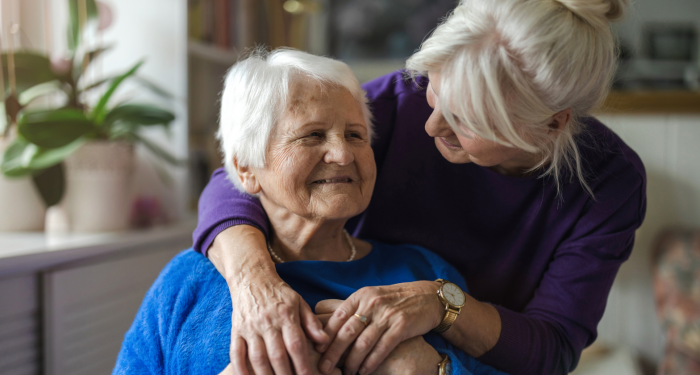
While genetics and luck play a role in aging well, the difference between the 80-year-old who knows everyone at the farmers' market and the one who barely speaks anymore comes down to surprisingly simple daily habits that take just minutes to practice.
Have you ever noticed how some older adults seem to light up a room while others fade into the background?
I see it every Saturday at the farmers' market where I volunteer.
There's this gentleman who must be pushing 80, and he knows everyone's name, remembers details about their grandkids, and always has a witty observation about the weather or local news.
Then there's another vendor, probably around the same age, who barely speaks to anyone anymore.
The difference between them isn't just personality.
Research in psychology suggests it comes down to consistent daily habits that keep our social skills sharp as we age.
After my father had his heart attack at 68, I started paying closer attention to how people age differently.
Some stay vibrant and connected well into their 80s and 90s, while others begin withdrawing from social life much earlier.
The fascinating part? The ones who stay socially sharp aren't doing anything revolutionary.
They're just consistently practicing small, manageable habits that anyone can adopt.
Let me share what psychology tells us about these eight simple practices that make all the difference.
1) They initiate conversations daily
When was the last time you started a conversation with someone you didn't have to talk to?
The socially sharp seniors I know make a point of initiating at least one conversation every single day.
Not deep, philosophical discussions necessarily.
Just simple exchanges like commenting on the produce selection at the grocery store or asking a neighbor about their garden.
Research from the University of Michigan found that just 10 minutes of social interaction can boost cognitive performance.
The key word here is "initiate."
Waiting for others to approach you doesn't provide the same cognitive benefits as being the one who reaches out.
I learned this firsthand when I became my mother's primary caregiver after her surgery.
The days she initiated conversations with nurses or other patients, she seemed more alert and engaged than when she passively received visitors.
2) They remember and use people's names
There's something magical about hearing your own name, isn't there?
People who stay socially sharp make it a practice to remember names and actually use them in conversation.
This isn't just about being polite.
According to neuroscience research, the act of remembering and recalling names exercises multiple brain regions simultaneously.
One woman in my trail running group, who's 72, keeps a small notebook where she jots down names and one interesting fact about each person she meets.
She reviews it regularly.
Sounds like work? Maybe.
But she's also the most popular person at our group gatherings because everyone feels seen and remembered around her.
3) They ask follow-up questions
How often do we ask someone "How are you?" and then actually listen to the answer?
Socially sharp seniors don't just engage in surface-level pleasantries.
They ask follow-up questions that show genuine interest.
"You mentioned your daughter was visiting last week. How did that go?" or "Did you ever figure out that problem with your tomato plants?"
This habit does two things.
First, it strengthens social bonds because people feel heard.
Second, it keeps the brain actively engaged in tracking multiple storylines and relationships, which researchers say is crucial for maintaining cognitive function.
4) They share stories from different life periods
Ever notice how some older adults only talk about the past while others weave stories from all stages of their life?
The socially vibrant ones consciously share stories from various time periods, including recent experiences.
They might tell you about something funny that happened yesterday alongside a memory from decades ago.
This practice keeps them relevant and relatable across age groups.
A conversation with a stranger at the farmers' market recently reminded me why this matters.
She was probably 75 and told me about both her recent adventure trying online dating and her experience as a young nurse in the 1970s.
Her ability to connect different life experiences made her absolutely captivating to talk to.
5) They learn new social technologies
Yes, this means tackling those smartphones and video calls.
Psychology research shows that seniors who embrace new communication technologies maintain larger, more diverse social networks.
You don't have to become a social media influencer, but learning to text, video chat, or use basic apps keeps you connected to younger generations.
The most socially engaged seniors I know didn't let technology intimidate them.
They asked for help, took classes at the library, or had grandkids teach them.
Now they're sharing photos, joining virtual book clubs, and staying connected in ways that would have been impossible before.
6) They maintain diverse friendships
Do all your friends look like you, think like you, and share your exact life experiences?
Socially sharp seniors actively maintain friendships across different age groups, backgrounds, and interests.
This diversity challenges their perspectives and keeps their conversational skills flexible.
In my trail running group, the oldest members are often the ones chatting with the twentysomethings about music or asking the new parents about modern child-rearing approaches.
They're not trying to be young.
They're staying curious about how the world is changing.
7) They practice active listening
When someone's talking, are you really listening or just waiting for your turn to speak?
Older adults who stay socially sharp have mastered the art of active listening.
They make eye contact, nod, ask clarifying questions, and reflect back what they've heard.
"So what you're saying is..." becomes a regular part of their vocabulary.
Studies show this type of engaged listening not only strengthens relationships but also helps maintain cognitive processing speed.
It requires focus, interpretation, and response formulation all happening simultaneously.
8) They express gratitude regularly
This might be the simplest habit of all, yet it's incredibly powerful.
Socially vibrant seniors make expressing gratitude a daily practice.
Not just saying "thanks," but specifically acknowledging what someone did and how it helped.
"Thank you for taking the time to explain that new parking system to me. I was really confused, and you made it so clear."
Research from UC Davis shows that people who regularly express gratitude have stronger social connections and are perceived as more approachable and trustworthy.
It creates a positive feedback loop where people want to engage with you more.
Final thoughts
Looking at these eight habits, what strikes me most is how achievable they all are.
We're not talking about major lifestyle overhauls or expensive interventions.
Just small, consistent practices that keep us engaged with the world around us.
Since leaving my corporate job and spending more time in my community, I've seen firsthand how these habits transform aging.
The people who stay socially sharp aren't necessarily the ones who were always extroverted or naturally gifted conversationalists.
They're the ones who show up, stay curious, and keep practicing these simple social skills day after day.
The beautiful thing about these habits? You can start them at any age.
Whether you're 30, 50, or already past 70, incorporating even a few of these practices into your daily routine can make a significant difference in how connected and engaged you feel.
After all, staying socially sharp isn't just about maintaining cognitive function.
It's about continuing to find joy, meaning, and connection in our relationships throughout every stage of life.
And that's something worth practicing for.
What’s Your Plant-Powered Archetype?
Ever wonder what your everyday habits say about your deeper purpose—and how they ripple out to impact the planet?
This 90-second quiz reveals the plant-powered role you’re here to play, and the tiny shift that makes it even more powerful.
12 fun questions. Instant results. Surprisingly accurate.