
Upper-middle-class households often have more room to experiment, to update, and to curate. Working-class households often learn to stretch, repair, and prioritize function first.

Add VegOut to your Google News feed. 
Have you ever walked into someone’s home and thought, “Wow, this looks gorgeous, but who on earth can afford to live like this?”
As someone who used to spend my days staring at spreadsheets and budgets, I often see home decor through two lenses at once.
On one side, there is the psychology of aspiration, status, and self-expression; on the other, there is the hard reality of what it actually costs.
When those two collide, you get a funny tension.
What feels “normal” or “tasteful” for an upper-middle-class household can look wildly unnecessary, even ridiculous, to someone who grew up counting every dollar.
If you have ever straddled those worlds, you might feel strangely torn between admiration and discomfort.
In this article, I want to unpack five decor trends that tend to show up in more affluent homes and often look wasteful from a working-class perspective:
1) Constant seasonal decor overhauls
Do you know someone who seems to have a completely different house every season?
Fall appears and suddenly there are pumpkins, plaid blankets, burnt orange pillows, themed mugs, and a new wreath.
Winter rolls in and all of that disappears, replaced with silver, gold, forest green, new candles, and a whole new set of cushions.
Then spring, then summer, and repeat.
From an upper-middle-class perspective, this can feel fun and harmless.
It is creative expression, a way to mark the seasons, a hobby.
There is often storage space for bins and a budget line for “home decor.”
From a working-class perspective, it can look like burning money.
All those pillows, candles, signs, wreaths, and table runners add up.
Afterwards, you need somewhere to store them, and you need time to set it all up and pack it away.
If you have grown up in a home where one good set of curtains lasted a decade, buying new ones just to fit a fall color palette feels almost offensive.
Psychologically, there is another layer.
Seasonal overhauls are often driven by a craving for novelty and social comparison.
If your feed is full of influencers with themed front porches and color coordinated mantels, “normal” starts to shift.
If you catch yourself feeling behind, it is worth asking: Am I decorating to nurture my home, or to prove something about my life?
2) Perfectly matched, designer everything
“Perfection is the enemy of good.”
You have probably heard that saying before; I think about it a lot when I step into a home where every single thing matches.
The sofa, the rug, the art, the throws, even the coffee table books look like they were ordered in one coordinated click.
Upper-middle-class households often pay for “cohesive” design.
That might mean hiring an interior designer or buying full sets from a higher-end store.
Rooms end up looking like catalog spreads; calm, curated, and very photogenic.
Working-class households, historically, have done something different.
Furniture is inherited, gifted, found on sale, or picked up secondhand.
Sofas do not always match chairs.
The dining table might be older than everyone at the table.
Things are kept until they break, and function usually beats aesthetics.
From that vantage point, designer perfection can look wasteful and a bit disconnected from real life.
Why replace a perfectly good dresser just because it does not match the new bed frame?
Why buy new “accent chairs” when nobody ever sits in them?
Underneath the matching, there is often a psychological need for control and status.
A coordinated home can be a way of saying, “I am stable. I am successful. I have it together.”
Especially for people who grew up with financial insecurity, a flawless living room can feel like proof that they made it.
But here is the hard question I often ask myself: Is my home a support system, or a showroom?
You can love aesthetics and still resist perfection pressure.
3) Expensive minimalism
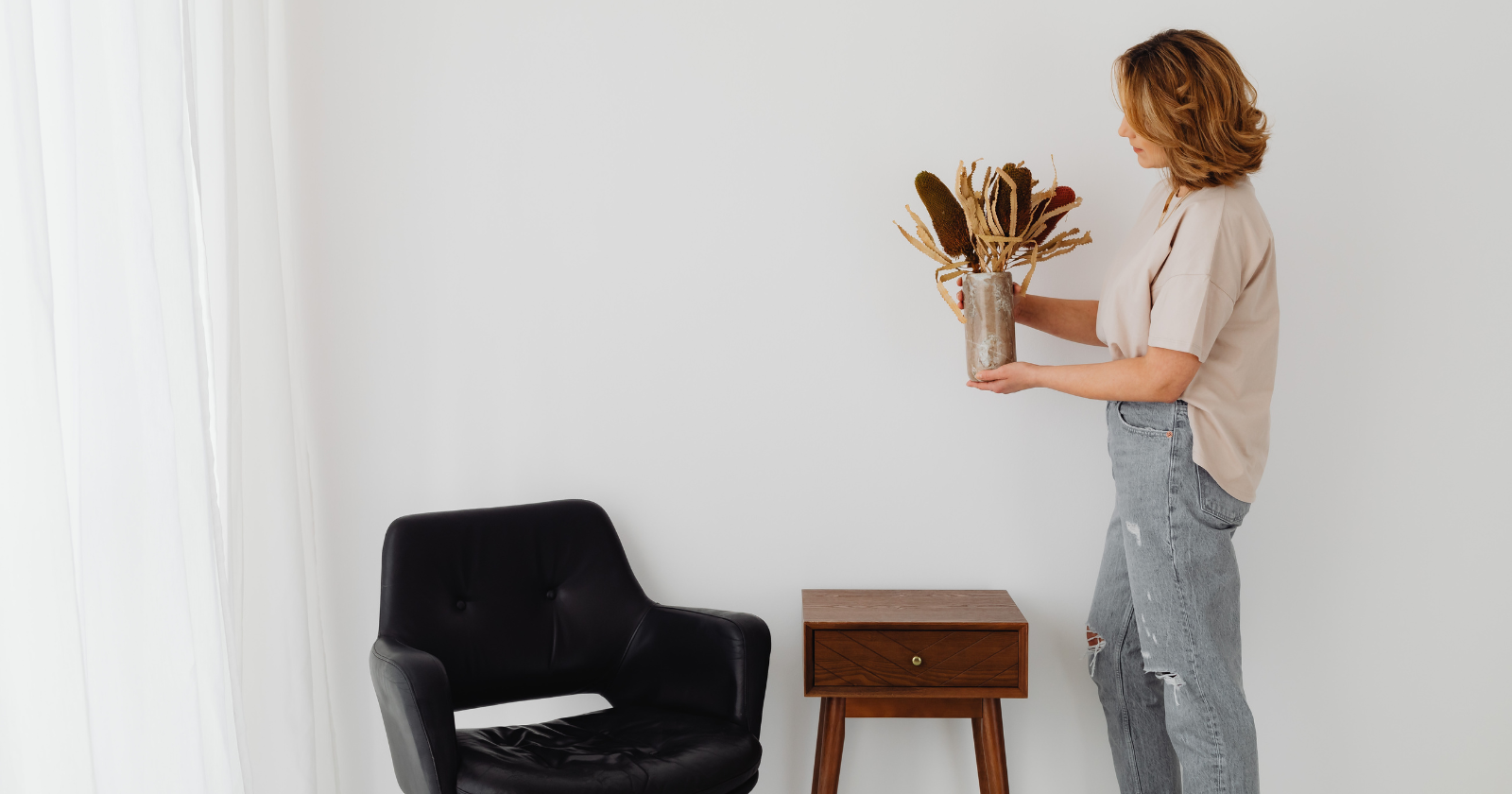
I still remember the first time I walked into a friend’s house that was ultra minimalist.
White walls, white sofa, one sculptural chair, and a single plant in a perfectly neutral pot.
No clutter, no visible storage, no family photos.
It was like stepping into a boutique hotel.
Beautiful, yes, but also, mildly terrifying; I was scared to put my glass down!
Minimalism in its pure form is about owning less and focusing on what truly matters, but the version that often circulates in upper-middle-class circles is very different.
It is “curated minimalism,” which usually means decluttering aggressively, then buying high-end, neutral, often custom pieces to achieve that airy look.
Hidden storage systems, built-in cabinetry, matching containers, and sleek organizers are not cheap.
Neither is replacing colorful but usable furniture with beige, linen, and oak silhouettes.
From a working-class perspective, it can feel like a double hit of waste.
First, you clear out perfectly good items.
Then, you spend a lot of money to make the emptiness look intentional.
There is also a moral tone that can sneak in. Minimal spaces are often framed as “healthier,” “more mindful,” or “more evolved.”
That can make people who cannot afford to toss out backup bedding or extra dishes feel like they are failing some kind of spiritual or psychological test.
If this hits a nerve, it might be worth reframing.
Instead of asking, “How do I make my home look minimalist,” try, “What is my personal version of enough?”
4) Tech-heavy smart home upgrades
Some decor trends are not just about what you see; they are about what is built in.
Smart lighting systems, app-controlled blinds, built-in speakers in every ceiling, smart fridges, expensive thermostats, video doorbells, voice-activated everything.
These upgrades often come as part of a “modern home” package, and they are especially common in upper-middle-class spaces.
From inside that world, they are framed as efficient.
Just tap your phone and the whole house adjusts.
You can dim lights, play music, preheat the oven, and check your front door without moving. It feels luxurious and futuristic.
From a working-class viewpoint, this can look like paying to solve problems that do not really exist.
Light switches work, regular speakers work, and most of us can close our own blinds.
It is not that these things are bad, it is that they are not essential.
There is also the issue of constant upgrades.
Once you are in the smart ecosystem, there is always a newer model, a faster hub, a better integration.
Planned obsolescence is built in. If you grew up in a home where appliances were used until they literally died, replacing them for convenience alone can feel deeply wrong.
Psychologically, tech-heavy decor can be about reducing friction in a life that is overpacked and overstressed.
It can also be about signaling that you are “ahead of the curve.”
Here is the question I recommend playing with: Does this device genuinely reduce my stress, or does it just give me a short-lived hit of excitement?
You are simply allocating your resources differently, which might be the wiser, more grounded choice.
5) Styling for guests more than for real life
Who is your living room actually for? This might be the most important decor question of all.
I have seen many upper-middle-class homes where entire rooms exist primarily for how they look to visitors.
Formal living areas that nobody sits in.
Guest bathrooms that are more luxurious than the family bathroom.
Perfectly staged coffee tables that cannot actually hold a real cup of coffee.
From a working-class perspective, homes have to work hard.
Rooms are multipurpose, furniture needs to be durable, and there is rarely space or budget for areas that are just “for show.”
So, when someone spends serious money on a room that children are not allowed to play in, it can look like pure waste.
At a psychological level, this “for guests” styling often comes from a deep desire to be seen as competent, put together, and respectable.
The house becomes a stage set for identity; if people admire it, there is a sense of validation.
There is nothing wrong with wanting to host beautifully.
The trouble starts when the version of your home that other people see matters more than how you actually live in it day to day.
A simple self check is to ask: If no one else ever saw this room, would I still want it to look and function this way?
If the answer is yes, you are probably aligned; if the answer is no, you may be investing in an image rather than your actual wellbeing.
Final thoughts
When you zoom out, these decor trends are about the stories we tell ourselves about success, safety, and belonging.
Upper-middle-class households often have more room to experiment, to update, and to curate.
Working-class households often learn to stretch, repair, and prioritize function first.
Neither approach is morally superior; they are responses to different realities.
What matters for your self development is noticing where you feel pressure to perform a certain lifestyle and where you feel resentment or judgment toward others.
Both are clues.
Ask yourself:
- What do I secretly believe a “successful” home should look like?
- Which decor choices actually support my values, relationships, and mental health?
- Where am I tempted to spend just to keep up, instead of to truly feel at home?
As someone who cares about money, psychology, and, yes, the planet, I think a lot about waste.
Not just financial waste, but emotional and environmental waste too.
You do not have to copy anyone’s aesthetic, or reject it in anger; you get to build a space that feels honest.
Let your home be a reflection of what you stand for, not just what a certain income bracket has decided is trendy this year.