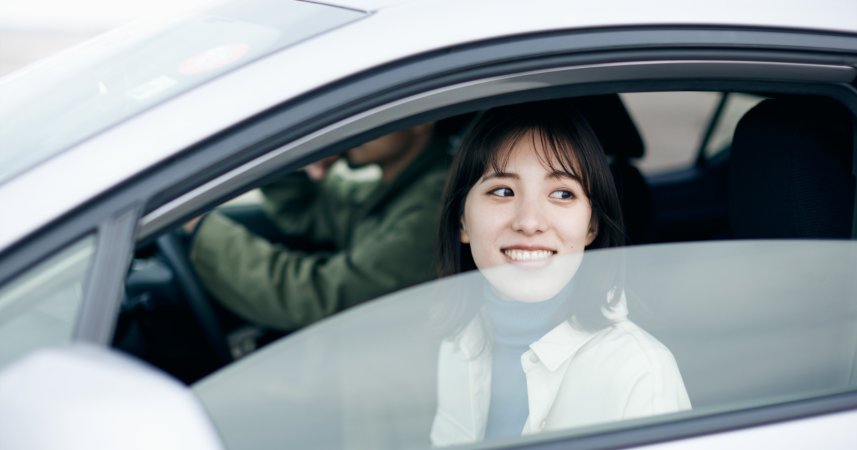
Whether you prefer the driver's seat or the passenger seat reveals more about your personality than you might think.

Add VegOut to your Google News feed. 
I've never enjoyed driving.
Even after years of doing it, I still find it stressful and would rather be the passenger whenever possible.
My partner is the opposite—he always wants to drive and feels uncomfortable when someone else is behind the wheel.
This preference seemed trivial until a therapist I was seeing years ago mentioned that it often correlates with specific personality traits. People who prefer being passengers tend to share certain characteristics that distinguish them from people who prefer driving.
I started paying attention to this pattern among friends and colleagues. Sure enough, the people who always volunteered to drive had noticeably different personalities from those of us who were happy to ride along.
It's not just about skill or comfort with cars. It's about control, responsibility, trust, and how you prefer to engage with the world around you. The driver's seat versus the passenger seat represents fundamentally different ways of moving through life.
Psychology research suggests that this preference reflects deeper traits about attention, control needs, and interpersonal dynamics. People who genuinely enjoy being the passenger rather than the driver tend to display these distinctive characteristics.
1) They're comfortable relinquishing control
The most obvious trait is comfort with not being in control. Passengers literally put their safety in someone else's hands and trust that person to make good decisions.
People who prefer being passengers don't need to control every situation. They can relax into not being responsible for outcomes. This shows up beyond driving—they're comfortable following others' leads, trusting teammates to handle tasks, accepting that they don't need to manage everything.
I'm comfortable not driving because I don't need to control the route, speed, or decisions. I trust the driver and can let go of responsibility. People who hate being passengers often can't stand not controlling the situation.
This doesn't mean passengers are passive in all life areas. It means they can selectively release control when appropriate. They distinguish between situations requiring their management and situations where yielding control is fine.
Drivers often struggle with this. They feel responsible for outcomes even when they're not actually in charge. Passengers can more easily separate their responsibility from others'.
2) They're natural observers rather than doers
Passengers can look around, notice things, pay attention to surroundings in ways drivers can't. This often reflects a broader preference for observing rather than actively doing.
People who prefer being passengers tend to be the ones noticing details, watching interactions, processing what's happening around them rather than being consumed by the doing. They're comfortable in receptive rather than active roles.
I notice so much more as a passenger than I ever did when driving. The architecture, people, small details. Driving required all my attention on the task. As a passenger, I could actually engage with my environment.
This observer orientation shows up professionally too. Passenger-preferring people often excel at analysis, noticing patterns, providing perspective. They see things doers miss because they're not consumed by the action itself.
Drivers are more action-oriented. They want to be doing, controlling, moving things forward. Observers want to be noticing, understanding, processing what's happening.
3) They value relationships over efficiency
Being a passenger means having time to talk with the driver. Many passenger-preferring people actively enjoy this social aspect of not driving.
They prioritize the relationship and conversation opportunity over efficiency. They'd rather spend an extra ten minutes in the car talking than save time by driving themselves separately.
I love being a passenger on long drives because it's uninterrupted conversation time. No distractions, just talking. That's valuable to me in ways that controlling the vehicle isn't.
Drivers often prioritize efficiency and task completion. The drive is about getting from A to B optimally. Passengers see the drive itself as an opportunity for connection.
This reflects broader patterns in how people approach life. Some prioritize tasks and efficiency. Others prioritize relationships and experiences along the way.
4) They trust others easily
Being comfortable as a passenger requires trusting the driver's competence and judgment. People who prefer being passengers generally have higher baseline trust in others.
They assume people are capable unless proven otherwise. They don't need to verify or control others' competence. They can relax into trust without constant vigilance.
My partner struggles with this. He has a hard time trusting other drivers because he notices all the small mistakes people make. I don't notice those things because I'm not tracking driving performance the way he is.
This trust extends beyond driving. Passenger-preferring people tend to delegate more easily, trust colleagues to handle tasks without micromanaging, give people benefit of the doubt about intentions and capabilities.
People who only feel safe driving themselves often have trust issues more broadly. They need to verify competence rather than assuming it.
5) They have lower need for independence and autonomy
Driving represents independence and autonomy. You control where you go, when, how you get there. People who prefer being passengers are often less driven by needs for independence.
They're comfortable with interdependence. Relying on others doesn't threaten their sense of self. They don't need to prove they can handle everything alone.
I never felt limited by not loving to drive because I was comfortable asking for rides or coordinating with others. Independence through car ownership never felt as essential to me as it did to many peers.
This doesn't mean passengers are dependent or helpless. It means they're comfortable with mutual reliance rather than needing to prove self-sufficiency in all areas.
Drivers often equate independence with worth. Being able to transport yourself anywhere anytime feels important to their identity. Passengers are less invested in that particular marker of independence.
6) They're comfortable with passive experiences
Passengers receive the experience of travel without actively creating it. This comfort with passive reception shows up in other preferences too.
People who prefer being passengers often enjoy other receptive activities. Reading, watching films, listening to music, and getting comfortable. They're comfortable receiving experiences rather than always generating them.
I'm very happy sitting back and letting experiences wash over me. I don't need to be actively creating or controlling every moment. Passive reception is satisfying in itself.
Drivers tend to prefer active engagement. They'd rather be doing than watching. Sitting still while someone else acts feels frustrating rather than relaxing.
This relates to how people recharge. Some need activity and action. Others need stillness and reception. Neither is better, but they're distinctly different orientations.
7) They have less spatial anxiety
Driving requires constant spatial awareness and judgment. People who dislike being passengers often struggle with spatial awareness in the passenger seat—they tense up, give advice, feel anxious about distances and timing.
People who prefer being passengers are often less anxious about spatial navigation generally. They don't feel compelled to track routes, don't worry about parking challenges, aren't hyperaware of spatial relationships between vehicles.
I realized I have minimal spatial anxiety. I don't track where we're going or worry about the driver's spatial judgments because I'm not anxious about that domain. People who hate being passengers are often very spatially anxious.
This shows up beyond cars. Spatial anxiety affects how people navigate cities, pack suitcases, arrange furniture. Low spatial anxiety means you're comfortable not managing those details.
8) They're present-focused rather than destination-focused
Drivers are often focused on the destination and getting there efficiently. Passengers can be more present with the journey itself because they're not responsible for navigation and timing.
People who prefer being passengers tend to be more present-focused generally. They're engaged with current experience rather than always goal-focused. The journey matters, not just the destination.
I enjoy the drive itself as a passenger—watching scenery, thinking, talking. The destination is important, but the time spent getting there has its own value.
Drivers are more likely to view the drive as obstacle between current location and desired destination. It's something to complete efficiently rather than experience in itself.
This reflects broader orientations toward life. Some people are always focused on next goals and achievements. Others find value in present moments even when they're transitional rather than destination.
Final thoughts
None of these traits are inherently better or worse. They're just different orientations toward control, trust, action, and experience.
I used to feel slightly embarrassed about preferring to be a passenger, like it indicated some failure of adult competence. Now I understand it reflects my personality characteristics that serve me well in many contexts.
The key is knowing yourself and your preferences rather than forcing yourself into patterns that don't fit. If you genuinely prefer driving, lean into that. If you prefer being a passenger when possible, that's legitimate too.
Understanding these personality correlations also helps in relationships. If you're a driver partnered with a passenger, recognizing these different orientations prevents conflicts about who should drive. It's not about capability—it's about preferences reflecting deeper traits.
If you prefer being a passenger, you probably recognized yourself in most of these traits. If you prefer driving and find being a passenger uncomfortable, these traits probably don't resonate with you at all.
Neither preference is wrong. They're just different ways of being in the world, reflected in something as simple as whether you'd rather drive or ride.