They’re not just bringing wine—they’re bringing social finesse in a bottle.
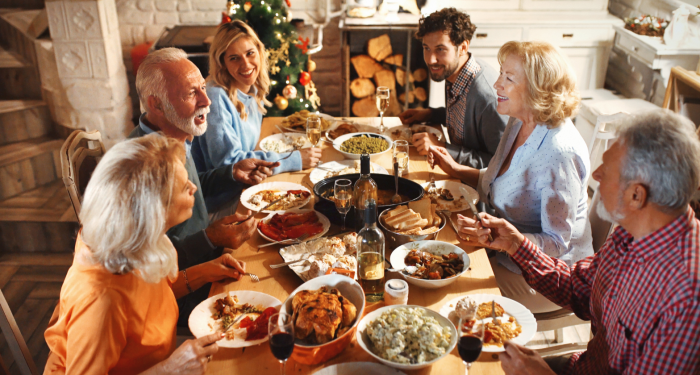
We all know that friend who never shows up empty-handed.
There’s an ease about them—a quiet confidence and thoughtfulness that seems to make gatherings run smoother and feel warmer.
As someone who spent years analyzing patterns as a financial analyst and now spends weekends helping out at farmer’s markets, I’ve noticed that the “wine-bringer” often has a distinct mindset.
It isn’t about the label or the price tag. It’s about psychology—how they relate to people, to rituals, and to shared moments.
A few months ago, I grabbed a medium-bodied Syrah on my way to a neighbor’s impromptu pasta night.
Nothing fancy.
But when I handed it to her, she sighed with relief: “Perfect—I forgot to pick up a red.”
That tiny moment of ease is the point. People who reliably bring a bottle tend to think ahead, reduce friction, and signal, “I see you.”
Here are eight traits I keep seeing—in my life, in the research, and in the little social experiments we call dinner parties.
1. They practice proactive generosity
Do you ever wait to be told what someone needs—and then arrive late to the moment?
Related Stories from VegOut
- The one question boomers keep asking at family gatherings that makes their adult children mentally check out of the conversation every single time
- You know you're afraid of irrelevance when you do these 7 things to prove you're "still got it"
- You know you've given up on fashion when these 10 comfort-based clothing choices have become your entire wardrobe
Wine-bringers don’t.
They default to contribution.
Psychologically, this is prosocial behavior in action: doing something for the group without being prompted.
They assume the host is juggling a dozen details—timers, seating, dietary notes—and they look for one easy remove-a-friction move.
Proactive generosity doesn’t mean extravagance. It means making it easier for the gathering to gather.
A bottle does that: it plugs into almost any menu, it’s shareable, and it communicates, “I’m here to add, not just consume.”
Over time, that habit shapes how others perceive you—reliable, thoughtful, low-maintenance.
Try this: Make generosity your default setting.
If you’re unsure what to bring, text: “Thinking a chilled white or sparkling—any preference?”
You’ve already taken one decision off the host’s plate.
2. They understand the psychology of reciprocity
As noted by social psychologist Robert Cialdini, “The rule for reciprocation says that we should try to repay, in kind, what another person has provided us.”
People who bring wine aren’t score-keeping; they’re honoring a basic social contract.
Someone is opening their home—time, groceries, cleaning, planning.
A tangible gesture restores balance and signals respect.
Reciprocity isn’t manipulation; it’s glue. It keeps relationships from feeling one-sided.
When we contribute, we tell the host, “Your effort matters to me.”
And oddly enough, that makes it easier for the host to receive.
They don’t feel like they’re carrying the whole night alone.
Try this: Think in micro-balances. If the host is cooking a complex main, bring something that can flex—wine pairs broadly and can pivot mid-meal.
If you don’t drink, the principle still holds: bring a sparkling tea, a shrub, or a fancy zero-proof bottle.
3. They’re skilled at reading the room
Some people treat every invite like the same event.
The wine-bringer doesn’t.
They scan for context: Is this a family-style taco bar or a candlelit birthday?
Are kids running around, or is it a grown-ups-only catch-up?
That social attunement—what psychologists call theory of mind—drives better decisions.
A bright, crowd-pleasing white for a sunny porch lunch; a mellow red for rainy-night comfort food; bubbles when celebration hangs in the air.
This isn’t snobbery; it’s empathy. When you read the room well, your choice feels like it belongs.
You’re not just dropping off a bottle; you’re adding to the story the host is already telling with the menu, music, and mood.
Try this: Have a “go-to” in each category—a dependable sparkling, a versatile white, a food-friendly red.
Keep notes on your phone about what friends tend to prefer. Your future self will thank you when you’re late leaving work and dashing into the shop.
4. They use rituals to build connection
“Small things often,” as the Gottman Institute likes to say, are what keep relationships strong.
Bringing a bottle is a small thing, but repeated over time, it becomes a ritual—a predictable, comforting thread that ties people together.
Rituals lower social anxiety.
Guests know what to expect.
Hosts feel supported before anyone rings the bell.
Humans are ritual-making creatures. A cork popping at the threshold, a quick toast while the pasta rests, the host setting your bottle by the sink for later—all of that becomes shorthand for “We belong here.”
Rituals also help us transition—workday to evening, strangers to friends, separate to shared.
Try this: Create a signature move. Maybe you attach a tiny notecard: “For your fridge, not tonight—congrats on the new job!”
Or you always bring a chilled bottle in a reusable bag.
Small. Repeatable. Yours.
5. They notice—and remember—preferences
I once brought a crisp, mineral-driven white to a friend who usually drinks big reds.
Halfway through the night, she whispered, “This is perfect with the lemony beans.” I only knew to grab it because months earlier she’d raved about a coastal white at a picnic.
People who consistently bring wine are sneaky good at pattern recognition.
They file away what others enjoy and fold it into future choices.
Psychologically, this is attentive presence. You’re not trying to impress; you’re trying to echo someone’s taste back to them.
That feels intimate without being intrusive. In a world where most of us are overwhelmed, feeling “seen” is a gift all by itself.
Try this: After gatherings, jot a one-line memory: “Jess—loves anything with grapefruit notes; Sam—prefers low-alcohol options.”
You’ll look like a mind reader the next time.
6. They reduce decision fatigue for the host
If you’ve ever hosted, you know the mental load—timers beeping, a guest arriving early, someone asking where the forks live.
A guest who arrives with a bottle lowers the cognitive temperature.
It’s one fewer “Do we have enough?” loop in the host’s head.
This trait shows up in other ways, too: they open the wine themselves if it’s appropriate; they ask where to put it rather than handing it off mid-stir; they offer to pour for the table when things get busy.
They’re quietly running interference so the host can be present.
Try this: Pair your bottle with a sentence that solves a problem: “This is chilled—want me to pop it and pour while you plate?”
Those 12 words are hospitality jiu-jitsu.
7. They signal reliability and trust
Consistency is a social signal.
When someone always contributes, others map them as dependable.
It’s not about being perfect; it’s about being predictably prosocial.
That reliability compounds.
You’re the person a host will text when they need an extra chair or a quick run for ice.
And because you’ve banked trust through small, steady generosity, you get invited into the inner circle of a gathering—the “help me taste the sauce,” “set the playlist,” “tell me if this is too salty” circle.
Try this: Be the earliest guest to RSVP “Yes, and I’ll bring wine.”
That tiny act flips you from passive recipient to active co-creator of the evening.
8. They find joy in shared experiences (and know it boosts happiness)
There’s compelling evidence that giving to others lifts our own mood.
The classic line from Dunn, Aknin, and Norton is beautifully blunt: “Spending money on others promotes happiness.”
People who bring wine aren’t only greasing the social wheels—they’re also practicing a happiness habit.
Notice how this plays out in real life: the pleasure is less about the sip and more about watching the table light up when someone loves what you brought, or when the host tucks it away “for a quiet Tuesday after you all leave.”
It’s a joy rooted in contribution, not attention.
Try this: When you shop, picture the moment your host will exhale with relief.
Choose for that feeling. If alcohol isn’t your thing, the happiness effect still applies—bring a non-alcoholic aperitif, a beautiful soda, or a carafe of herbal iced tea.
(Bonus for VegOutMag readers: many bottles—wine and zero-proof—now label clearly when they’re vegan-friendly.)
A few practical notes I’ve learned the unglamorous way
-
Label your intention. If you mean it as a host gift for later, say so: “No need to open tonight.” If it’s meant for the meal: “Happy to open this with the pasta.” Clarity prevents that awkward “Do we open this now?” dance.
-
Bring something that travels well. A chilled white or sparkling in an insulated sleeve is your friend in summer. In winter, a corkscrew-free option (screwcap, crown cap) helps when the host can’t find their opener.
-
Mind inclusivity. Ask if anyone’s avoiding alcohol right now. It’s a tiny question that communicates care. And if you’re bringing alcohol, consider pairing it with a non-alcoholic option so everyone can say yes to something special.
-
Price isn’t the point. Thoughtfulness beats prestige every time. A well-chosen, reasonably priced bottle that fits the meal and the mood will always feel more generous than an expensive curveball.
Why this matters more than “good manners”
Is this just etiquette? Not exactly. Etiquette is the surface; psychology is the structure underneath.
People who consistently bring wine are modeling a way of being with others: anticipate needs, honor effort, notice details, relieve strain, and celebrate together.
These are the same muscles that make us good partners, colleagues, and friends.
And if you’re wondering whether this is performative—only generous when people are watching—here’s my litmus test: Would you still bring something if no one noticed?
The wine-bringer’s answer is yes, because for them the payoff is embedded in the act.
Contribution is part of their identity.
Final thoughts
If you want to cultivate these traits, you don’t need a sommelier pin—you need a mindset shift.
Think like a host even when you’re a guest.
Choose small, dependable acts over grand gestures.
Let your contribution be a ritual that says, “I’m on your team.”
Next time you’re invited over, ask yourself: What would make tonight easier for my host and warmer for the group?
Maybe that’s a bottle that dovetails with the menu.
Maybe it’s a bright non-alcoholic spritz for the sober-curious friend.
Either way, you’re practicing the psychology of generosity—one easy, human-sized bottle at a time.

Related Stories from VegOut
- The one question boomers keep asking at family gatherings that makes their adult children mentally check out of the conversation every single time
- You know you're afraid of irrelevance when you do these 7 things to prove you're "still got it"
- You know you've given up on fashion when these 10 comfort-based clothing choices have become your entire wardrobe