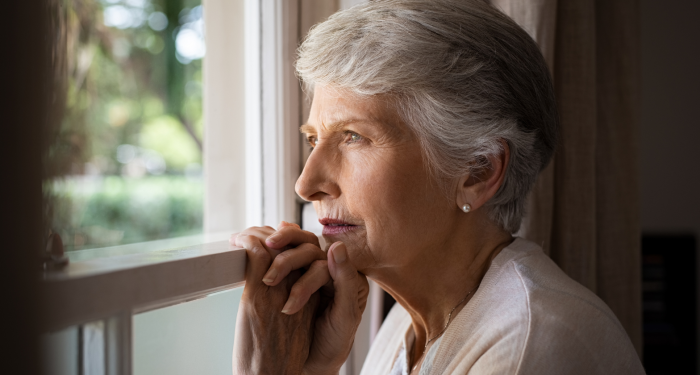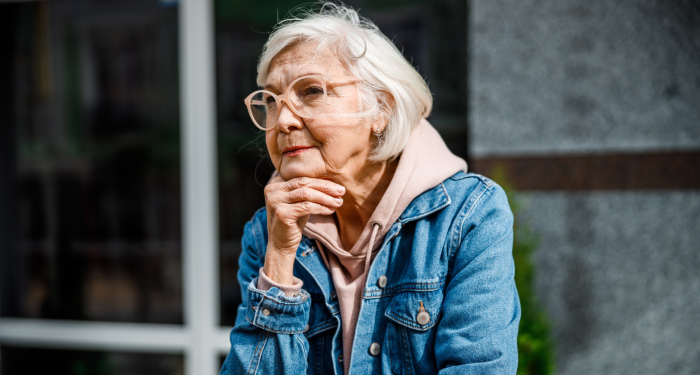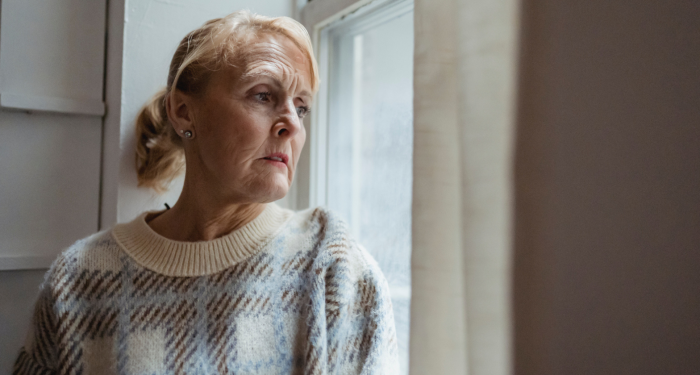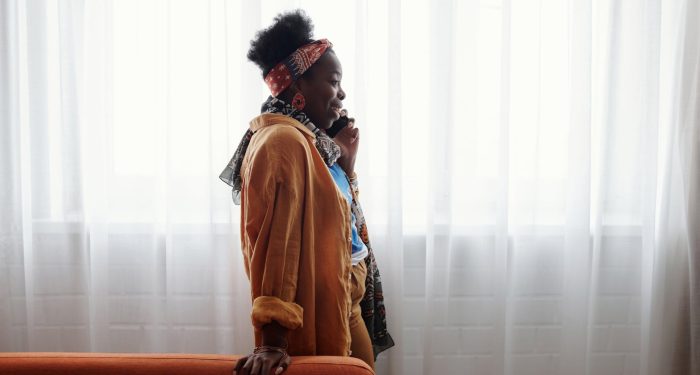
The generation turning 70 right now didn't slow down at the finish line — they crossed it and kept running, and what they're doing with their freedom is worth paying close attention to

Add VegOut to your Google News feed. 
Picture what 70 looked like a generation ago.
There was a kind of cultural script for it. You retired, you slowed down, you handed things over. You were allowed to be tired. The world had already decided what your days would look like, and that picture was largely beige: quiet afternoons, a smaller world, the gentle fade into the background.
Now look at the people actually turning 70 today.
They are not fading. They are, in a lot of cases, doing the most interesting things they have ever done. Not because they suddenly found energy they didn't have before, but because they finally shed the weight of everything that was consuming it.
The mortgage is gone, or manageable. The career that demanded 70-hour weeks has been left behind. The children who needed them — really needed them, in that all-consuming early-years way — have built their own lives. For the first time in five decades, there is no external structure telling them who to be and where to be it.
What a person does with that kind of freedom turns out to be one of the most revealing things about them.
A generation that was built differently
The people entering their 70s right now are largely baby boomers, born between 1946 and 1964. And to understand why so many of them are approaching this life stage differently to the generations before them, it helps to understand what shaped them.
They came of age in one of the most culturally turbulent periods in modern history. Civil rights movements, the feminist movement, anti-war protests, a wholesale questioning of authority and tradition. These weren't abstract news events for boomers — they were the backdrop of their adolescence and early adulthood.
Research published in BMC Geriatrics found that boomers who identified with the counterculture movements of the 1960s and 70s were significantly more likely to view retirement as a new beginning rather than simply an end to working life. The values they formed young — questioning convention, asserting individuality, resisting being told how to live — didn't disappear when they put on suits and took out mortgages. They went underground for a few decades. And now they're back.
This is a generation that was handed a cultural permission slip to redefine things. They redefined youth, they redefined work, they redefined family. It probably shouldn't surprise anyone that they're redefining what it means to be old.
What the freedom actually looks like
It's easy to romanticize this. The reality is that the transition into this much freedom isn't always smooth, and not everyone glides through it gracefully.
For people who spent thirty or forty years defined by a professional role, a title, a set of responsibilities, the sudden absence of all that structure can feel deeply disorienting at first. I've written before about how much of our identity gets quietly tied up in what we do, and that doesn't resolve itself just because the circumstance changes.
But here's what I find genuinely striking: for the people who get through that initial disorientation, what's on the other side often looks remarkably alive.
The woman who spent her career in a job that required her to flatten herself into whatever the role needed, and who now paints every morning in a studio she built in her garage. The man who raised three children largely on his own after a difficult divorce and who is now, at 71, taking his first solo trip to a place he's wanted to visit for thirty years. The couple who downsized, cleared the debt, and are now spending three months a year in a community where they volunteer, cook, and have more genuine human connection than they had in their entire suburban chapter combined.
These aren't exceptions. They're becoming a pattern. And the research supports the idea that this is what happens when people approach later life with purpose rather than resignation.
What purpose actually does
A systematic review published in the International Journal of Environmental Research and Public Health found that having a clear sense of purpose in life improves life satisfaction and actively facilitates healthy aging. Not as a soft, feel-good bonus, but as a measurable factor in both physical and psychological wellbeing.
This matters because it reframes the question. It's not really about what people do with their free time after 70. It's about whether they approach that freedom with intention or simply let the days arrive and pass.
The people writing the most interesting chapters of their later lives aren't necessarily the ones who had the most advantages going in. They're the ones who treated the freedom as something to be used deliberately. Who asked themselves what they actually wanted rather than waiting to be told. Who were willing to feel temporarily lost in order to find something more honest on the other side.
That kind of willingness takes courage. But the interesting thing is that by 70, most people have already done genuinely hard things. They've outlasted difficulty. They know what they're made of in ways that a younger person simply hasn't had the time to find out yet.
The shed weight
Let me stay for a moment on what actually gets dropped when the career ends, the mortgage clears, and the children leave.
Because I don't think we talk enough about how heavy that accumulation was.
Not heavy in a purely negative sense. Most of it was chosen and meaningful. But careers are demanding. Mortgages are a form of obligation that quietly structures nearly every financial decision for decades. Parenting, real hands-on parenting, takes a particular kind of sustained attention that leaves very little room for anything else.
There's also the social performance of all of it. The version of yourself you present at the office, at the school gate, at the neighborhood gathering. The careful management of how you're perceived. The energy that goes into maintaining appearances, meeting expectations, being the person various roles require you to be.
By the time someone reaches their late sixties or early seventies, a lot of that falls away naturally. Not all of it, and not without some grief. But there's a lightness that many people in this life stage describe that I don't think gets talked about enough. A sense of finally being allowed to just be themselves, without the performance. After fifty years of showing up for everyone else's version of their life, that's not a small thing.
No editor and no deadline
There's something I find quietly thrilling about the idea of writing a chapter of your life with no editor and no deadline.
So much of adult life is structured by external expectations. Careers have performance reviews. Parenting has phases and milestones. Even relationships have implicit timelines, the social pressure to have reached certain things by certain ages.
At 70, most of that dissolves. What remains is entirely up to the person. What do you want to learn? Who do you want to spend time with? What do you still want to make, build, experience, or understand?
Those are genuinely open questions. And open questions, after decades of having all the questions pre-loaded, are a gift, even when they're briefly terrifying.
I think about the people I've met through volunteering, through running trails in the early morning, through the communities that exist around shared interest rather than shared circumstance. The ones I find most alive, regardless of age, are the ones still asking themselves real questions. And those questions, I've noticed, tend to get more interesting rather than less as people get older.
There's less to prove. Less performance required. The question stops being "how am I doing relative to others?" and becomes something more essential: what do I actually think? What do I actually want? What would I do if nobody was watching or evaluating?
That's a very good question to finally get to ask.
What this generation is showing us
There's something worth paying attention to here that goes beyond any individual story.
The generation now entering their 70s is, by sheer demographic size, going to reshape what this life stage looks like, just as they reshaped every stage they've passed through. And the ones doing it well are offering a kind of template that didn't really exist before.
Not the passive, slow-fade version of old age that the generation before them largely accepted. And not a frantic, denial-of-aging version either, where the goal is to keep pretending nothing has changed.
Something more honest than either of those. An acknowledgment that yes, the landscape has shifted, the obligations have lifted, the body is different. And a deliberate decision about what to do with that reality rather than simply waiting for it to unfold.
That's what the most interesting people in this chapter have in common. They decided. They took the freedom seriously. They treated the open page as an invitation rather than a void.
Final thoughts
The people entering their 70s right now are carrying decades of accumulated experience, perspective, and self-knowledge. They've been through enough to know what actually matters to them, which is something it genuinely takes time to learn.
The careers that consumed them gave them skills. The mortgages that owned them gave them stability. The children who needed them gave them a kind of purpose that ran very deep.
None of that was wasted. It was the first half of the story.
What they do now, with no external script, no performance required, no one to answer to but themselves — that's the part that's still being written.
And from where I'm standing, it looks like one of the most interesting chapters yet.
What’s Your Plant-Powered Archetype?
Ever wonder what your everyday habits say about your deeper purpose—and how they ripple out to impact the planet?
This 90-second quiz reveals the plant-powered role you’re here to play, and the tiny shift that makes it even more powerful.
12 fun questions. Instant results. Surprisingly accurate.