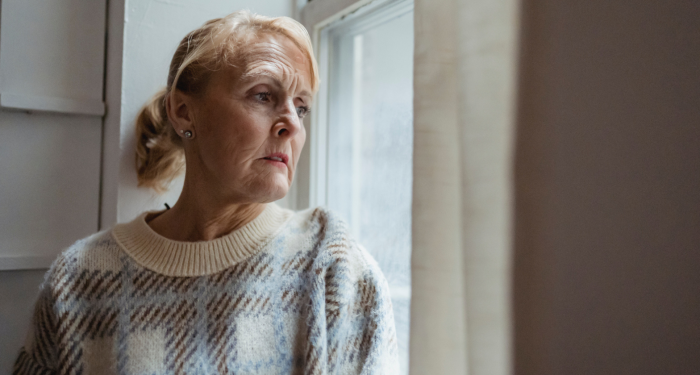
The reason so many people disappear in retirement has nothing to do with health or money — it's that the world they're retiring into requires them to build their social life from scratch, and nobody warned them.

Add VegOut to your Google News feed. 
Imagine two versions of the same person retiring thirty years apart.
The first retires in 1995. She attends the same church she has gone to for twenty years, where she knows half the congregation by name.
Her neighbors have lived on the same street for decades. Her husband belongs to a union social club. The local civic groups, the bowling league, the community committees — they all still have regular meetings, regular faces, and a standing place in the weekly calendar. When she stops working, the rest of her social world stays largely intact. Human contact doesn't require planning. It just arrives.
The second version retires today. She hasn't attended church in years, like most people her age.
She's moved twice in the last decade. Her neighbors cycle through with the rental market. The union is long gone. The civic clubs are hollowed out. Her adult children live in different cities. Her closest friendships from work are already fading, just a few months in.
When she stops working, the human contact stops with it. There's no replacement infrastructure. And nobody told her there would need to be.
Same person. Completely different world to retire into.
What work was actually doing all along
Work is an odd thing to grieve, especially when you spent decades looking forward to leaving it. But the grief isn't really about the work itself. It's about what work quietly provided alongside it.
A reason to get dressed and leave the house. A predictable rhythm of human faces. Small talk that didn't require effort. Colleagues who became, if not close friends, at least familiar presences. The low-grade hum of being part of something ongoing.
None of that felt like a social life exactly. But it was doing the work of one.
When I left my career in finance at 37, one of the things that hit me hardest, and that I hadn't anticipated at all, was how quickly the social structure dissolved. People I'd shared lunch with almost every day for years became occasional email contacts within months. It wasn't anyone's fault. We'd been work friends, which is a real and valid kind of friendship, but it didn't survive the removal of the shared context.
I was 37, with energy and time to rebuild. I found a trail running group. I started volunteering. I gradually stitched together a social life that didn't depend on being employed anywhere.
But here's what I keep thinking about: that process required significant intentional effort even for me, at that age, in those circumstances. For someone stepping out of a fifty-year working life at 65, into a world that has systematically shed most of its ambient community structures, the task is much harder. And far fewer people are prepared for it.
The infrastructure that quietly disappeared
A generation ago, social contact had scaffolding. Not perfectly, and not equally for everyone, but it existed.
Churches, synagogues, mosques — communities where people saw each other every week, knew each other's names, and showed up for each other in concrete ways. Unions, where working men and women had a social identity beyond their job title. Bowling leagues and civic organizations and women's clubs and fraternal societies, where the point wasn't just the activity but the recurring gathering of known faces. Neighborhoods where people had lived for decades and actually spoke to each other across fences.
Robert Putnam famously documented the collapse of this social architecture in his book Bowling Alone, noting that Americans became dramatically less connected through voluntary associations, civic organizations, and community groups across the final decades of the twentieth century. The bowling league became the occasional evening out with whoever happened to be free. The regular meeting became the group chat that gradually went quiet.
What replaced all of that? Largely nothing with the same organic density of human contact. The internet offered connection of a kind, but not the embodied, recurring, physically present kind that actually keeps loneliness at bay.
For the generation now retiring, this isn't abstract social history. It's the landscape they're walking into.
How serious the problem actually is
A review published in Innovation in Aging, drawing on the nationally representative U.S. Health and Retirement Study, found that 43 percent of Americans aged 60 and older report feeling lonely. Around one in four adults over 65 are considered socially isolated. These are not small numbers. They represent tens of millions of people.
And the consequences aren't just emotional. Social isolation and loneliness are linked to higher risks of heart disease, cognitive decline, depression, and significantly shortened life expectancy. Loneliness, at a physiological level, activates the body's stress response systems in ways that quietly erode health over time. It is, to use the language researchers now commonly reach for, a public health crisis.
What's striking is that the crisis is not primarily driven by personality or preference. Most people who become isolated in retirement didn't choose isolation. They lost the structures that had been generating contact for them, and they didn't know how to replace them, and the world around them had quietly dismantled most of the ready-made alternatives.
A longitudinal study published in BMC Public Health found something particularly pointed on this front: in individualistic societies like the US and Australia, retirement was associated with higher levels of loneliness than in more communitarian cultures. The more a society expects people to manage their own social lives independently, the harder retirement hits those who haven't built something deliberate to land on.
That's not an accident of personality. It's a structural problem.
The difference between passive and intentional connection
Here's a distinction worth sitting with.
For most of adult life, the majority of our social contact is what you might call passive. It arrives as a byproduct of things we're doing anyway. Work creates colleagues. The school run creates other parents. The gym class creates familiar faces. None of it requires a specific decision to go and connect. The connection is a side effect of existing structure.
Intentional connection is different. It requires choosing to pursue contact without a built-in reason. Joining something new at a stage of life when joining things feels awkward. Showing up to places where you don't already know anyone. Putting in repeated effort before any relationship has warmed enough to feel natural. Tolerating the discomfort of early-stage social investment when it would be much easier to stay home.
That's a genuinely different skill set. And it's one that most people have rarely had to use, because passive contact handled it for them for fifty years.
The people who navigate retirement well, the ones who stay connected and engaged and alive in the fullest sense, have almost always made this shift. They're the ones at the Saturday farmers' market every week not just for the vegetables, but because it's become part of how they know people. They're in the running group, or the community choir, or the volunteer organization, or the book club that actually meets in person. They've built the infrastructure deliberately, because the ambient infrastructure that used to do it for them no longer exists.
Why this matters more now than it used to
I want to be honest about something: the people who struggle most with this aren't failing at retirement. They're encountering a genuine structural shift that the culture hasn't caught up to yet.
The retirement planning industry is almost entirely focused on money. How much to save, when to take Social Security, how to structure withdrawals, how to manage healthcare costs. All of that matters enormously. But it addresses the financial architecture of later life while almost entirely ignoring the social one.
Nobody sits down with a soon-to-be retiree and says: the social contact you've been receiving passively for forty years is about to stop, and there is no default system that will replace it, so you need to start building something intentional now, before you retire, while you still have the energy and the routine to make new habits stick.
That conversation should be routine. It isn't.
What building it actually looks like
The good news is that intentional community is absolutely buildable. The people doing it aren't particularly special. They're just the ones who understood the problem in time and decided to take it seriously.
It tends to start with repetition. Not one-off events or occasional outings, but recurring commitments. The same group, the same day, the same place. That repetition is what turns strangers into familiar faces and familiar faces into people you actually know. It takes time, but it works.
Volunteering is one of the most reliable routes, because it combines recurring structure with shared purpose. The research on this is consistent: people who volunteer regularly report less loneliness and stronger sense of meaning than those who don't, regardless of age.
Physical activity in a group context works for the same reasons. The running club, the yoga class, the walking group. The activity is almost beside the point. What matters is the recurring gathering.
And for people who find all of this uncomfortable at first, which is most people, it's worth remembering that the discomfort is normal. Making friends as an adult, without the built-in context of school or workplace, is genuinely awkward for almost everyone. It gets easier with repetition. The awkward early weeks are just the entry cost.
Final thoughts
The generation retiring right now isn't more introverted, more difficult, or less social than the one that came before. They're retiring into a fundamentally different social landscape, one where the default structures that used to generate human contact have largely dissolved, and the replacement is intentional effort.
The ones who are thriving figured that out. They started building before they needed it, or they built it quickly after. They treated social investment as essential infrastructure, not optional enrichment.
The ones who are quietly disappearing often didn't know they needed to.
That's the conversation worth having. Not just about pensions and portfolios, but about the other thing that makes a life worth living: the repeated, warm, familiar presence of other people who know your name.
That doesn't happen automatically anymore. But it can still happen. You just have to decide to build it.