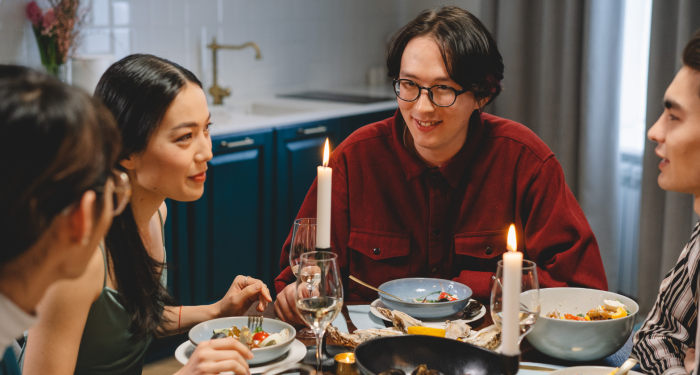
Their favorite memories weren't the promotions or vacations they'd worked toward for decades, but the Tuesday night spaghetti dinners and bedtime stories they'd rushed through—ordinary moments they'd traded for "important" meetings they can't even remember now.
When I set out to interview 50 men in their 70s about their favorite memories, I expected stories of adventure, career triumphs, maybe some wild tales from their youth. What I got instead left me sitting in my car after the last interview, crying into a cold cup of coffee.
"The saddest thing is not that youth is gone," writer Somerset Maugham once observed, "but that we were so busy we barely noticed it passing." This quote kept echoing in my mind as I listened to these men share what truly mattered to them after seven decades of living.
What struck me wasn't just what they remembered fondly, but the weight of regret that colored so many of their responses. These weren't bitter men. They were successful by most standards, accomplished in their fields, providers for their families. Yet their favorite memories revealed a pattern so consistent it felt like a warning bell for those of us still in the thick of our busy lives.
1. The ordinary Tuesday nights they can never get back
"My favorite memory? Tuesday nights when the kids were little," one retired engineer told me, his voice catching slightly. "We'd have spaghetti, and my daughter would get sauce all over her face. My wife would laugh until she cried. Nothing special happened. We were just together."
This became a recurring theme. Not the graduations, promotions, or vacation photos that line their walls, but the mundane moments they once rushed through to get to something "more important." Another man described how he used to read the newspaper while his son played with blocks at his feet. "I thought I had all the time in the world to play with him later," he said. "Later came and went."
The heartbreak here isn't in what they lost, but in how available it once was. Every single day offered these moments, and they passed them by for deadlines, meetings, and the eternal promise of "when things slow down."
2. The last real conversation with their fathers
Nearly half the men I interviewed circled back to their relationships with their own fathers, and specifically, conversations they wished they'd had. One man, a retired physician, told me about the last time he saw his father healthy. They talked about the weather, the news, anything but what mattered.
"I wanted to tell him I understood why he worked so hard, that I forgave him for missing my games," he said. "But we just talked about my car needing new tires."
My own father's heart attack at 68 made me grateful I left corporate stress when I did, but hearing these stories reminded me that leaving work behind is only part of the equation. These men had decades to have these conversations, yet something always held them back. Pride, fear, the simple assumption there would be more time.
Several mentioned finding letters after their fathers died, expressions of love and pride that were never spoken aloud. "We both knew it," one said, "but knowing it and hearing it are different things."
3. The friend they let drift away
"I had this buddy from college," started one story that represented dozens of similar ones. "We were inseparable. Best man at each other's weddings. Then life got busy."
The details varied, but the pattern was identical. A friend who was once central to their lives slowly became a Christmas card, then an occasional Facebook like, then a name they heard had passed away. No falling out, no dramatic ending, just the slow fade of prioritizing everything else above friendship.
One man showed me a photo from 1975: six friends on a fishing trip, all grinning, holding up their catches. "I'm the only one left," he said, "and I can't remember the last time I talked to most of them before they died."
What made these stories particularly painful was the recognition that maintaining these friendships would have required so little effort. A phone call here, a lunch there. But somehow, there was always something more pressing.
4. The dance they sat out
This one surprised me, but it came up repeatedly in different forms. Literal dances they didn't dance, songs they didn't sing, moments of joy they held themselves back from out of embarrassment or self-consciousness.
One man recalled his daughter's wedding where his wife begged him to dance to their song. "I told her I was too tired, but really, I was worried about looking foolish," he admitted. "She died three years later. I would give anything to look foolish with her now."
Another talked about never joining his kids when they played in the rain, always being the responsible one watching from the porch. "I stayed dry," he said, "and missed everything that mattered."
The regret here was visceral. These men realized too late that dignity and composure are poor substitutes for shared joy. Every moment of holding back was a memory that never got made.
5. The hobby they always meant to start
"I was going to learn guitar when I retired," became almost a punchline, except no one was laughing. Painting, writing, woodworking, traveling to specific places, learning languages. The list of postponed passions was endless.
What made this particularly poignant was that many had actually tried to start these hobbies in their 70s, only to find that arthritis, declining energy, or cognitive changes made it far more difficult than it would have been even a decade earlier.
"I collected guitar magazines for 30 years," one told me. "Planning for when I'd have time. Now my fingers won't cooperate, and those magazines are in the recycling bin."
The tragedy wasn't that they never became professional musicians or artists. It was that they denied themselves the simple pleasure of being bad at something they loved, of learning and growing just for the joy of it.
The pattern I couldn't ignore
After completing all these interviews, I sat with my notes spread across my kitchen table, looking for patterns. What I found was both simple and devastating: these men's favorite memories were all of times when they were fully present, and their deepest regrets were of all the times they weren't.
Not one man mentioned wishing he'd worked more hours. Not one talked about needing a bigger house or a fancier car. The promotions they'd sacrificed family dinners for were footnotes. The meetings that seemed so crucial were forgotten entirely.
Instead, they remembered the weight of their children when they were small enough to carry. The smell of their wife's perfume on a summer evening. The sound of their best friend's laugh. The feeling of grass under bare feet.
During one particularly moving conversation at the farmers' market where I volunteer, an elderly gentleman told me, "You want to know the secret? It's not about finding time for what matters. It's about realizing that what matters is already here, disguised as ordinary life."
What this means for the rest of us
These conversations changed me. Now, when my inclination is to check my phone while someone's talking, I think of all those men who can't remember their last real conversation with someone they loved. When I'm tempted to skip a family dinner for work, I remember the Tuesday night spaghetti dad.
The heartbreak in these men's stories isn't that life was tragic. It's that life was beautiful, available, and present, and they were too busy looking ahead to notice. They had everything they now miss desperately. They just didn't know it at the time.
We can't get back time, but we can learn from those who've run out of it. Their favorite memories and deepest regrets are roadmaps, showing us both what to cherish and what to avoid. The dance is happening now. The conversation needs to happen today. The ordinary Tuesday night in front of you is someone's future favorite memory, if you're present enough to live it.
Perhaps the most heartbreaking response came from the last man I interviewed. When I asked about his favorite memory, he was quiet for a long moment. Then he said, "My favorite memories are all of times I almost missed but didn't. The problem is, I can count them on my hands."
We all have more than ten chances left. The question is: will we take them?
If You Were a Healing Herb, Which Would You Be?
Each herb holds a unique kind of magic — soothing, awakening, grounding, or clarifying.
This 9-question quiz reveals the healing plant that mirrors your energy right now and what it says about your natural rhythm.
✨ Instant results. Deeply insightful.