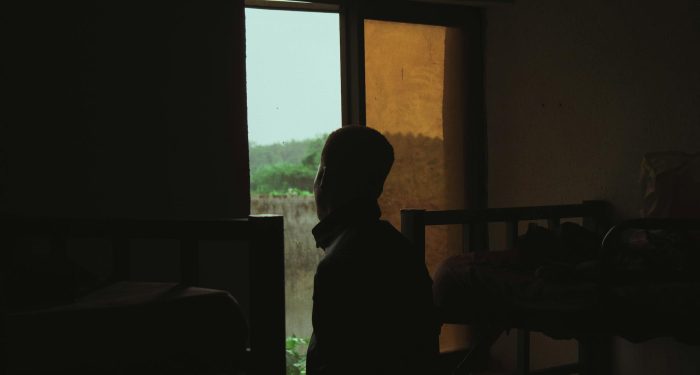
Being told you were mature for your age as a child might have felt like winning the lottery, but decades later, you're probably still performing the exhausting role of the responsible adult who never learned how to simply exist without proving their worth.

Add VegOut to your Google News feed. 
"You're so mature for your age."
If you heard this growing up, you probably felt proud at the time. Special, even. But here's what I've come to realize after years of unpacking my own childhood: that compliment might have stolen something precious from you. Your permission to just be a kid.
I was labeled "gifted" in elementary school, and while it felt like winning the lottery back then, it created this invisible pressure cooker I didn't even know I was living in. Every mistake felt catastrophic. Every B+ felt like failure. And somewhere along the way, I stopped being a child and started being a performer in my own life.
Sound familiar? You're not alone. Behavioral experts are now recognizing that this seemingly innocent praise often creates adults who struggle with specific patterns. Let's talk about the eight traits that tend to show up if you were one of those "mature" kids.
1. You're uncomfortable with playfulness or "silly" activities
When was the last time you did something just for fun? Not productive fun, not educational fun, just pure, pointless joy?
If you're squirming at the thought, welcome to the club. Those of us who were praised for being mini-adults often feel guilty about activities that don't have a purpose. Dancing in your kitchen? Feels weird. Playing a video game? There must be something more productive you could be doing. Building a blanket fort with your kids? You might do it, but you're checking your phone the whole time.
Dr. Lachlan Soper, a clinical psychologist, explains it perfectly: "By saying that a child is mature for their age, it can put a heavy weight of responsibility on their shoulders."
That weight doesn't magically disappear when you turn 18. It stays with you, making every moment of lightness feel like you're shirking some invisible duty.
2. You struggle to ask for help
Remember being the kid who helped everyone else with their homework? The one teachers trusted to watch the class when they stepped out? That felt good, right? But it also taught you that needing help meant you weren't living up to your "mature" label.
Fast forward to now. Maybe you're drowning at work but won't delegate. Perhaps you're going through something tough but haven't told anyone. You've become so used to being the helper that being helped feels like admitting defeat.
I learned this the hard way when I started as a junior analyst at 23. I was working 70-hour weeks, sacrificing everything for career advancement, and slowly burning out. But asking for support? That felt like proving I wasn't as capable as everyone thought.
3. You feel guilty when you're not being productive
Weekends make you anxious. Vacations feel wrong unless you're checking emails. Even when you're sick, you're thinking about what you should be doing instead of resting.
This isn't normal adult responsibility. This is what happens when childhood becomes a performance of adulthood. You learned early that your value came from being useful, responsible, accomplished. So now, rest feels like rebellion.
I spent years believing that rest was laziness and productivity was virtue. Spoiler alert: That's a recipe for burnout, not success.
4. You have a hard time setting boundaries
Mature kids were often the family mediators, the friend group therapists, the ones who smoothed things over. We learned to manage other people's emotions before we even understood our own.
Now? Saying no feels impossible. You take on extra projects you don't have time for. You listen to that friend's drama for hours even when you're exhausted. You show up for everyone except yourself.
The truth is, those of us who were "mature for our age" often became emotional dumping grounds for adults who should have known better. And we're still playing that role, even when it's destroying us.
5. You're a chronic overthinker
Every conversation gets replayed. Every decision requires a pro-con list. You analyze your emotions instead of feeling them.
Why? Because mature kids learned to think like adults before their brains were ready for it. We were praised for being logical, reasonable, thoughtful. But nobody taught us that sometimes, you just need to feel your feelings and move on.
6. You struggle with vulnerability
Mature kids didn't cry over small things. They didn't throw tantrums. They were reasonable, composed, adult-like. But guess what that teaches you? That your messy, human emotions aren't acceptable.
Justin Vafa William, a licensed clinical social worker, notes: "I think it is generally intended as a compliment. But despite that intention, it does have the potential to be damaging."
And one of the biggest damages? Learning to hide your real self behind a mask of having it all together.
7. You feel responsible for everyone's emotions
If someone's upset around you, you immediately wonder what you did wrong. If a friend is having a bad day, you feel like you need to fix it. If your partner is stressed, their stress becomes your emergency.
This goes beyond empathy. This is the result of being the "mature one" who was expected to understand and manage adult emotions before you'd even figured out your own. You became the family emotional regulator, and you never really stopped.
8. You have imposter syndrome about your accomplishments
Here's the paradox: You work harder than everyone else, achieve more, push yourself further, but it never feels like enough. You're constantly waiting for someone to figure out you're not as capable as they think.
Why? Because deep down, you know the truth. You weren't actually more mature. You were just a kid who learned to perform maturity to survive, to earn love, to feel valuable. And now you're an adult who's still performing, terrified that if you stop, you'll lose everything.
Final thoughts
If you're recognizing yourself in these traits, I want you to know something important: This isn't your fault. You were a child doing what children do, adapting to what the adults around you needed.
But here's the thing. You get to stop performing now. You get to be messy, playful, needy, human. You get to ask for help, set boundaries, rest without guilt. You get to finally give yourself permission to just be, without constantly proving your worth through your maturity.
The process of unlearning these patterns isn't easy. I've had to work through people-pleasing tendencies that ran so deep I didn't even recognize them as problems. But every small step toward authenticity, every moment you choose your needs over others' comfort, every time you let yourself be silly or vulnerable or imperfect, you're reclaiming something that was taken from you.
You were never too mature for your age. You were a child who deserved to be one. And it's never too late to give yourself that permission now.
If You Were a Healing Herb, Which Would You Be?
Each herb holds a unique kind of magic — soothing, awakening, grounding, or clarifying.
This 9-question quiz reveals the healing plant that mirrors your energy right now and what it says about your natural rhythm.
✨ Instant results. Deeply insightful.

Avery White
Formerly a financial analyst, Avery translates complex research into clear, informative narratives. Her evidence-based approach provides readers with reliable insights, presented with clarity and warmth. Outside of work, Avery enjoys trail running, gardening, and volunteering at local farmers’ markets.
More Articles by Avery