
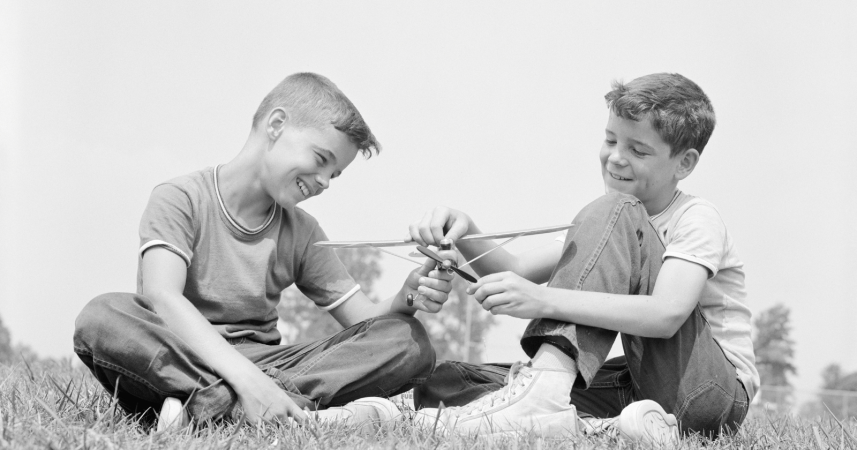
From catching fireflies in mason jars to building rickety treehouses that defied physics, those born in the 60s mastered the art of entertainment that cost nothing but delivered everything—and their secrets might just cure our modern boredom epidemic.

Add VegOut to your Google News feed. 
Remember when the best entertainment came from your own imagination and the people around you?
I was talking with a friend's mother recently, and she started telling me about her childhood in the late 60s and early 70s. Her eyes lit up as she described summer days that stretched endlessly, filled with adventures that cost absolutely nothing. It got me thinking about how different things were back then. No smartphones, no streaming services, no constant pressure to spend money on entertainment.
Growing up, my own parents would share similar stories. My mother, who was a teacher, loved reminding me how creative kids had to be with their free time. And you know what? Those born in the 60s might have been onto something. They found joy in simple pleasures that we've somehow complicated today.
So I dug deeper, talked to more people from that generation, and discovered some fascinating patterns. These free activities weren't just about saving money; they built communities, sparked creativity, and created memories that people still cherish decades later.
Ready to take a trip back in time? Here are nine things people born in the 60s did for fun without spending a dime.
1. Playing street games until the streetlights came on
Can you imagine kids today organizing their own games of kick the can, red rover, or hide and seek that involved the entire neighborhood?
Back then, the street was the playground. Kids would gather after school and create elaborate games with made-up rules. One person I spoke with told me about a game they invented called "Mission Impossible" where they'd pretend their suburban block was a spy training ground. They'd crawl under hedges, jump fences, and create secret codes using chalk on the sidewalk.
The beauty of these games? They required nothing but imagination and willing participants. No equipment to buy, no admission fees, no organized leagues with uniforms. Just pure, unstructured play that often lasted hours.
Parents didn't hover or schedule these activities either. Kids just showed up, figured out what to play, resolved their own disputes, and went home when Mom yelled that dinner was ready or when darkness fell.
2. Building forts and treehouses from scrap materials
Every vacant lot, wooded area, or backyard with a decent tree became prime real estate for fort building.
Kids would scavenge old wood from construction sites, grab hammers and nails from Dad's toolbox, and spend entire weekends constructing elaborate hideouts. These weren't the prefab playhouses you see today. They were architectural experiments that sometimes stayed up, sometimes collapsed spectacularly.
A colleague once told me about the summer he and his friends built a two-story fort using old pallets and plywood they found behind a grocery store. It became their headquarters for an entire summer, complete with a rope ladder and secret password. The fort might have been rickety, but the memories? Rock solid.
3. Exploring on bikes without destination
Bikes weren't just transportation; they were freedom machines.
Kids born in the 60s would hop on their bikes after breakfast and not return until dinner. They'd explore new neighborhoods, find shortcuts through woods, race down hills, and discover hidden streams or abandoned buildings. No GPS, no cell phones, no predetermined routes.
The adventure was in not knowing exactly where you'd end up. Maybe you'd find a new fishing spot, stumble upon a pickup baseball game, or discover a hill perfect for racing. The bike expanded your world exponentially, and it cost nothing beyond the initial purchase (often a hand-me-down anyway).
4. Creating elaborate performances and shows
Who needs Broadway when you have a garage and some old curtains?
Kids would spend weeks preparing variety shows, magic acts, or plays to perform for parents and neighbors. They'd write scripts on notebook paper, create costumes from old clothes, and rehearse endlessly. The garage door would rise like a theater curtain, revealing eager performers ready to entertain anyone willing to watch.
These weren't just quick skits either. Kids would sell homemade tickets (though admission was usually free), create programs, and take their roles seriously. Whether it was lip-syncing to records, performing card tricks learned from library books, or acting out original stories, the creativity was boundless.
5. Starting pickup sports games in any available space
You didn't need official fields or organized leagues to play sports.
Any flat surface became a playing field. Street hockey with a tennis ball, basketball with a hoop nailed to a garage, football in someone's backyard, or baseball in an empty lot. Teams were chosen on the spot, rules were flexible, and everyone played regardless of skill level.
What strikes me most about these stories is how democratic these games were. No one sat on the bench. If you showed up, you played. Younger kids learned from older ones, and everyone developed not just athletic skills but negotiation and conflict resolution abilities too.
6. Reading comics and trading with friends
Before the internet, comic books were the ultimate shared entertainment.
Kids would pool their collections, creating informal lending libraries. You'd read your comics multiple times, then trade with friends, exponentially expanding what you could read without buying more. These trading sessions were events themselves, with kids negotiating complex multi-comic deals like miniature Wall Street traders.
Library cards were golden tickets too. Kids would check out stacks of books and read voraciously. Reading wasn't seen as homework but as entertainment, especially on rainy days or during long summer afternoons.
7. Going on nature adventures and collecting treasures
The outdoors was an endless source of free entertainment.
Kids would spend hours catching fireflies, collecting interesting rocks, pressing flowers, or hunting for fossils. They'd build dams in creeks, catch tadpoles in jars, or simply lie in the grass watching clouds and making up stories about their shapes.
I love how one person described their "nature museum" - a cardboard box filled with feathers, unusual stones, and dried insects they'd found. No expensive equipment needed, just curiosity and a keen eye for interesting finds.
8. Learning skills from anyone willing to teach
Knowledge sharing was entertainment disguised as education.
Kids would learn to whittle from grandpa, bake from mom, fix bikes from the neighbor, or play guitar from an older sibling. These weren't formal lessons but informal apprenticeships that happened organically. Someone knew something cool? They'd teach you if you showed interest.
The patience required on both sides created bonds that went beyond the skill itself. Learning became social, interactive, and completely free.
9. Playing board games and card games for hours
When weather forced kids inside, out came the games.
Marathon Monopoly sessions that lasted days, intense card games of War or Rummy, or made-up games using regular playing cards. Families would gather around kitchen tables for Scrabble tournaments or checkers championships. No screens, no distractions, just face-to-face competition and conversation.
These games taught strategy, math, reading, and most importantly, how to lose gracefully and win humbly.
Final thoughts
Looking back at these activities, I'm struck by their simplicity and richness simultaneously. People born in the 60s didn't have less fun because they couldn't spend money on entertainment. If anything, the limitation sparked more creativity, stronger communities, and deeper connections.
While we can't turn back time, we can learn from this era. The next time you're bored or feel like entertainment requires opening your wallet, remember these nine activities. Most of them are still possible today. In fact, I've started incorporating some into my own life. My photography walks help me slow down and notice details, much like those nature adventures did for kids decades ago. And the vegetables I grow in my garden? They connect me to that same satisfaction of creating something from nothing.
Maybe the secret isn't about having more options or spending more money. Maybe it's about rediscovering the joy in simple, free pleasures that connect us to each other and the world around us.
What free activity from your childhood do you miss most?
What’s Your Plant-Powered Archetype?
Ever wonder what your everyday habits say about your deeper purpose—and how they ripple out to impact the planet?
This 90-second quiz reveals the plant-powered role you’re here to play, and the tiny shift that makes it even more powerful.
12 fun questions. Instant results. Surprisingly accurate.












