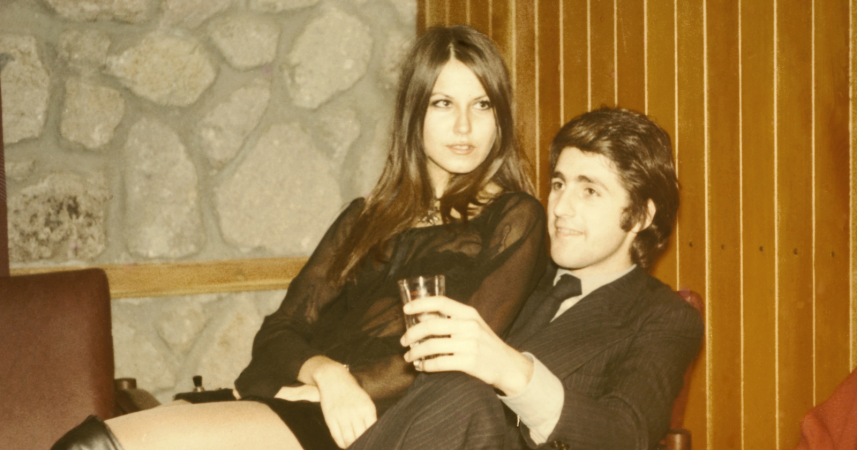
From spontaneous party arrivals to hours-long phone calls just to chat, the analog generation navigated a world where every human connection required showing up without knowing what—or who—awaited them.
Remember when meeting someone new didn't require swiping through a hundred profiles or crafting the perfect opening message?
My parents, both born in the early 60s, tell stories about meeting people that sound almost mythical now. Dad met his college roommate's sister at a dinner party and they dated for two years. Mom became best friends with a woman she sat next to on a cross-country bus ride. These stories feel like they're from another planet compared to our current reality of algorithmic matches and social media connections.
I've been thinking about this a lot lately, especially after joining a local trail running group where making friends required actual face-to-face vulnerability. No hiding behind screens, no carefully curated profiles. Just showing up, sweaty and out of breath, hoping to connect with someone.
The more I talk to people who came of age in the 60s and 70s, the more I realize they had something we've lost. Not just different technology, but different expectations and social norms that made meeting people feel more natural and less performative.
So what exactly did they do differently? Let's explore eight things that were completely normal back then but feel almost impossible now.
1. They showed up at places without knowing who would be there
Can you imagine walking into a party without checking the guest list on Facebook first? Or going to a bar without seeing who's already there on Instagram stories?
People born in the 60s did this constantly. They'd hear about a party through word of mouth and just show up. No advance social media stalking, no pre-gaming anxiety about who you might run into. You walked through the door and figured it out.
My mother tells me about college parties where she'd know maybe one person, and by the end of the night, she'd have five new friends. There was something liberating about not having any digital preview of who you were about to meet. Every introduction was genuinely fresh.
Today, we research people before we meet them. We know their job history, relationship status, and vacation preferences before we say hello. That element of discovery through actual conversation? Pretty much gone.
2. They talked to strangers on public transportation
Picture this: You're on a train or bus, and instead of everyone staring at their phones with earbuds in, people are actually talking to each other. Wild, right?
My father, the engineer who can talk to anyone about anything, met some of his longest-standing professional contacts on his daily commute in the 70s. He'd strike up conversations about the newspaper someone was reading or comment on the weather, and before you knew it, they were exchanging business cards.
Now? We've created an invisible force field with our devices. Making eye contact on public transport feels almost aggressive. We've traded potential connections for podcasts and playlists.
3. They joined clubs and actually attended meetings
Book clubs, bowling leagues, community groups. People didn't just join them; they showed up. Every week. In person.
There was no option to participate via Zoom or catch up through a WhatsApp group. If you wanted to be part of something, you had to physically be there. This forced regular face-to-face interaction created deeper bonds.
When I first joined my trail running group, I was struck by how similar it felt to these old-school clubs. Same people, same time, every week. No excuses, no virtual alternatives. And you know what? That consistency is where real friendships form.
4. They used the phone as an actual phone
Remember when calling someone wasn't considered intrusive? People born in the 60s would pick up the phone just to chat. Not to convey urgent information or confirm plans, but to actually connect.
Long phone conversations were normal. You'd call a friend and talk for an hour about nothing and everything. These meandering conversations built relationships in ways our efficient text exchanges never could.
Now, an unexpected phone call sends most of us into a panic. "Why are they calling? What's wrong?" We've become so accustomed to asynchronous communication that real-time voice connection feels almost invasive.
5. They hung out in third places
Sociologist Ray Oldenburg coined the term "third places" to describe locations that aren't home or work where people naturally gather. For the 60s generation, these were everywhere: local diners, record stores, community centers, corner bars.
People had their spots. You'd become a regular somewhere, and through that consistency, you'd meet other regulars. Relationships formed organically through repeated casual contact.
Today's third places are increasingly digital or commercialized. Coffee shops are full of people working on laptops with headphones on. Bars are loud enough that conversation becomes impossible. We've optimized these spaces for efficiency or sensory overload, not connection.
6. They dated people from their immediate social circles
Dating apps didn't exist, so people dated friends of friends, coworkers, or people they met through activities. This might sound limiting, but it had an interesting effect: people were more invested in making things work because there were social consequences to being a jerk.
When I met my partner Marcus at a trail running event five years ago, it felt oddly traditional. We had mutual friends, shared interests, and saw each other regularly whether we planned to or not. There was no ghosting option when you knew you'd see someone next Tuesday at 6 AM on the trail.
The 60s generation didn't have infinite options at their fingertips. They worked with what was in front of them, which paradoxically might have led to deeper connections.
7. They showed up without confirming plans sixteen times
Plans were plans. If someone said "See you Saturday at 7," they'd be there Saturday at 7. No day-of texts confirming, no last-minute cancellations via message.
This reliability forced people to be more intentional about their commitments. You couldn't casually agree to everything knowing you could bail later with a quick text. Your word meant something because changing plans required actual effort and usually an uncomfortable phone call.
The ease of canceling today has made all our plans feel tentative. Even when we do meet up, there's often this underlying sense that it almost didn't happen.
8. They were comfortable with silence
Without phones to fill every quiet moment, people born in the 60s had to sit with silence. Waiting rooms, bus stops, standing in line. These were opportunities for striking up conversations or simply being present with others.
That comfort with silence extended to social interactions too. Not every pause in conversation needed to be immediately filled. People could sit together quietly without it feeling awkward.
Now we panic at the slightest lull, reaching for our phones like life preservers. We've lost the ability to just be with other people without constant stimulation or conversation.
Final thoughts
Reading this back, I realize it might sound like I'm romanticizing the past. Maybe I am, a little. But there's something to be learned from how the 60s generation approached human connection.
They had fewer options but deeper connections. Less convenience but more commitment. No algorithms but actual serendipity.
The good news? Some of these approaches aren't actually impossible today. They just require us to swim against the current a bit. Put down the phone, show up consistently somewhere, talk to strangers, be okay with silence.
When my mother, the teacher, introduces me as "my daughter who worked in finance" instead of "my daughter the writer," I used to correct her. Now I see it as an opportunity for someone to ask, "Oh, what do you do now?" Real conversation, real connection.
Making friends as an adult does require intentional effort and vulnerability, just like it always has. The methods might feel foreign now, but the human need for connection remains exactly the same.
If You Were a Healing Herb, Which Would You Be?
Each herb holds a unique kind of magic — soothing, awakening, grounding, or clarifying.
This 9-question quiz reveals the healing plant that mirrors your energy right now and what it says about your natural rhythm.
✨ Instant results. Deeply insightful.