
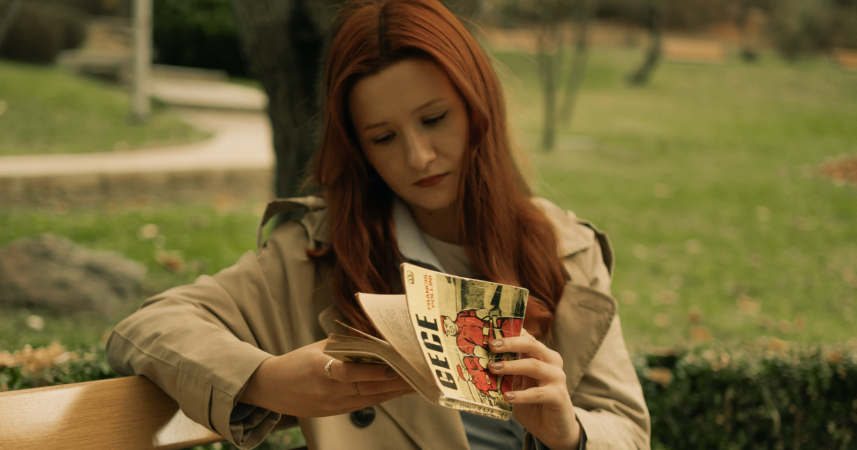
From memorizing routes without GPS to fixing broken appliances with nothing but determination and a screwdriver, the pre-internet generation mastered the art of self-reliance through spectacular failures and stubborn persistence that today's tutorial-dependent world can barely fathom.

Add VegOut to your Google News feed. 
Remember dial-up internet? Or better yet, remember when the internet didn't exist at all?
If you grew up in the 60s and 70s, you navigated life without Google Maps, figured out relationships without Reddit advice, and somehow managed to cook dinner without watching a single TikTok recipe. While today's generation has instant access to tutorials for literally everything, previous generations had to figure things out through trial, error, and sometimes pure stubborn determination.
My parents, who raised me in the 80s, often share stories about their younger years that sound like tales from another planet. My mother, a teacher, and my father, an engineer, both grew up mastering skills that many of us now outsource to apps or YouTube videos. When I helped them downsize recently, I found myself fascinated by the resourcefulness they developed simply because they had no other choice.
These weren't just practical skills either. They were life lessons wrapped in everyday experiences, building character one mistake at a time. Here are eight essential skills that people from that era had to learn the old-fashioned way.
1. Reading paper maps and actually remembering directions
Can you imagine driving to a new city without GPS? People in the 60s and 70s didn't just read maps; they became human navigation systems. They'd study route maps before trips, memorize landmarks, and actually pay attention to street signs.
I once asked my dad how he managed cross-country road trips back then. His answer? "You planned ahead, asked for directions at gas stations, and if you got lost, you figured it out." There was no recalculating route or satellite view to save you.
This forced people to develop incredible spatial awareness and memory skills. They knew their neighborhoods inside out, could give detailed directions using landmarks, and developed an internal compass that many of us have completely outsourced to our phones.
The bigger lesson here? They learned to prepare thoroughly and trust their instincts. When you couldn't rely on technology to bail you out, you became more self-sufficient and confident in your abilities.
2. Fixing things without YouTube tutorials
When something broke in the 70s, you had three options: fix it yourself, find someone who could, or buy a new one. Since buying new wasn't always affordable, people became incredibly resourceful.
My father still has his original toolbox from 1975. Inside, there's not just tools but handwritten notes about various repairs he's done over the years. No pause-and-rewind video tutorials, just determination and maybe a library book if you were lucky.
This generation learned to troubleshoot by actually understanding how things worked. They'd take apart radios, tinker with car engines, and patch up household items because calling a repair person for every little thing wasn't economically feasible. The patience required to figure out mechanical problems without step-by-step visual guides built problem-solving skills that went far beyond home repairs.
3. Building relationships without social media
How did people maintain friendships without Facebook? They actually had to work at it.
Keeping in touch meant writing letters, making phone calls that cost money by the minute, or showing up at someone's house. You couldn't send a quick emoji to maintain a connection. Relationships required genuine effort and intentionality.
Birthday calendars were kept in physical books. If you wanted to know what your high school friends were up to, you organized reunions or made actual phone calls. Dating meant meeting people through friends, at work, or during social activities. You couldn't swipe through hundreds of profiles; you had to put yourself out there in real life.
This taught people to value quality over quantity in relationships. When maintaining each friendship required real effort, you naturally invested more deeply in fewer, more meaningful connections.
4. Managing money without online banking
Balancing a checkbook by hand, keeping paper receipts, and actually visiting the bank were just normal parts of life. There were no instant balance updates or automatic bill payments to rely on.
People in the 60s and 70s had to track every penny manually. They knew exactly how much was in their account because one bounced check could cascade into multiple fees. This forced a level of financial awareness and discipline that's easy to bypass today.
When I was earning my MBA through night classes, I met several older students who still preferred paper ledgers to spreadsheets. Their reasoning was simple: writing it down made them think about each transaction. The physical act of recording expenses created a mental connection to spending that clicking "pay now" doesn't quite replicate.
5. Researching anything without Google
Need to know something? Better hope the library is open.
Research in the 60s and 70s meant card catalogs, encyclopedias, and actually talking to experts. Writing a school paper could take weeks of preparation just to gather sources. You couldn't fact-check instantly or pull up statistics in seconds.
This developed incredible patience and critical thinking skills. Since information was harder to access, people learned to evaluate sources more carefully. They couldn't just click through twenty websites; they had to make judgment calls about which books were worth checking out, which experts to consult.
My mother often tells me about spending entire Saturdays at the library for her teaching preparation. The effort required to find information made people value knowledge differently. When learning something new took genuine effort, you remembered it better.
6. Entertaining themselves without screens
Boredom in the 70s couldn't be cured with a quick scroll through Instagram. People had to create their own entertainment.
This meant developing hobbies that required actual skill development. People learned instruments without online tutorials, played cards without app reminders, and had long conversations without the distraction of notifications. Kids played outside until the streetlights came on, creating games with whatever was available.
The ability to self-entertain fostered creativity and imagination in ways that constant stimulation doesn't allow. People became comfortable with quiet moments and learned to find joy in simple activities. They read books cover to cover, worked on puzzles for hours, and developed crafts that required patience and practice.
7. Cooking from scratch without food blogs
Learning to cook meant watching your parents, asking neighbors for recipes, or working through trial and error with a basic cookbook. No video demonstrations, no comment sections warning about common mistakes, no instant pot to speed things up.
Recipe cards were treasured and passed down through generations. If you wanted to try cuisine from another culture, you had to seek out someone from that background or find one of the few specialty cookbooks available. Mistakes were learning opportunities you couldn't avoid by reading reviews first.
This developed not just cooking skills but intuition about flavors, techniques, and timing that following step-by-step videos doesn't quite teach. People learned to improvise with available ingredients because you couldn't just order whatever you needed online.
8. Dealing with conflict face to face
There was no hiding behind screens or ghosting people you didn't want to deal with. Conflicts had to be resolved in person or over the phone.
This forced people to develop real communication skills. You couldn't carefully craft a text message or hide behind an email. You had to find words in real-time, read body language, and navigate uncomfortable situations without an escape route.
Working through disagreements face-to-face taught emotional regulation and empathy in ways that digital communication can't match. People learned to pick their battles carefully because every confrontation required genuine energy and presence.
Final thoughts
Looking back at these skills, what strikes me most isn't the inconvenience of not having modern technology, but the self-reliance and depth of experience that came from figuring things out the hard way.
Sure, we can learn almost anything from YouTube now, and that's incredibly valuable. But there's something to be said for the confidence that comes from solving problems without a safety net, the relationships built through intentional effort, and the patience developed when instant gratification isn't an option.
Perhaps the real skill people from the 60s and 70s mastered wasn't any single item on this list. It was adaptability itself. They learned to trust their own judgment, to persist through frustration, and to find satisfaction in the process of learning, not just the outcome.
We might have more tools now, but we could all benefit from occasionally putting them down and figuring things out the old-fashioned way.
What’s Your Plant-Powered Archetype?
Ever wonder what your everyday habits say about your deeper purpose—and how they ripple out to impact the planet?
This 90-second quiz reveals the plant-powered role you’re here to play, and the tiny shift that makes it even more powerful.
12 fun questions. Instant results. Surprisingly accurate.












