From mismatched plates to always saving room for dessert, these subtle dinner table habits tell the story of a middle-class upbringing.
The way we eat dinner says more about us than we realize.
Manners, rituals, and even the way food is served all tell a story about where we came from.
For many of us who grew up in middle-class households, certain habits were just “normal.”
Only later do you realize they’re little clues about your upbringing — unspoken signals that reveal your roots.
Here are eight subtle dinner table habits that quietly give away a middle-class childhood.
1. Setting the table with mismatched dishes
Middle-class families rarely had a perfectly coordinated set of dinnerware.
Instead, the table was often a mix of chipped plates, hand-me-down bowls, and mismatched forks collected over the years.
Maybe the “good dishes” only came out on holidays, while weeknight meals were served on whatever was clean.
The look wasn’t curated — it was practical.
No one cared if the salad plate didn’t match the dinner plate, as long as there was food on it.
This casual approach to table settings is a dead giveaway of middle-class roots.
It says, “We’re here to eat and talk, not impress anyone.”
And honestly, there’s a certain charm in that kind of imperfection.
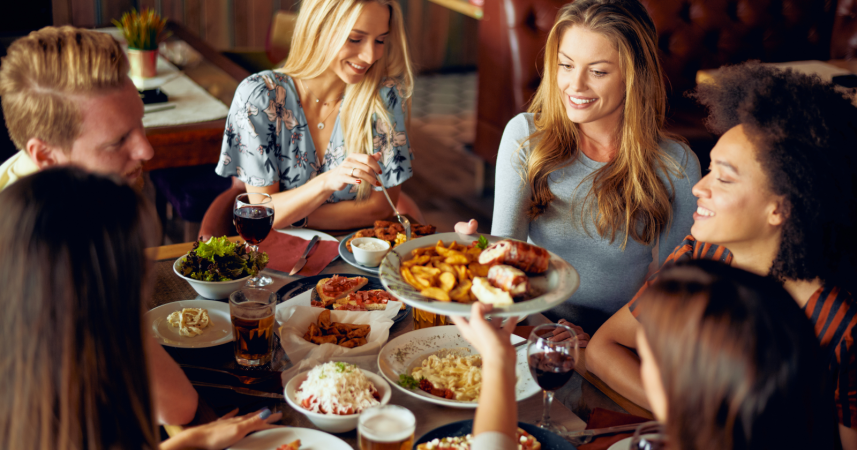
2. Passing food around family-style
For middle-class families, dinner wasn’t about individual portions plated up like a restaurant.
Everything went into big bowls and casserole dishes in the middle of the table.
Mashed potatoes, green beans, lasagna — everyone helped themselves and passed the dish along.
It was practical, communal, and just a little bit chaotic.
You never left the table hungry, and there was always at least one kid trying to sneak extra rolls before they made it around the circle.
This family-style tradition was about sharing, not presentation.
It reinforced the idea that meals were about togetherness, not performance.
3. Saying grace — or at least a quick “thanks”
Even if your family wasn’t particularly religious, there was often a moment of pause before eating.
For some, it was a full prayer.
For others, it was just a quick, “Thanks, Mom,” before digging in.
It wasn’t about ceremony so much as it was about gratitude.
Middle-class families tended to treat mealtime as a small ritual — a signal that this was family time, not just another task in the day.
That tiny moment of acknowledgment gave dinner a little extra meaning.
And if you grew up with it, you probably still feel weird starting a meal without it.
4. Finishing everything on your plate
In many middle-class households, the phrase “There are kids starving somewhere” was practically a dinner table soundtrack.
Wasting food wasn’t an option.
Parents expected you to finish every bite, whether you liked it or not.
Peas, meatloaf, mysterious casseroles — they all had to disappear before you could be excused.
This habit wasn’t just about frugality; it was about values.
It taught responsibility, gratitude, and maybe a little bit of guilt.
Even as adults, many people still feel compelled to clean their plates, no matter how full they are.
It’s a middle-class reflex you never quite outgrow.
5. Talking about your day during dinner
Dinner wasn’t just about eating — it was about connection.
In middle-class households, the table doubled as a nightly check-in.
Everyone shared a little about their day: what went well, what went wrong, and who got in trouble at school.
It was equal parts therapy session and stand-up routine.
This tradition was less about perfect conversation and more about being together.
Phones weren’t allowed, TV was turned off, and everyone had to actually talk.
If you grew up like this, you probably still associate dinner with storytelling and laughter.
And you can spot others who did too by the way they instinctively start conversations over meals.
6. Serving “budget” cuts dressed up as special
Middle-class families knew how to stretch a dollar without making it obvious.
Chicken thighs became “Sunday dinner.”
Hamburger helper got spiced up and served like gourmet pasta.
Even canned veggies could be made fancy with a little butter and seasoning.
The idea wasn’t to hide thriftiness — it was to make everyday meals feel like an occasion.
Kids rarely realized how carefully meals were planned around the grocery budget.
Looking back, you see the strategy and love behind every dish.
And you can always tell someone with middle-class roots by the way they turn simple ingredients into comfort food magic.
7. Clearing the table together
In many middle-class households, everyone pitched in after the meal.
Kids carried plates, parents rinsed dishes, and someone inevitably wiped down the table.
It wasn’t framed as “helping out” — it was just expected.
The meal wasn’t over until the kitchen was reset for tomorrow.
This shared cleanup created a sense of teamwork (and occasional grumbling).
It also meant no one person carried the full burden of chores.
If you still instinctively stack plates when eating at someone else’s house, this habit probably stuck with you.
It’s one of those subtle signals that middle-class values shaped your upbringing.
8. Always saving room for dessert — even if it’s simple
Dessert wasn’t optional; it was part of the meal.
Maybe it was homemade pie, maybe it was store-brand ice cream, maybe it was a box of cookies on sale — it didn’t matter.
There was always something sweet to end the night.
It wasn’t about indulgence; it was about celebration.
Dessert marked the transition from “meal” to “family time.”
Even on hectic nights, there was a small ritual in gathering again for that final bite.
If you still crave something sweet after dinner, no matter how full you are, this habit probably comes straight from childhood.
Because in a middle-class home, dessert wasn’t a treat — it was tradition.
Closing reflection: the table tells the story
The dinner table holds more than food — it holds memories.
These little habits may seem ordinary, but they reflect the values, rhythms, and resourcefulness of middle-class life.
From mismatched plates to shared cleanup, they’re subtle signals of a specific upbringing.
And while families today might gather differently, those traditions still shape how we connect over meals.
Because in the end, dinner has never just been about eating.
It’s about belonging.