Growing up in front of a television wasn't just entertainment for boomer kids - it was a shared cultural education that shaped an entire generation.
My mother talks about Saturday mornings in the 1960s with this wistful nostalgia I've never quite understood.
She'd wake up early, pour a bowl of cereal, and plant herself in front of the only television in the house for hours of cartoons and shows that felt like the most important thing happening in the world.
What's fascinating isn't just the shows themselves, but how they created a shared cultural language for an entire generation.
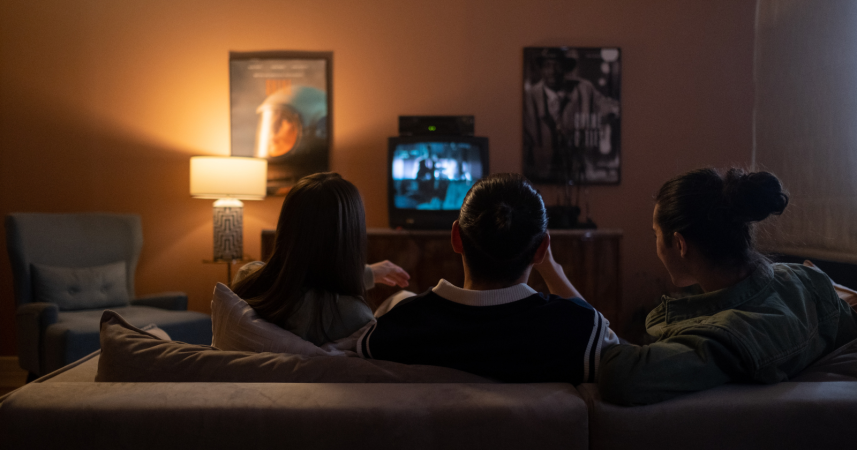
Boomer kids across the country were watching the same programs at the same time, forming collective memories that would bond them for decades.
There was no streaming, no on-demand, no choice to watch whatever you wanted whenever you wanted. You watched what was on when it was on, and that created a completely different relationship with television.
These shows didn't just entertain. They taught boomer kids about heroism, family dynamics, problem-solving, and what it meant to be American during a particular moment in history.
Here are ten TV shows from the 60s and 70s that defined what it meant to be a boomer kid.
1) The Brady Bunch
This show gave boomer kids the idealized blended family blueprint. Six kids, two parents, a housekeeper, and endless wholesome problems that got solved in thirty minutes.
The Brady Bunch premiered in 1969 and ran until 1974, perfectly capturing the era's optimism about family life even as real families were dealing with divorce, Vietnam, and social upheaval.
What made it defining for boomer kids was how it normalized blended families at a time when divorce was becoming more common. It gave kids a framework for understanding complicated family structures through the lens of sitcom simplicity.
Every boomer kid knew the theme song. Everyone had opinions about which Brady sibling they identified with most. The show created a shared vocabulary about family dynamics that transcended individual experiences.
2) Sesame Street
Sesame Street revolutionized children's television when it debuted in 1969. It was educational programming that didn't feel like school, mixing puppets, animation, and real people in ways that were completely new.
For boomer kids, especially younger boomers born in the late 50s and early 60s, Sesame Street was their introduction to letters, numbers, and basic concepts. But it was also their introduction to diversity, urban life, and social issues presented at a child's level.
The show treated kids as capable of understanding complex ideas. It tackled death, divorce, racism, and disability in age-appropriate ways that other children's programming avoided entirely.
What made Sesame Street defining was its ubiquity. Nearly every boomer kid watched it at some point. Big Bird, Oscar, Bert and Ernie became cultural touchstones that everyone recognized.
3) The Wonderful World of Disney
Sunday nights meant Disney for boomer families. The show, which ran under various names from 1954 through the 80s, was appointment television that entire families watched together.
What made it defining was how it mixed education, entertainment, and Disney promotion into something that felt special and important. Kids learned about nature, history, and science through Disney's lens.
The show represented family togetherness in ways that feel almost quaint now. Everyone gathered in the living room, and watching Disney became a ritual that organized Sunday evenings for millions of families.
For boomer kids, Disney shaped their understanding of storytelling, animation, and what counted as quality family entertainment.
4) Batman
The campy 1966 Batman series starring Adam West was pure boomer kid catnip. It was colorful, action-packed, and just subversive enough to feel exciting without being actually dangerous.
The show aired twice a week with cliffhanger endings that kept kids coming back. The exaggerated sound effects, dramatic narration, and over-the-top villains created a style that defined how that generation thought about comic book adaptations.
What made Batman defining was how it took something from comic books and made it mainstream family entertainment. It legitimized superhero stories in ways that influenced decades of future adaptations.
Every boomer kid remembers the theme song, the Batmobile, and the tilted camera angles during villain scenes.
5) Mister Rogers' Neighborhood
Fred Rogers talked to boomer kids like they were real people with real feelings that mattered. From 1968 through 2001, Mister Rogers' Neighborhood provided a calm, thoughtful alternative to the chaos of most children's programming.
The show moved slowly and deliberately. Rogers changed into his cardigan and sneakers at the start of every episode. He spoke directly to the camera as if having a conversation with each individual child.
For boomer kids, Mister Rogers represented safety and validation. In a world that often dismissed children's feelings, here was an adult who took them seriously. He taught emotional literacy before that was even a concept.
The show's impact went beyond entertainment. It shaped how boomer kids thought about kindness, processing emotions, and treating others with respect.
6) The Flintstones
The Flintstones, which premiered in 1960, was essentially The Honeymooners set in the Stone Age. It was prime time animation aimed at families, not just kids, and it worked brilliantly.
For boomer kids, The Flintstones was their introduction to animated sitcoms. It proved that cartoons could tell family stories with recurring characters and ongoing situations.
The show also introduced boomer kids to satire and social commentary disguised as prehistoric silliness. Many of the jokes went over kids' heads but resonated with their parents, creating a shared viewing experience.
What made it defining was how it normalized animation as entertainment for the whole family. Before The Flintstones, animated shows were mostly shorts. After, animation could tell longer stories with character development.
7) Scooby-Doo, Where Are You!
Scooby-Doo debuted in 1969 and created a formula that would be copied endlessly. Teenagers and a talking dog solving mysteries where the villain is always revealed to be someone in a mask.
The show gave kids a framework for problem-solving and critical thinking disguised as spooky entertainment. The mysteries followed predictable patterns, but figuring out the clues before the big reveal made kids feel smart.
What made Scooby-Doo defining was how it balanced being scary enough to be exciting but never so scary that kids couldn't handle it. The monsters were always fake, which was reassuring.
The characters also represented different personality types that kids could identify with. Every boomer kid saw themselves somewhere in the Mystery Machine.
8) H.R. Pufnstuf
This psychedelic children's show from 1969 was absolutely bizarre, and boomer kids loved it anyway. A boy and his talking flute trapped on a magical island with a dragon mayor and a witch trying to steal the flute.
What made H.R. Pufnstuf defining was how weird it was willing to be. The costumes were elaborate and slightly creepy. The plots were nonsensical. The whole aesthetic was trippy in ways that reflected the late 60s counterculture.
For boomer kids, the show represented permission to enjoy something strange and surreal. Not everything needed to make perfect sense or teach obvious lessons.
9) The Electric Company
From 1971 to 1977, The Electric Company taught reading and grammar through sketch comedy, music, and animation. It was Sesame Street for slightly older kids, targeting elementary school audiences.
What made it defining was the talent involved. Morgan Freeman, Rita Moreno, Bill Cosby. The show brought legitimate performers to educational television in ways that made learning feel cool.
For boomer kids struggling with reading, The Electric Company was validation that they weren't alone and that language could be playful rather than frustrating.
10) The Partridge Family
This musical sitcom about a family band touring in a painted school bus ran from 1970 to 1974 and captured something about boomer adolescence perfectly.
What made The Partridge Family defining was how it sold a fantasy of family togetherness through music. The idea that a whole family could perform together felt aspirational during an era of increasing family fragmentation.
For boomer kids, especially girls, David Cassidy as Keith Partridge represented the safe teen idol. The show created a template for teen stardom that would influence pop culture for decades.
Final thoughts
These shows created a shared cultural foundation for boomer kids that's hard to replicate in our current fragmented media landscape. When everyone watches the same programs at the same time, it creates collective experiences that bond a generation.
The shows also reflected their era in ways that are sometimes uncomfortable to look back on. Limited diversity, traditional gender roles, simplified problem-solving, and a sanitized version of American life that ignored much of what was actually happening.
But for better or worse, these programs shaped how boomer kids understood family, heroism, education, and entertainment. They provided frameworks and references that would last lifetimes.
The experience of watching television as a boomer kid was fundamentally different from how kids consume media now. It was communal, scheduled, and limited. You couldn't pause or rewind. You had to be present when the show aired or you missed it.
These ten shows weren't just entertainment. They were cultural touchstones that defined what it meant to grow up during that particular moment in American history.RetryTo run code, enable code execution and file creation in Settings > Capabilities.
What’s Your Plant-Powered Archetype?
Ever wonder what your everyday habits say about your deeper purpose—and how they ripple out to impact the planet?
This 90-second quiz reveals the plant-powered role you’re here to play, and the tiny shift that makes it even more powerful.
12 fun questions. Instant results. Surprisingly accurate.