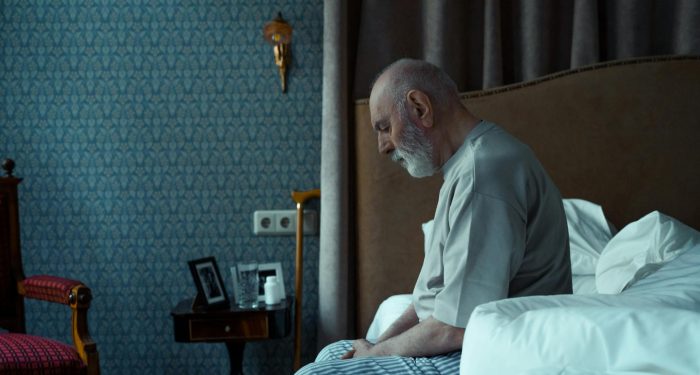
Everyone agrees on what's wrong with them. Almost no one asks what they've figured out.

Add VegOut to your Google News feed. 
I know a man who got divorced at forty-two. Smart, successful, emotionally intelligent by any reasonable measure. The kind of person you'd expect to "get back out there" within a year or two. Find someone new. Rebuild.
That was eleven years ago. He hasn't remarried. Hasn't come close.
When mutual friends talk about him, the language is always diagnostic. He has trust issues. He's afraid of vulnerability. He hasn't done the work. The assumption underneath every observation is the same: something is wrong with him. He's stuck. He needs to heal so he can return to normal.
But here's what I've started to wonder. What if he's not stuck? What if he's simply arrived somewhere the rest of us haven't been forced to go?
The premise no one questions
There's a particular genre of article that circulates endlessly online. You've seen the headlines. "The behaviors divorced men display without realizing it." "The psychological patterns keeping him single." The framing is always therapeutic, always concerned, always pointed toward the same destination: get him back into a relationship.
Notice what's embedded in this. Remarriage is the goal. Partnership is the finish line. A man who remains single after divorce hasn't made a choice. He's failed to complete a recovery.
This assumption runs so deep we barely see it. The coupled state is default. The single state is transitional. Something to move through on the way back to normal.
But what if the assumption itself is the thing worth examining?
What divorce actually teaches
I was single for over a decade. I haven't been through a divorce, but I've watched enough friends go through one to understand something important: divorce is an education.
Not an education in heartbreak, though there's that. Not an education in logistics, though there's plenty of that too. It's an education in structure. In seeing, for the first time, what marriage actually is beneath the ceremony and the sentiment.
Before marriage, most people approach it romantically. Two people in love, building a life, making a commitment. The legal and economic dimensions exist, but they're background noise. Paperwork. Formality.
Divorce brings the structure into sharp focus. Assets become divisible. Income becomes garnishable. Decisions made jointly become obligations enforced individually. The romantic frame drops away and what remains is the architecture: a legal and economic arrangement with specific terms, specific risks, specific consequences.
Men who go through this don't emerge with "trust issues." They emerge with information. Information about how the institution actually functions. And information changes calculation.
The math that doesn't get discussed
Here's something that rarely appears in the articles about divorced men who don't remarry: maybe they've done the math.
Not in a cold, transactional way. Not because they're incapable of love. But because they've experienced the institution and seen what it costs when it fails. They've learned that marriage isn't just a relationship. It's a binding legal contract with asymmetric risk profiles depending on who earns more, who owns what, and which jurisdiction you're in.
A man who has built significant wealth, gone through a divorce that cost him substantially, and emerged on the other side has received a very specific education. He may still want companionship. May still value intimacy. May still fall in love. But he now understands what marriage actually is, distinct from what he'd been told it was.
The articles that pathologize these men never engage with this. They focus on psychology. His attachment style. His fear of vulnerability. His unprocessed grief. What they don't address is that he might simply be making a rational decision based on information he didn't have before.
The romantic industrial complex
I've spent my career in media. I understand how narratives get constructed and why certain stories get told over and over.
The narrative that everyone should aspire to marriage, that single people are incomplete, that divorce is a failure to be recovered from: this isn't natural law. It's a constructed story, reinforced because powerful interests benefit from its telling.
The wedding industry generates billions annually. But that's just the visible tip. Tax codes favor married households. Insurance systems assume coupling. Housing markets price for pairs. The entire economic infrastructure is built around the assumption that adults will partner up.
Beyond economics, there's social pressure so constant it becomes invisible. Movies end with weddings. Success stories include "and then I met my wife." A fulfilled life means finding "the one."
Divorced men who don't remarry aren't just making a personal choice. They're opting out of a system that has been designed, at every level, to push them back in. That takes a kind of clarity the diagnostic articles never credit them with.
Reframing the "warning signs"
The lists of behaviors these men supposedly display read differently once you question the premise.
"He's become more independent." Translation: he's learned he can build a satisfying life without organizing it around a partner's needs and preferences. This is framed as isolation. It might be sovereignty.
"He's protective of his time." Translation: he's discovered that time is his only non-renewable resource, and he's stopped giving it away to obligations he didn't consciously choose. This is framed as selfishness. It might be wisdom.
"He's comfortable being alone." Translation: he's built a relationship with himself that doesn't require external validation to feel complete. This is framed as fear of intimacy. It might be maturity.
"He's skeptical of the institution." Translation: he's examined marriage as a system rather than a given, and concluded it doesn't align with his interests or values. This is framed as cynicism. It might be insight.
The difference between "damaged" and "awake" depends entirely on which premise you start from.
What I've learned from long-term singleness
I've written before about what happens when you've been single for a long time. How you build an entire life architecture around being your own center of gravity. How you learn what energizes you, what drains you, how to protect your mind and your sense of self.
There's a trap in this. You can mistake emotional avoidance for mastery. You can build walls and call them boundaries. You can convince yourself you've evolved beyond the messiness of relationships when really you're just protecting old wounds.
But there's also truth in it. Real truth. The capacity to be alone without being lonely is not a dysfunction. It's a skill. And men who have rebuilt their lives after divorce often develop this skill in ways that make them genuinely content.
The question isn't whether they could remarry. Many of them could. The question is whether they want to, given what they now know about themselves and about the institution.
The discomfort of seeing clearly
I want to be careful here. There's a version of this argument that tips into bitterness. Into grievance. Into the angry corners of the internet where men blame women for their disappointments.
That's not what I'm describing.
The men I'm talking about aren't angry. They've often co-parented effectively, maintained civil relationships with their exes, moved forward without resentment. They're not the red-pill casualties raging online.
They've simply done something our culture discourages: they've analyzed the structure they're moving through. They've named what marriage actually is rather than accepting the romantic framing that obscures its realities.
This is uncomfortable. If you're happily married, it might feel like an attack on what you've built. It's not. Plenty of people find that marriage serves them beautifully. The arrangement works.
But for those it doesn't work for, the insistence that they "heal" and try again starts to look like something else entirely. A system protecting itself. A narrative that can't tolerate defection.
What they see that we don't
Divorce forces a confrontation with marriage's structure that most people never experience. The ones who emerge and don't remarry have arrived at a particular kind of clarity.
Some of that clarity is painful. Some of it is liberating. Most of it is simply true in ways that make other people uncomfortable.
They know that love and legal partnership are separate things that we've conflated. They know that commitment doesn't require a contract. They know that the economic arrangements embedded in marriage aren't neutral. They know that the cultural pressure to couple up serves interests beyond their own.
Maybe this knowledge is damage. Or maybe it's just knowledge.
The next time you encounter a divorced man who hasn't remarried, resist the urge to diagnose him. Resist the articles that list his "behaviors" as symptoms. Resist the assumption that he's stuck, broken, afraid.
Ask instead: what does he see that you don't?
He may be damaged. Or he may be awake.
The difference matters. And the fact that we default to the former interpretation tells you more about the system than about him.