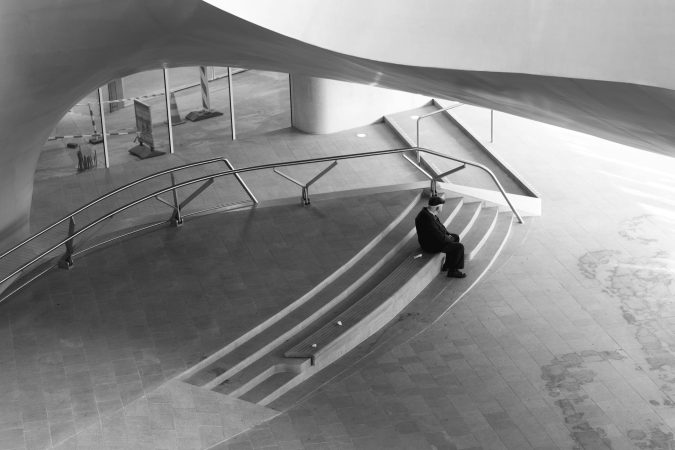
You can build the entire life you were told to want and still feel like a stranger standing in someone else's living room.

Add VegOut to your Google News feed. 
The house was quiet the evening I understood what had happened. Not the dramatic quiet of something wrong, just the ordinary quiet of a life where everything had gone according to plan. Dinner done. Dishes put away. The television off because nothing appealed. I sat in a chair I'd chosen from a catalog, in a room I'd painted a color I'd approved, in a house I'd earned through decades of showing up, and I felt the specific emptiness of a person who has arrived at a destination they never actually chose.
Most people would call that ungrateful. I would have, too, for most of my life. The conventional understanding goes something like this: you work hard, you earn your rewards, and satisfaction follows like weather follows seasons. Discomfort after achievement gets diagnosed as a failure of gratitude, a chemical imbalance, a midlife crisis arriving on schedule. What almost nobody considers is the possibility that the discomfort is accurate. That the feeling of hollowness after doing everything right is the clearest signal a person can receive, arriving only after the noise of striving finally stops.
That signal says: this was never yours.
The blueprint you didn't draw
I spent thirty-five years at a job I tolerated. I built a company. I moved through cities — Melbourne, Bangkok, Singapore — accumulating evidence of a life in motion. From the outside, the trajectory looked intentional. Strategic, even. And I believed it was, because I was the one making the decisions. I picked the career. I signed the lease. I booked the flights.
But here's what took me decades to see: I was making choices the way a person answers multiple-choice questions. The options were pre-set. Someone else wrote the test. My agency was real, but it operated within a framework I'd inherited so early that I mistook it for my own personality.
Get educated. Get employed. Get promoted. Get married. Get a house. Get respected. Every box had a check mark, and every check mark produced a brief neurological reward, and that reward felt enough like happiness that I never stopped to ask whether it was.
Psychologists have long distinguished between extrinsic motivation — doing things for rewards, approval, status — and the intrinsic kind, where the activity itself generates meaning. The distinction sounds academic until you're sitting in a house full of extrinsic rewards and you realize none of them are warm.

Extrinsic motivation works. That's the problem. It gets you through school. It gets you hired. It gets you the house and the title and the retirement account. The architecture of modern life is built almost entirely on external incentives: salaries, bonuses, grades, promotions, social approval. You can run on that fuel for forty years without sputtering.
Then the engine stops. And you discover there was never an engine. Just momentum.
The question behind the question
My father taught me to change a tire when I was fourteen. Cold rain, lug nuts that wouldn't budge, his patience outlasting the weather. He was teaching me competence, the kind that keeps you from being stranded. I loved him for it. I still do. But competence and desire are different animals, and I spent most of my adult life confusing them.
I was competent at earning. Competent at showing up. Competent at reading a room, managing expectations, delivering results. I could solve problems efficiently and present conclusions clearly. None of this told me what I actually wanted.
The question I kept answering — how do I succeed? — was never mine. The question I never asked was simpler and more dangerous: what would I do if nobody were watching?
I genuinely did not know. And the not-knowing, once I finally noticed it, was terrifying in a way that failure never was. Failure at least confirms you were trying something. The absence of desire confirms nothing. You're just standing in a room.
Living in alignment with personal values suggests that the gap between outward success and inner fulfillment often traces back to this exact misalignment. Those who thrive under pressure and those who burn out despite equal talent may differ on one axis: whether their efforts connect to something they recognize as authentically theirs.
I burned out. I just did it so slowly that it looked like aging.
Approval as a narcotic
The approval of others is the most socially acceptable addiction on the planet. Nobody stages an intervention for the person who keeps winning employee of the month. Nobody worries about the kid who gets straight A's. The feedback loop between performance and praise starts so early and operates so smoothly that questioning it feels like questioning gravity.
I meditated every morning for nearly a decade. Ran most mornings, too. I read psychoanalytic philosophy texts left over from my academic years, dense books about the construction of self. And still I couldn't see that every "self-improvement" project I undertook was just another performance, another attempt to become a version of myself that someone would approve of.
The meditation wasn't silence. It was rehearsal.
The running wasn't freedom. It was discipline dressed as joy.
Even my attempts to break free of the pattern became the pattern. That's how deep the grooves were.
I came across writing about what psychologists call the deeper structure of intrinsic motivation, and one idea stopped me: if intrinsically motivated behavior is genuinely performed for its own sake, then most of what we call "passion" might actually be desire satisfaction wearing a costume. We pursue things because completing them feels good, not because the pursuit itself has meaning. The distinction is razor-thin and changes everything.
I had spent years doing things that felt good to complete. The check mark. The closed deal. The finished run. The meditation timer chiming. But the doing itself? The minutes inside the activity? Those were something to get through.
An entire life built on getting through things.
The house that answers someone else's question
The title of this piece is long. I know. But I couldn't shorten it, because the sentence itself mirrors the experience: a life that accumulates clause after clause, modifier after modifier, building toward a conclusion that arrives too late and says something you didn't expect.
The house you earned. The career you built. The marriage you maintained. The children you raised. Each one a subordinate clause in a sentence whose main verb was never yours.
My children are adults now, living lives they chose for themselves. I feel enormous pride about that, and underneath the pride, a strange recognition: they did something I never managed. They asked their own questions.
When I look at the life I built, I see competence everywhere and curiosity almost nowhere. The books I kept through four countries and eventually donated — fourteen boxes of them — were evidence of a person I meant to become. A curious person. A person who read widely and followed threads. Instead, I became a person who accumulated books the way some people accumulate credentials: as proof of an intention that never matured into action.
Writers on this site have explored the uncomfortable truths about wealth that nobody says out loud. One of those truths is adjacent to what I'm describing: that the accumulation of external success can become its own prison, because the more you have, the more you've invested in the premise that having things equals being someone.
Walking away from that premise at thirty feels like courage. At seventy, it feels like grief.
The evening it became clear
Retirement was supposed to be the reward. Thirty-five years of tolerating a job, and then: freedom. I'd heard people talk about retiring the way pilgrims talk about reaching a holy city. The assumption, shared by nearly everyone I knew, was that the problem had always been the job, the schedule, the obligation. Remove those, and the real self emerges like a butterfly from a corporate chrysalis.
Eighteen months into retirement, I understood that the real self had never been suppressed. The real self had never been developed. There was no butterfly. There was a person who had organized his entire identity around utility, and when the utility ended, so did the organizing principle.
Research tracking well-being across nations has found that economic prosperity alone doesn't reliably predict happiness. Countries with modest wealth sometimes report greater life satisfaction than wealthy ones, particularly when social connection and a sense of purpose are strong. The individual version of this finding is less discussed but equally real: a person can be prosperous, accomplished, and admired, and still feel like they're watching their own life from the next room.
I sat with this exact feeling for months in Singapore—watching people around me accumulate every marker of success while privately admitting they felt nothing—which is what led me to film https://www.youtube.com/watch?v=zh0XgYwQalI, because I needed to understand what we're actually sacrificing in this chase.
That was the evening. Sitting in the chair, in the quiet house, understanding with complete clarity that I had spent decades answering a question I hadn't authored. The question was: what does a successful life look like? And the answer was: like this. Exactly like this. A nice house, a good career, a family, a retirement. All boxes checked.
The question I'd never asked was: what does your life feel like?
And the answer was: like absence.
What remains when you stop performing
I don't have a tidy resolution. I'm suspicious of tidy resolutions, actually, because they tend to be one more performance. The essay that ends with transformation. The memoir that turns loss into lesson. The retirement story that concludes with a new hobby or a new sense of purpose, as though purpose can be picked up at the hardware store.
What I have instead is a slow, uncomfortable reckoning with the fact that I am learning, very late, to sit with a question I cannot answer. Not "what should I do next?" — that's just another task list. But "what do I want?" asked honestly, without reference to what would impress anyone, without checking whether the answer is respectable or productive or appropriate for a person my age.
Some mornings the question produces nothing. Silence. A blank page.
Other mornings, something small and specific surfaces. A desire to walk somewhere unfamiliar. A book I actually want to read, not one I think I should read. A conversation I want to have, not one I need to have.
These feel trivial after decades of consequential decisions. They feel almost embarrassingly small. But they have a quality the consequential decisions never had: they're mine.
The saddest version of success is quiet. It doesn't announce itself with a crash. There's no dramatic collapse, no public reckoning, no moment where someone hands you a mirror and you see the truth. It arrives as a small, persistent feeling that something is missing, in a room where nothing is missing, in a life where everything went right.
The sadness is not that you failed. The sadness is that you succeeded, completely, at something you never chose.
And now the evening is yours. Finally, uncomfortably, with no instructions and no template, the evening is yours.
If You Were a Healing Herb, Which Would You Be?
Each herb holds a unique kind of magic — soothing, awakening, grounding, or clarifying.
This 9-question quiz reveals the healing plant that mirrors your energy right now and what it says about your natural rhythm.
✨ Instant results. Deeply insightful.

Justin Brown
Justin Brown is a writer and entrepreneur based in Singapore. He explores the intersection of conscious living, personal growth, and modern culture, with a focus on finding meaning in a fast-changing world. When he’s not writing, he’s off-grid in his Land Rover or deep in conversation about purpose, power, and the art of reinvention.
More Articles by Justin