Pain didn't hand me a lesson — it handed me weight, and the silence that followed wasn't wisdom, it was the sound of recalibration.

Add VegOut to your Google News feed. 
Research suggests that psychological responses to extreme events are heterogeneous, not homogeneous, meaning that the popular narrative of universal growth after suffering simply doesn't hold up across populations. Some people emerge from pain transformed in positive ways. Others don't. And a significant number fall into a middle space that nobody writes inspirational quotes about: changed, yes, but not necessarily stronger, wiser, or more compassionate. Just quieter. I've spent a long time in that quiet. And I want to talk about what actually lives inside it.
The Mythology of the Beautiful Wound
There's a script we've all absorbed, whether we got it from therapy culture, social media, or well-meaning friends who didn't know what else to say. The script goes: pain happens, you process it, you grow, you emerge better. Post-traumatic growth. The phoenix from the ashes. The broken bone that heals stronger.
And look, the concept of post-traumatic growth is real. Research confirms that some people do experience genuine positive transformation after trauma, including shifts in personal strength, deeper relationships, and a renewed appreciation for life. I don't dispute that. What I dispute is the unspoken expectation that this is the default outcome, that if you haven't alchemized your suffering into something beautiful, you're doing recovery wrong.
Because here's what nobody said to me during the hardest stretch of my life: sometimes pain just sits there. It doesn't teach. It doesn't transform. It occupies space. And the version of you that comes out the other side isn't a phoenix. It's just a person who is very, very tired and has developed an acute sensitivity to noise.
Ten Ways Pain Rewires You (and the Ones That Hit Different)
I came across a video from the YouTube channel Psychology Says that walks through ten unexpected ways pain changes a person, and I watched it with the kind of attention I used to reserve for conversations at 3 a.m. with people I actually trusted. The framework resonated, particularly the early points about cognitive recalibration and the later ones about empathy versus sympathy. But it also made me sit with some uncomfortable questions about what happens when those changes arrive without the neat resolution the growth narrative promises.
The video opens with a point that landed immediately: after real pain, your tolerance for nonsense drops dramatically. Your brain recalibrates what matters. The friendships that felt draining, the job you kept out of guilt, the habits you knew weren't working. Pain makes all of that suddenly very clear. And I recognized that shift in myself. I recognized it so deeply that I also recognized what the video doesn't say, which is that sometimes the recalibration is so severe it empties entire rooms. Not just the people who were draining you, but the people who were simply there, people whose only crime was existing at a volume your nervous system could no longer tolerate.
The video describes this as a positive shift in cognitive priorities. I experienced it more like a filter that got set too tight. Everything that wasn't essential got cut, and by the time I realized it, I was sitting alone in a room that felt very still and very clean and very empty.
The Quiet That Doesn't Feel Like Peace
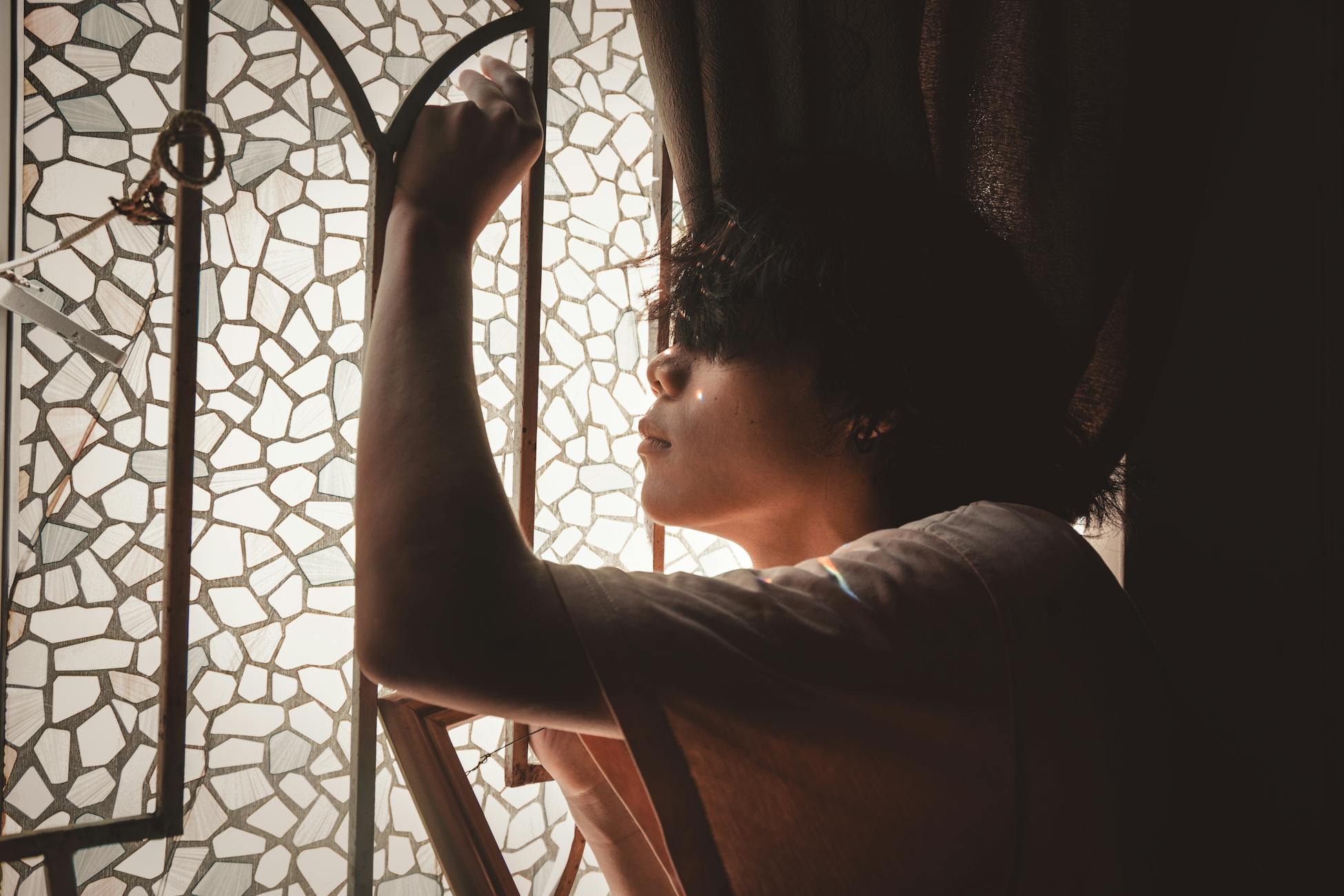
Point five in the video discusses becoming comfortable with silence, framing it as a recalibration of stimulation thresholds. After emotional intensity, your nervous system craves stillness. You can sit in a room with nothing happening and feel completely at peace. The video calls this a mind that has learned to rest without distraction.
I want to complicate that.
Because there are two kinds of quiet after pain. There's the quiet that arrives because you've genuinely processed something and found the other side, where the stillness is warm and chosen. And then there's the quiet that arrives because you've carried so much for so long that speaking feels like an energy expenditure you can't afford. The second kind looks like the first from the outside. People might even admire it. They might call you calm, centered, grounded. But inside it, you know the difference. One is rest. The other is conservation mode.
I lived in the second kind for longer than I'd like to admit. The conversations that felt pointless weren't just small talk about the weather. They were conversations about anything at all. Not because I'd achieved some enlightened depth of processing. Because opening my mouth required a decision about how much of myself I was willing to spend, and most days the answer was: not much. Not today.
The video also touches on empathy deepening while sympathy shrinks. You feel more for others but tolerate less performative emotion. You can sense when someone is truly struggling because you recognize it. This rang true for me, painfully so. But the part the video frames as growth, the pulling back from people who dramatize minor inconveniences, I experienced more as isolation wearing a sophisticated mask. I told myself I was being selective about where I placed my compassion. In reality, I was rationing a resource that felt dangerously finite.
When Growth Is Just a Story You Tell
Research on post-traumatic growth suggests that the phenomenon involves genuine expansion: new possibilities, deeper relationships, greater personal strength. And the video captures this beautifully with its final point about choosing yourself in ways you never did before, setting boundaries that would have terrified you, walking away from things that don't feel right. The video calls this reorganizing your entire sense of self.
I believe that happens for some people. I've seen it happen. But I've also seen (and lived) something closer to what researchers studying trauma responses have warned about: the tendency to frame distress itself as pathology, and the equally dangerous tendency to frame every response to suffering as growth. Both framings miss the enormous, unremarkable middle where most of us actually live. The place where you're not broken and you're not transformed. You're just carrying something that doesn't have a name, and some mornings it's heavier than others.
We've explored on this site how people who can't look at old photos aren't stuck in the past so much as they're protecting themselves from evidence of who they used to be. I think something similar happens with pain narratives. We construct the growth story not because it's always true, but because the alternative, that some experiences just deposit weight and leave, is too destabilizing to sit with. The growth story gives the weight a purpose. Without it, you're just someone carrying something heavy for no reason.

What Veganism Taught Me About Sitting With Discomfort
There's a through-line between the way I've experienced pain and the way I think about living a plant-based life, and the connection is this: both require you to stop reaching for the comforting story and sit with what's actually there.
Veganism, at its core, is a practice of acknowledging suffering without looking away. You see the suffering embedded in food systems, in industrial agriculture, in the quiet cruelty of convenience. And you make a choice not to participate, knowing that your choice doesn't end the suffering. It just means you're no longer adding to it. That's a very different thing than solving it.
Pain works the same way. You can acknowledge it. You can refuse to turn it into something palatable. You can carry it honestly. And that honesty, that willingness to say this didn't make me better, it just made me different, is its own form of integrity. Not growth in the inspirational-poster sense. Something quieter. Something that doesn't photograph well.
The video from Psychology Says ends with a message I found genuinely moving: "Pain didn't break you. It rebuilt you into someone who sees clearer, feels deeper, and refuses to settle for less than what's real." I want that to be universally true. But the most honest thing I can say is that pain rebuilt me into someone who sees differently. Whether that's clearer, I still can't tell. Some days the view is sharper. Other days it's like looking through water.
Learning to Carry It Without Setting Everything Else Down
If you've been through something that didn't leave you with a lesson, a revelation, or a motivational speech, I want you to know: that's a legitimate outcome. You're not doing healing wrong. The quiet inability to connect in the same way you used to, the flattened affect, the sense that you're watching your own life from a slight distance: these are normal responses to abnormal weight.
The video mentions stress inoculation, the idea that repeated exposure to pain builds a strange calmness in crisis. Other people panic while you slow down, not because you don't care, but because your system has been here before. I recognize that calmness. But I also recognize its cost, which is that the same mechanism that keeps you steady in emergencies can make ordinary life feel like something happening behind glass. You're regulated, yes. You're also somewhere slightly removed from the texture of things.
I think the work, the real work, isn't turning pain into growth or wisdom or art (though the video is right that creativity often surges after suffering). The real work is learning to carry the weight without setting down everything else: the willingness to connect, the ability to feel joy without immediately bracing for its departure, the inner peace that comes from trusting your own experience even when it doesn't match the narrative everyone else seems to be living.
Some experiences come with lessons. Some just come with weight. I've stopped pretending I can always tell the difference, and something in that surrender, that giving up of the need for pain to mean something, has been the closest thing to peace I've found. Not the peace of resolution. The peace of no longer arguing with what is.
It's quiet in here. And I'm learning, slowly, that the quiet can be both.
What’s Your Plant-Powered Archetype?
Ever wonder what your everyday habits say about your deeper purpose—and how they ripple out to impact the planet?
This 90-second quiz reveals the plant-powered role you’re here to play, and the tiny shift that makes it even more powerful.
12 fun questions. Instant results. Surprisingly accurate.