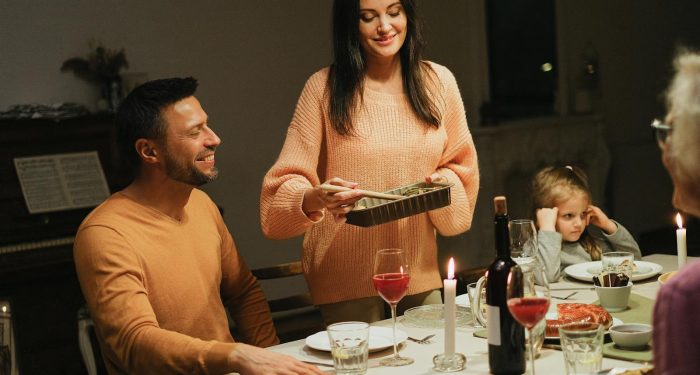
Self-sufficiency becomes a trap when the people around you mistake your composure for completeness, and you forget you ever needed anything different.

Add VegOut to your Google News feed. 
A woman named Sarah told me something over coffee in Singapore that I haven't been able to stop thinking about. She'd moved there for work six years ago, built a life she described as "full" — good job, regular yoga, a flat she loved, weekend hikes, a reading list that never ran dry. Then one evening she tripped on the stairs outside her building and sat on the concrete for ten minutes with a twisted ankle, scrolling through her phone contacts, unable to identify a single person she could call who wouldn't feel like an imposition. She had over four hundred contacts. She called a taxi instead.
That story stayed with me because Sarah isn't lonely in any way most people would recognize. She's social. She's warm. She attends things, contributes to conversations, remembers details about people's lives. And yet something fundamental had shifted over the years without anyone, including her, naming it.
The conventional understanding of friendlessness centers on isolation: someone withdrawn, someone struggling, someone visibly alone. Most advice about adult loneliness assumes the person experiencing it knows they're lonely and just needs strategies for connection. But there's a different version of this that operates almost invisibly. The person functions well. They seem fine. And the reason they seem fine is because they've spent years becoming so self-contained that the need for close friendship has been rerouted, reclassified, and eventually buried under a layer of competence so thick that even they can't always locate it anymore.
The architecture of not needing anyone
Self-sufficiency, in small doses, is a healthy adaptation. You learn to manage your own emotions, solve your own problems, sit with your own discomfort. But like most psychological defenses, it has a tipping point. Cross it, and the adaptation starts functioning as a wall.
Research suggests that people who pride themselves on independence often create what amounts to a social force field. They handle crises alone. They process grief privately. They celebrate milestones quietly. And each time they do this successfully, the neural pathway deepens. The behavior gets reinforced. The story solidifies: I can do this myself.
The problem is that other people are watching. They're learning too.
They're learning that you don't need them.
And humans, being the efficient social creatures they are, redistribute their attention accordingly. They stop offering. They stop checking. Not out of cruelty, but out of a reasonable interpretation of the signals you've been sending for years. The friend who always seems fine gets fewer "how are you, really?" texts. The person who never asks for help stops receiving it. The one who handles everything becomes, in the eyes of everyone around them, the one who doesn't need anything.
This has been explored on this site before — how a particular version of niceness can actually prevent the vulnerability that friendship requires. The mechanism is similar. Competence, like excessive kindness, can become a barrier to being truly known.
The moment the story becomes the person
There's a phase in this process that happens so gradually it's almost impossible to catch. You start out choosing self-reliance. Then at some point you begin identifying with it. "I'm just independent" becomes the explanation for everything: why you didn't call anyone after the bad news, why you processed the breakup alone, why you spent your birthday reading in a café and told yourself you preferred it that way.
Maybe you did prefer it. That's the confusing part. The preference feels genuine because, by now, the alternative has become genuinely uncomfortable. Asking for support activates something that feels like weakness or exposure. The muscles required for emotional dependence have atrophied from disuse.

Psychologists describe this pattern using attachment terminology. People with what's called a dismissive-avoidant attachment style tend to suppress their need for closeness and develop an inflated sense of self-reliance. The critical insight is that this suppression isn't the absence of need. The need is still there, operating below conscious awareness, but the person has built such an effective containment system around it that they genuinely believe they've outgrown it.
The belief is the trap. Because as long as you believe you don't need close friendships, you won't do the awkward, vulnerable, slightly embarrassing work of building them. And the people around you, reading your composed exterior, will confirm your belief by not pushing past it.
A feedback loop forms. Your self-sufficiency signals independence. Others respect that independence by giving you space. The space confirms that you're alone in this. The aloneness reinforces the self-sufficiency. Round and round.
What loneliness looks like when you're good at being alone
The standard markers of loneliness don't apply here, which is part of why this particular experience goes unaddressed. You're not isolated. You might have a busy social calendar. You have colleagues, acquaintances, people you eat lunch with, people who'd call you a friend.
But there's a specific difference between social contact and being known. Social contact is someone asking about your weekend. Being known is someone noticing that you described the weekend without mentioning how you actually felt about it. Social contact fills a room. Being known fills something else entirely.
The loneliness that accompanies extreme self-containment often manifests not as sadness but as a low-grade flatness. A sense that you could disappear for three days and no one would raise an alarm. Not because people don't care about you, but because your system is so well-managed that your absence wouldn't create a visible gap in anyone's daily life.
As one Psychology Today analysis on loneliness notes, the feeling can be fleeting for some people and pervasive for others, sometimes triggering or worsening depression and anxiety. But the people who've mastered self-sufficiency often don't even categorize what they're experiencing as loneliness. They call it independence. They call it introversion. They call it preference.
Sometimes those labels are accurate. And sometimes they're a story the nervous system tells to avoid confronting a need it decided, years ago, was too dangerous to have.
How other people become mirrors
Something shifts when you realize that other people's perception of you has calcified around your own performance. A friend once told Sarah, offhandedly, "You're the most together person I know." She said it as a compliment. Sarah received it as a door closing.
Because once someone has decided you're together, they stop looking for evidence that you might not be. Your tiredness gets read as calm. Your withdrawal gets read as needing space. Your silence gets read as self-possession rather than struggle. And correcting that perception requires an act of vulnerability that feels, by that point, almost physically impossible.
This is the part that nobody warns you about. The person nobody checks on isn't always the quiet one in the corner. Sometimes it's the person who seems so reliably okay that checking on them feels redundant.
The cruelest irony is that reaching out from inside this pattern means fighting against the very identity you've constructed. Saying "I'm struggling" when you've spent years broadcasting competence feels like fraud. Saying "I need someone" when you've organized your entire life around not needing anyone feels like regression. The self-sufficiency that once protected you now guards the door against the thing you actually want.
The difference between solitude and subtraction
Solitude chosen freely is restorative. Writers on this site have covered how loneliness can clear something out, making room for a different kind of happiness. That's real. I believe that.
But there's a meaningful distinction between solitude that's chosen and solitude that's inherited, gradually, from a life organized around never burdening anyone. The first type is generative. The second is a slow subtraction you barely notice because each individual loss is so small: one fewer person you'd call in a crisis, one fewer friendship that goes below surface level, one more evening where the quiet is comfortable but also, if you're honest, a little too familiar.
I sat with this paradox for a long time before I recorded a video about how we convince ourselves we're fundamentally different from everyone else—how that story of being uniquely self-sufficient becomes the very thing that keeps us isolated. The comments on that one told me I wasn't alone in building that particular prison.
Research on the loneliness epidemic has tended to focus on people who are visibly struggling with social connection. But there's a growing recognition that some of the most isolated individuals are those who appear, by every external measure, to be doing fine. Their isolation is structural, woven into their personality so seamlessly that it looks like a feature rather than a wound.
The responsible child pattern is often part of the origin story here. People who learned early that their needs would go unmet, or that meeting their own needs was the only reliable option, carry that wiring into adulthood. It becomes their operating system. It serves them well professionally. It makes them excellent in a crisis. And it quietly, systematically prevents them from forming the kind of friendships where someone would notice if they disappeared for three days.
What changes when you see it
I don't think the answer is simple, and I'm suspicious of anyone who suggests it is. You can't just decide to need people after decades of training yourself not to. The nervous system doesn't respond to logic that quickly.
But I do think something shifts when you name the pattern accurately. When you stop calling it independence and start calling it what it is: a defense that outlived its usefulness.
One small, almost embarrassingly simple thing Sarah did was start answering "How are you?" honestly. Not dramatically. Not with a monologue. Just, when someone asked, pausing long enough to actually check before responding. "Tired, honestly" instead of "Good, you?" "Weird week" instead of "Fine."
She said it felt like cracking a window in a room she hadn't realized was sealed.
The responses surprised her. People leaned in. They shared something back. The honesty functioned as a small act of permission — permission for the other person to also be something other than fine. Two people being slightly honest with each other is not a deep friendship. But it's the material from which one could eventually be built.
The hardest part of having no close friends, when you're someone who functions well alone, is that the absence doesn't announce itself. There's no crisis moment, no rock bottom, no dramatic confrontation with your own isolation. There's just a quiet accumulation of evenings, and a growing suspicion that the life you built to protect yourself might also be the thing keeping everyone at arm's length.
And the even harder part: knowing that the first move has to be yours, because you've already taught everyone around you that you don't need one.
What’s Your Plant-Powered Archetype?
Ever wonder what your everyday habits say about your deeper purpose—and how they ripple out to impact the planet?
This 90-second quiz reveals the plant-powered role you’re here to play, and the tiny shift that makes it even more powerful.
12 fun questions. Instant results. Surprisingly accurate.