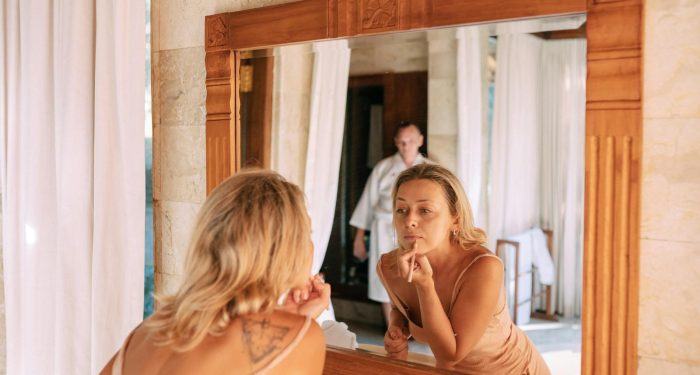
The fiercest commitment to independence often grows not from loving yourself enough, but from having once loved someone who taught you what disappearing looks like.
A 2023 study on adult attachment patterns found that people who score highest on relationship avoidance don't report the highest satisfaction with solitude. They report the highest anxiety when closeness becomes unavoidable. The fear isn't about losing freedom. It's about losing the person who made the freedom feel necessary in the first place. Researchers have circled this finding for years without stating it plainly enough: the people most resistant to partnership aren't the ones who love being alone. They're the ones who learned, through experience, that needing someone is the first step toward losing them.
That distinction matters more than most relationship discourse acknowledges. Because what it reveals is that a significant portion of long-term singlehood isn't a preference at all. It's a trauma response wearing the language of self-love.
A friend of mine — I'll call her Nadia — spent eleven years building what she described as a fortress of self-sufficiency. She had the solo travel, the biweekly therapy, the circle of friends who respected her boundaries because she'd trained them to. When anyone asked why she was still single, she'd say she loved her freedom too much. She believed it completely. Until a guy she'd been casually seeing for three months left a toothbrush at her apartment, and she had a panic attack so severe she canceled their next date and didn't return his calls for two weeks.
That's armor, not independence.
The conventional wisdom around long-term singlehood has shifted dramatically in the last decade. We celebrate it. We call it self-love. We post about it. And a lot of that celebration is genuinely earned. People who once chased validation through relationships learning to generate their own sense of worth. But buried inside that narrative is a subset of people whose commitment to being single has almost nothing to do with preference and everything to do with holding two contradictory truths at once — the freedom they're protecting is real, and the loneliness they're tolerating is also real.
When Protection Becomes a Prison
There's a pattern that keeps people stuck, and I've been circling it for years in my own thinking without being able to articulate it cleanly. Someone makes a choice to protect themselves. The choice works. Life genuinely improves. So they hold onto the choice, tell people about it, build around it. And slowly, without noticing, the choice hardens into an identity. Then that identity, which was once a lifeboat, becomes a wall. Not against the original threat. Against everything new trying to get in.
Justin Brown describes this trajectory in a recent video about his own years of singlehood. He talks about how his initial decision to be single was, by every measure, healthy. He'd been seeking validation from relationships. Partnerships brought out his worst side. Choosing himself was empowering. But over time, that empowering choice calcified into something rigid. An identity so load-bearing that even the possibility of intimacy felt like structural collapse.
What struck me about his framing is that he names the mechanism precisely: the choice that helped you becomes the wall that traps you. And he extends it beyond relationships. To careers people can't leave even though they stopped caring years ago, friendships they've outgrown but won't release, beliefs about who they are that were true at twenty-five and haven't been updated since.
That framing resonated with me because I've watched it happen to people I care about. The ones who gripped their singlehood tightest weren't the ones with rich solo lives and deep contentment. They were the ones who flinched when someone got close. And the flinch always had a history.
The Attachment Wound That Looks Like a Preference
Attachment theory has been around since the work of John Bowlby and Mary Ainsworth, but the clinical application to adult romantic behavior keeps revealing uncomfortable truths. A large study covered by Scientific American found that our earliest relationships with caregivers don't simply fade. They become templates for how we connect throughout life. People with what psychologists call a dismissive avoidant attachment style often present as fiercely independent. They value autonomy, feel suffocated by closeness, and may have no conscious desire for romantic partnership. From the outside, and often from the inside too, this looks like a preference. A lifestyle. A philosophy. But underneath, the machinery driving that independence is frequently a learned response to early experiences where needing someone resulted in being hurt, abandoned, or disappointed so consistently that the nervous system encoded a simple rule: need equals danger.
That's not solitude. That's armor. And the distinction matters enormously, because someone who genuinely thrives alone doesn't panic when a toothbrush shows up. They don't feel the walls closing in when a partner expresses love for the first time. They don't describe closeness as threatening their freedom, which is how Brown reflects on past relationships in his video, before recognizing that the right connection didn't trigger that alarm.
The Survival Logic Nobody Questions
There's a particular kind of childhood, or adolescence, or first marriage, or early adult relationship, where a person learns that emotional investment is a form of exposure. Maybe a parent left. Maybe a parent stayed but was emotionally absent in a way that taught you love was a thing you performed and never received back. Maybe your first serious partner dismantled your self-worth so methodically that by the time you left, you couldn't distinguish between intimacy and surveillance.
Whatever the specifics, the lesson encoded is identical: needing someone is the first step toward losing them. And if you're smart enough and self-aware enough, you build a life where that need can never form again.
Psychology Today documents two key ways attachment trauma shapes adult relationships: through anxiety (clinging, hypervigilance, fear of abandonment) and through avoidance (emotional withdrawal, compulsive self-reliance, distancing at the first sign of deepening connection). The avoidant path is the one that gets celebrated in our current cultural moment, because it looks like strength. It looks like someone who has their life together. It looks like self-love.
I'd argue it's the more dangerous of the two paths, precisely because no one questions it. The anxiously attached person knows they have a problem. Their friends know. Their therapist knows. But the avoidant person gets praised for the very behavior that's keeping them locked in a pattern they didn't choose. They get articles shared in their honor. They get told they're inspiring. And the wall gets taller.
The people who grew up noticing what someone needed before they asked, the hypervigilant ones, the ones who can read a room's emotional temperature within seconds of entering it, often develop the same avoidant stance in adulthood. They know exactly how to be close to someone. They're terrified of doing it. Because the last time they gave someone that level of attention, it was a survival mechanism, not a choice.

The Identity That Won't Update
Brown's most useful observation, I think, is about identity calcification. He describes how his single identity became so central to his self-concept that even when he met someone who didn't trigger the old alarm bells, someone who didn't make him feel like his freedom was being compromised, he still nearly couldn't let it happen. He describes the experience of moving away from that identity as deeply difficult.
That language is precise and it deserves attention. He doesn't say it felt like losing a preference. He says it felt profound. That's the language of identity, not lifestyle. When your singlehood has become who you are rather than what you're currently doing, any movement away from it registers as existential threat.
And here's where the pattern gets especially sticky: people in this position often surround themselves with content, communities, and conversations that reinforce the identity. They share articles about the joy of being single. They have friend groups where singlehood is the norm. They build their schedules, their living spaces, their financial plans around the assumption that this is permanent. None of that is unhealthy on its own. But when it functions as a sealed ecosystem that prevents any new information from getting in, when it stops being a choice and starts being a fortress, the identity has outgrown its usefulness. I've noticed this in myself with other things. Beliefs I held about what kind of work I should do, about what kind of people I could trust, about how much vulnerability was safe to show. Beliefs that were absolutely true and necessary when they formed. And beliefs I held for years past their expiration date because updating them would've required admitting that the person who needed them no longer existed.
That admission is surprisingly painful. Because if the wounded version of you no longer needs the wall, then you have to grieve the wound itself. A lot of people would rather keep the wall than do that grief work.
What Actually Changed
The most telling detail in Brown's story is what didn't happen. He didn't have a dramatic breakthrough in therapy. He didn't read a book that rewired his thinking. He met someone, on Bumble, of all places, and the early interactions simply didn't activate his defense system. They kept agreeing to meet again, not frantically, not urgently, but with a kind of easy rhythm that never forced him to choose between his identity and the relationship.
That's worth sitting with. Because the narrative we usually get about someone "giving up" long-term singlehood involves a moment of reckoning, a decision, a turning point. Brown's version is quieter. The identity didn't shatter. It gradually became less relevant. He started to realize that the things he valued — freedom, independence, generating his own happiness internally — didn't actually require the commitment to singlehood. They required a certain quality of inner life that could exist with or without a partner.
And I think this is where the fear-of-loss piece becomes clarifying. If your singlehood is about solitude, about space, about the pleasure of your own company, then a relationship that respects those things doesn't threaten you. But if your singlehood is about never again being in a position where someone's departure could break you, then any relationship threatens you. Because the threat was never about losing your freedom. The threat was about losing a person.
Purdue University researcher Susan South's work on attachment styles in relationships supports this distinction. Her Relationships and Mental Health Lab has found that attachment styles significantly shape how people navigate partnerships, and that the match between styles matters as much as the styles themselves. Someone with an avoidant attachment pattern doesn't necessarily need to become securely attached before they can be in a relationship. They need a partner whose approach doesn't trigger the old alarm system. Brown seems to have stumbled into exactly that.
The Grief Nobody Talks About
What I keep returning to is Brown's reflection that entering this relationship came with a cost. He frames it as a significant transition. And I think that framing reveals something that the self-love movement rarely addresses: the midlife transition from one identity to another requires mourning.
You have to mourn the version of yourself who needed protection so badly that they built an entire life around it. You have to mourn the years you spent inside that life, even if those years were necessary. You have to mourn the simplicity of a worldview based on complete self-sufficiency.
And you have to do all of that mourning without the guarantee that what comes next will be better. Because that's the final trap of the avoidant identity: it demands certainty before it releases its grip. Proof that the person won't leave, that vulnerability won't be destructive, that needing someone is safe. And of course, no one can show you that proof. Because relationships are inherently uncertain. Which is exactly what made them terrifying in the first place.
The people who eventually move through this, and many don't, tend to arrive at a specific realization. The realization that you don't have to feel ready. You will never feel ready. The feeling of readiness is the one thing avoidant attachment can never produce, because the entire system is designed to prevent it.
So you move forward without it. Or you don't.
Brown moved forward. And by his own account, it wasn't through willpower or insight. It was through the slow, undramatic experience of spending time with someone who didn't make closeness feel like a cage. Someone who shared his values. Someone he describes, with characteristic understatement, as a person he got lucky to meet.
Luck. That's the part that makes this whole thing hard to turn into advice. You can do the therapy. You can understand the pattern. You can recognize that your commitment to singlehood stopped being a choice years ago and became a reflex. And then you still need something outside yourself — a person, a moment, a toothbrush on your bathroom sink that doesn't send you spiraling — to show you that the wall can come down without the whole structure collapsing.
I don't have a clean answer for what to do with that. I'm not sure there is one. But I keep thinking about Nadia and the toothbrush. How the panic she felt wasn't about the object. It was about what the object represented: someone close enough to leave something behind. Someone whose absence could be noticed. Someone who, by being there in the morning, had created the conditions for a specific kind of loss she had spent her entire adult life engineering against.
The fear of giving up being single, when you trace it back far enough, rarely leads to a person who loves their own company so much they can't bear to share it. It leads to a person who loved someone once, or needed someone once, and the cost of that was so high they swore — consciously or not — never to be in that position again.
The solitude was never the point. The solitude was the moat.
And the hardest question isn't whether you should lower the drawbridge. It's whether you're honest enough to admit why you built it. Most people who read this will nod along and then quietly exempt themselves from the implication. They'll say their singlehood is different. Chosen. Genuine. Maybe it is. But if a toothbrush on your bathroom counter could unravel you, if the phrase "I'm starting to need you" makes your chest tighten before your mind can form a response, then the question isn't whether you love solitude. The question is what you're calling solitude that is actually something else entirely. And you already know the answer. You've known it for years. You just haven't decided what to do about it.