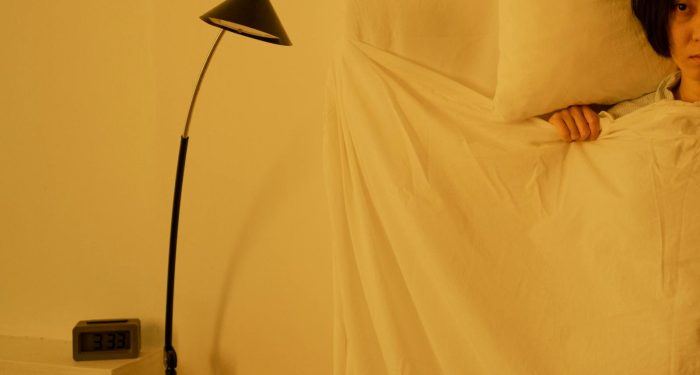
The restlessness you feel at your own kitchen table has nothing to do with the kitchen, and everything to do with the stranger sitting in your chair.
The key turns in the lock the same way it always does. The door opens into a hallway I chose the paint color for, past shoes I bought, into a kitchen where my coffee mug sits exactly where I left it this morning. Everything in this apartment belongs to me. And I stand in the middle of it feeling like I'm housesitting for someone who isn't coming back.
I've had this experience in seven cities across four continents. Melbourne, London, New York, Los Angeles, Bangkok, Ho Chi Minh City, now Singapore. Each time I told myself the displacement was about the place. Wrong neighborhood, wrong city, wrong era. But after twenty years of moving and never quite landing, I've started to suspect the problem is architectural. The self I constructed to navigate each new place became so polished, so functional, so well-suited to first impressions and fresh starts, that at some point it sealed off the original underneath. The feeling of not belonging at home is the sound of a locked door you forgot you installed.
The Conventional Wisdom Gets the Direction Wrong
Most advice about belonging treats it as an input problem. Join a club. Volunteer. Get a dog. Host dinner parties. The assumption is that you lack connection because you haven't inserted yourself into enough connective tissue. And for some people, those who genuinely are isolated, that advice works.
But studies on environmental belonging and psychological congruence suggest something more uncomfortable: people who feel chronically displaced, even in stable environments, often aren't experiencing a deficit of social opportunity. They're experiencing a mismatch between the self they present and the self that actually needs to be seen. The environment feels wrong because the person navigating it has been performing so long they can't remember who's supposed to feel at home.
I lived in Melbourne, then London, then New York, then Los Angeles, then Bangkok, then Ho Chi Minh City, and now Singapore. Each move came with a compelling reason. The PhD needed London. The startup needed New York's ambition. The burnout needed Thailand's calm. Every rationale was real. And every rationale also happened to provide a clean exit from a place where I'd started to feel stuck. Stuck meaning exposed. Meaning known well enough that the curated version was starting to show cracks.
The move always fixed the feeling. For about eighteen months.
The Eighteen-Month Pattern
I recently recorded a video where I laid out this cycle in detail—the restlessness, the search for a "special quality" in the next place, the euphoria of arrival, and the slow, creeping realization around year two that the same emptiness has followed you across an ocean. Justin Brown walks through the full pattern across six countries and twenty years:
What struck me most when I sat down to map this pattern was how predictable it had become. Year one: everything is new, and newness feels like belonging because you're too busy learning the grocery stores and the transit system to notice you haven't been known. Year two: the logistics fade, and you realize the people around you have friendships that were built over decades. They have someone who remembers when their daughter was born. You have pictures on your phone.
The difference between being present and being there is time. Years of unremarkable, repeated proximity. Weeknight dinners. Knowing your neighbor's dog's name. Watching someone's kids learn to ride a bike. These things can't be compressed or hacked. Every move resets that clock to zero.
People who stay somewhere their whole lives rarely appreciate this invisible accumulation because they've never lost it. People who move don't appreciate what they've given up because the next city always arrives with the promise that this one will finally feel like home. Neither group is wrong. But the people who stayed have something you can't buy or build quickly. They belong somewhere.

The Public Self as the Only Self
Here's where the belonging problem folds into something deeper. When you move frequently, you become extremely skilled at a specific kind of social performance. You learn to read a room fast, calibrate your personality to the culture, present the most appealing version of yourself in compressed timeframes. These are real skills. Management consulting taught me the same thing. Walk into a new client, a new city, a new problem, and become immediately useful.
The cost is subtle. Each time you build a new social self for a new place, the older selves get archived. Not lost, exactly, but inaccessible. The person I was in Melbourne at twenty-four shares almost nothing with the person I am in Singapore at forty-four, and the transition wasn't a single transformation. It was a series of replacements, each one optimized for the current environment.
Studies on impression management and self-presentation fatigue have begun to document how sustained performance of a curated identity leads to psychological exhaustion. The findings focus on virtual environments, but the mechanism is universal: when the gap between who you are and who you're presenting becomes a permanent feature of daily life, the cognitive load doesn't just tire you. It alienates you from your own interior.
You come home, close the door, and still feel like you're performing. Because you are. The audience has just shifted from other people to yourself.
Someone once framed this beautifully on this site: loneliness is closely tied to whether anyone in your life has seen the unedited version.
Frequent movers rarely let anyone see the unedited version. Each new environment rewards the polished one.
Novelty as Avoidance
There's a question I've been sitting with lately: was choosing novelty over roots ever really a choice, or just the only thing I knew how to do?
I asked that question in the video, and it landed harder than I expected. Because the honest answer is uncomfortable. Every move I made had a legitimate reason. Career, opportunity, lifestyle. But every move also conveniently interrupted the moment when a place started to demand something I wasn't sure I could give: sustained, unglamorous presence. The kind that requires you to still be there on the bad days, the boring days, the days when you're not the interesting new person anymore.
A friend of mine in Melbourne has a three-year-old daughter. He sends me photos constantly. I've watched her grow through a screen. I've met her twice. And the gap between those two things—the digital witnessing and the actual presence—is the gap between performing connection and living it. Another friend recently went through something devastating on the other side of the world. I couldn't get there. If I'd built my life in one place, in one sustained community, I could have been there in the way that actually matters. Physically, repeatedly, without having to book a flight. The trade-off became visible: I chose breadth over depth, and breadth is exhilarating until someone needs you to be somewhere specific, right now, for the fourth Tuesday in a row.
The pattern runs parallel to something writers here have explored about the grief of unchosen lives. The sense that committing to one place, one community, one version of yourself means mourning every alternative. Frequent movers avoid that mourning by never fully committing. But the grief doesn't disappear. It just redistributes across every shallow root you planted and left behind.
The Belonging Clock
Studies on the science of belonging have established that the sense of being rooted in a place depends on repeated, low-stakes interactions over extended periods. These aren't dramatic moments of bonding. They're the accumulation of seeing the same faces at the same coffee shop, week after week, until recognition becomes familiarity, familiarity becomes trust, and trust becomes the quiet foundation of feeling known.
Every move resets that clock. And here's the part nobody warns you about: the clock gets harder to restart each time. At twenty-four, you walk into a bar in a new city and friendships form with the ease of proximity and shared novelty. At forty-four, people your age have established lives. Their social architectures were built over decades. You're asking them to retrofit a friendship into a structure that was finished years ago.
Research from Wake Forest University found that boosting a person's sense of belonging in an institutional environment significantly increased their long-term engagement and outcomes. The principle holds beyond academia: when people feel they belong, they invest. When they don't, they hedge. And hedging—keeping one foot toward the exit, maintaining the option to leave—is exactly what chronic movers do without realizing it.
I've done it in Singapore for three years now. The relationship is good. The whippet is wonderful. The routines are forming. But there's a part of me that still scans for the next place, the way a person who grew up hungry still scans a room for the exits even when the table is full.
The Uncomfortable Cost Nobody Celebrates
Everyone celebrates the person who leaves. The expat. The digital nomad. The one who was brave enough to start over. And that deserves celebration. I wouldn't trade the experiences I've had across six countries and twenty years. The startup in New York. The serenity of Thailand. The chaos and energy of Vietnam. Each place taught me something I couldn't have learned staying put.
But we don't talk about the cost. The cost is a specific kind of loneliness that isn't about missing a place but about missing the version of yourself that could have existed there. The person who stayed in Melbourne. The person who watched his friend's daughter grow up in real time. The person who could drive across town when someone needed him.
That person doesn't exist. He was traded for the person typing this in Singapore, and the trade was worth it. But it was a trade, and denying that is where the damage accumulates.
The feeling of not belonging isn't a flaw. It's the price of leaving. And the reason it follows you into private space—into your own home, your own kitchen, the chair where nobody is watching—is that belonging requires a continuous self. A self that was there last year and will be there next year. A self that doesn't need to be re-introduced or re-optimized. A self that people know well enough to call out when it's performing.
When you've moved enough times, the performing self becomes the default self. You lose the off switch. And suddenly your own living room feels like a stage.
Rebuilding Access
I don't have a clean resolution for this, and I'm suspicious of anyone who does. Three years in Singapore is the longest I've stayed anywhere in two decades. I'm watching the clock accumulate. The neighbor recognizes me. The coffee shop barista knows I don't take sugar. My partner's rhythms have started to synchronize with mine in the way that only happens through repetition. Unremarkable, unglamorous repetition.
The work, if I'm honest about it, is learning to tolerate being known. Known beyond the curated introduction. Known in the way that a person who's stayed in one place for forty years is known. Flaws visible, contradictions documented, charm worn thin enough to reveal the actual person underneath.
That exposure terrifies the part of me that learned to survive by reinvention. But reinvention is just a sophisticated form of disappearance, and I've been letting go of the story about who I was supposed to become in favor of the quieter, less interesting work of actually being somewhere. The persistent feeling of not belonging in your own home is a signal. The signal says: the self you built for public use has become the only self you have access to. Even when the public leaves. Even when the door is closed. Even when the only person in the room is you.
So here's the question I can't answer yet, and maybe you can't either: if you stayed, right now, in the place you're in. If you stopped optimizing and stopped scanning and let the clock run. Would you actually discover who lives in your house? Or would you find out that the person you've been performing for twenty years is the only one left—and that the fix isn't a new city or a longer stay, but the admission that you hollowed yourself out so gradually you mistook the echo for a voice?