
The irritation you feel watching your grandchild cry openly at the dinner table is grief wearing the mask of disapproval, and somewhere in your body, you already know that.

Add VegOut to your Google News feed. 
The annoyance that rises in your chest when a twenty-five-year-old talks openly about their anxiety in a coffee shop, or when your granddaughter names her boundaries out loud at Thanksgiving dinner, or when a younger colleague says they need a mental health day without whispering it — that reaction is grief. Not generational superiority. Not cultural decline. Grief. The specific, aching kind that surfaces when you witness someone doing freely and without punishment the very thing you were trained, shamed, and sometimes hit for doing as a child. And the reason it disguises itself as judgment is because judgment is safer. Judgment lets you stay right. Grief asks you to feel what you lost.
The Body Remembers What the Mind Renames
I've been paying attention to a pattern, mostly in myself but also in the people around me who are past sixty. Someone younger expresses a feeling — openly, casually, as if it's their right — and something tightens. Not intellectually. Physically. The jaw. The shoulders. A faint heat behind the sternum. And what comes out of the mouth, almost reflexively, sounds like criticism: They're so sensitive. We didn't have the luxury of falling apart. Nobody coddled us and we turned out fine.
But here's the thing. If we turned out fine, why does watching someone else be emotionally free make us so uncomfortable?
The body is answering a question the conscious mind refuses to ask. When you grew up in a home where crying earned you a slap, where expressing fear was called weakness, where anger was the only sanctioned emotion for men and silence was the only sanctioned emotion for women, your nervous system learned a rule: emotional expression equals danger. You survived by internalizing that rule so completely it became invisible. It stopped feeling like a rule and started feeling like who you are.
Then someone walks into the room and breaks that rule without consequence. And your body doesn't think, good for them. Your body thinks, that's not allowed. Then, underneath that, something quieter and more devastating: why was it not allowed for me?
What Psychologists Call Disenfranchised Grief
There's a clinical framework for this. Psychologists describe a type of mourning that happens when a loss isn't socially recognized, when there's no funeral for it, no language for it, no cultural permission to feel it. The loss of your right to emotional expression as a child qualifies. You can't point to a date it happened. There was no single event. It was a thousand small moments: the look your father gave you when you cried, the way your mother said "that's enough" when you were scared, the playground rule that boys don't show weakness and girls don't make scenes.
Studies suggest that grief and anger are often aligned, and that unexpressed grief doesn't simply dissolve. It can manifest as irritability, rigidity, and judgment of others who seem to be "getting away with" something. When you watch a younger person speak openly about their depression at a family gathering and feel a surge of annoyance, what's activating isn't your values about toughness. It's your grief about what openness cost you when you tried it at their age.
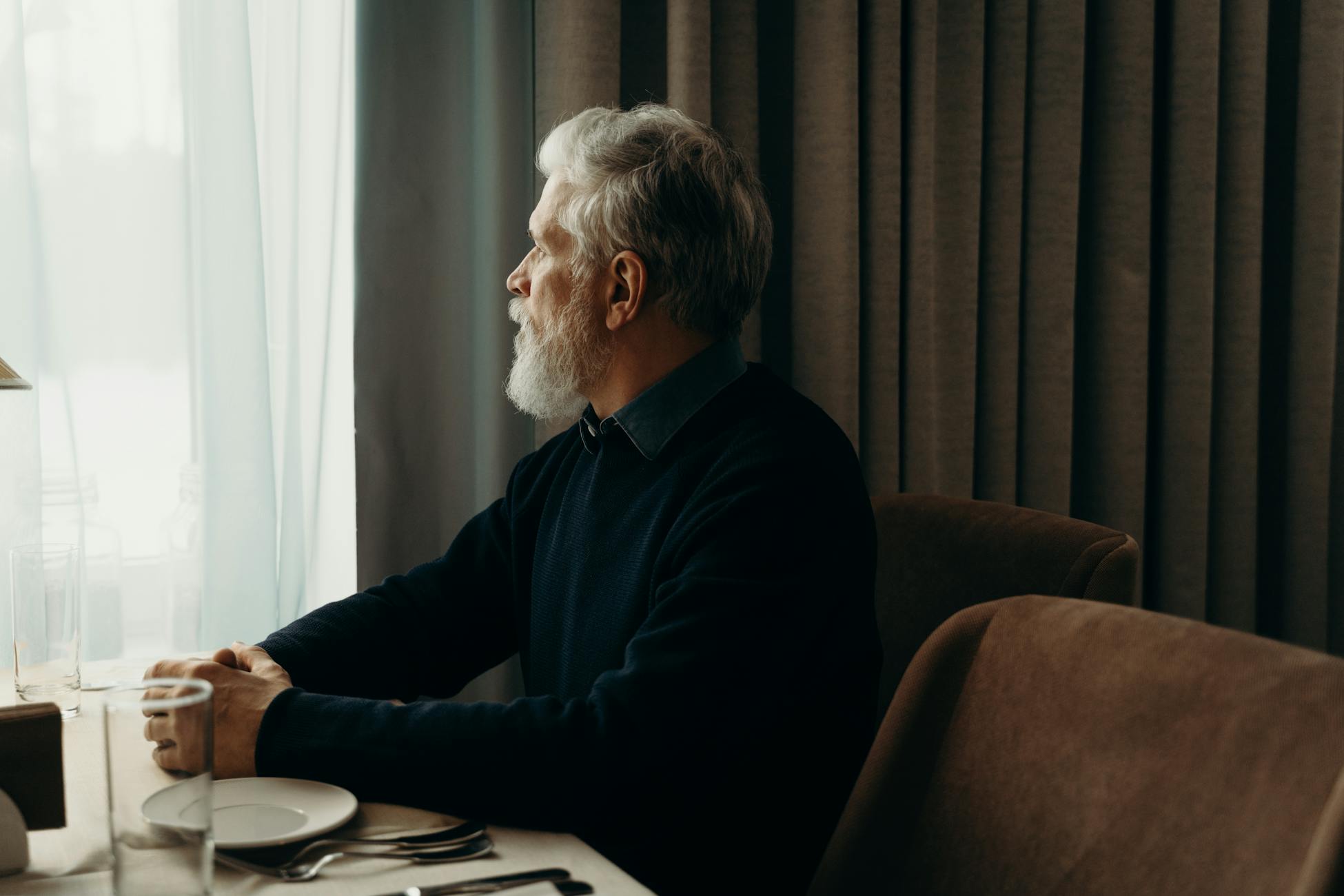
And because this grief was never named, never validated, never given a container, it has to go somewhere. So it goes sideways. It becomes, "This generation is weak." It becomes, "We had real problems and we handled them." It becomes an entire cultural posture that frames emotional suppression as strength and emotional honesty as self-indulgence. The writers on this site have explored how the silence older generations feel nostalgic for was often not peace at all. It was suppression in every room of the house, passed off as normalcy.
The Punishment That Became a Blueprint
I can trace this back to a specific texture. The texture of learning, before I had language for it, that my internal experience and my external expression needed to be two separate things. That the gap between what I felt and what I showed was where safety lived. Most people over sixty I know can trace it to something similar: a parent's voice, a teacher's correction, a cultural atmosphere so thick with emotional prohibition that you breathed it in without knowing you were breathing.
Studies have shown that physical punishment in childhood is tied to health problems in adulthood, and the mechanism makes sense. When emotional expression gets physically punished, the child doesn't learn that the emotion was wrong. The child learns that they were wrong for having it. The emotion doesn't go away. It goes underground. And it stays underground for decades, quietly shaping every relationship, every response to vulnerability, every reaction to someone else's openness.
The blueprint we built from that punishment was elegant in its cruelty: be competent, be useful, be steady, never need anything from anyone in a way that shows. And when that blueprint works (and it does work, in the sense that it keeps you employed, married, functioning), it starts to feel like the only blueprint. Anyone operating from a different one looks not just different, but threatening. Because if their way of being is valid, then what happened to us wasn't training. It was damage.
That's the thought the judgment exists to prevent.
When Seeing Freedom Looks Like Witnessing Injustice
There's something specific about watching someone do freely what you were punished for. It creates a cognitive collision. Part of you recognizes the freedom as good, as right, as what should have been available to you. Another part of you, the part that survived by believing the punishment was justified, experiences that freedom as a violation. If they can do this without consequence, then your suffering was unnecessary. And unnecessary suffering is harder to carry than suffering you can assign meaning to.
This is why the irritation feels so disproportionate. Your granddaughter says, "I'm feeling overwhelmed and I need to step outside for a minute," and the reaction inside you is outsized, electric, almost moral in its intensity. Because it isn't really about her. It's about you, at nine years old, feeling overwhelmed and being told to stop making a scene. It's about every time you swallowed something that needed to come out and were praised for the swallowing.

Research has documented the generational divide in moral judgments and self-expression, showing differences in attitudes about individuality and emotional openness across generations. But the data points to something deeper than preference. The divide isn't about whether emotions matter. Everyone, at every age, knows emotions matter. The divide is about whether expressing them is permitted, and what it costs you when you do.
People who have spent decades rationalizing their own unhappiness as toughness, as character, as the price of being a responsible adult, don't easily watch someone refuse to pay that price. The refusal feels like an accusation. And in a way, it is one. Not intentionally. The twenty-five-year-old in the coffee shop isn't thinking about you. They're just living. But their living, their unguarded, un-punished, unapologetic living, holds up a mirror to what you weren't allowed to do. And mirrors don't care whether you're ready to look.
The Grief That Has No Funeral
What do you grieve when you grieve a childhood right to emotional expression? There's no casket. No ceremony. No sympathy cards. You can't even articulate the loss without sounding dramatic, which is itself part of the wound. You were taught that naming pain is dramatic, that identifying a need is weakness, that grief itself is an indulgence reserved for catastrophe.
This connects to something I've been wrestling with lately—how the very systems claiming to help us heal sometimes profit from keeping us stuck in our pain, which I explored in a video about why genuine healing often eludes us despite all the "right" tools. The parallel feels important: just as older generations might judge what they secretly grieve, entire industries can position unresolved pain as a permanent customer base rather than a condition to actually resolve.
So the grief stays formless. It shows up as the tightness in your voice when your adult child talks about therapy. It shows up as the dismissal that leaks out when someone younger sets a boundary you never felt entitled to set. It shows up as the strange, hot feeling you get scrolling past posts about emotional intelligence, a feeling you'd call annoyance but that, if you sat with it for even thirty seconds, would reveal itself as something much closer to sorrow.
We've explored on this site how people can carry guilt for decades over wounds that only existed in their own bodies. The same is true of this grief. It lives in the body. It has nowhere else to go. The generation that raised us didn't give us the language, and the culture we built didn't give us the permission. So it converts to judgment because judgment is an emotion our generation was allowed to have.
What Remains When the Mask Slips
I'm not suggesting any of this is easy to look at. I'm not suggesting there's a five-step process for metabolizing sixty years of suppressed grief. I'm paying attention to the fact that every time I feel that flicker of irritation at someone else's emotional freedom, there's a younger version of me underneath it who needed something and didn't get it. And the irritation is easier to feel than the need.
The hardest part of recognizing this pattern is what it does to the story you've told yourself about your own life. If the emotional suppression you endured wasn't character-building but was, in fact, a wound, then large portions of your identity were constructed around managing that wound. Your steadiness, your reliability, your ability to hold an audience with your composure. All of it real. All of it earned. And all of it built on a foundation you didn't choose.
The younger generations aren't doing anything to us. They're just doing what we couldn't. And the grief of watching that, truly watching it, without converting it to criticism or nostalgia or superiority, might be one of the most important things a person over sixty can feel. Not because it fixes anything. Because it finally names what was always there, sitting underneath the judgment, waiting to be recognized as what it actually is.
And recognition, as anyone who has ever been truly seen knows, doesn't make the pain smaller. It just makes you stop pretending it belongs to someone else.
What’s Your Plant-Powered Archetype?
Ever wonder what your everyday habits say about your deeper purpose—and how they ripple out to impact the planet?
This 90-second quiz reveals the plant-powered role you’re here to play, and the tiny shift that makes it even more powerful.
12 fun questions. Instant results. Surprisingly accurate.