
The person everyone gravitates toward at the party is often the one who drives home in the most complete silence.
A study covered by News Medical found that emotional loneliness — the absence of close, intimate attachment — carries significantly greater psychological harm than social loneliness, which is about lacking a broader network. The distinction sounds academic until you notice where it lands hardest. Not on the people sitting alone at the edges of a room, but on the ones at the center. The ones holding everything together.
Consider someone like a woman I'll call Rae. She was the first person everyone called. The one who remembered your kid's name, your surgery date, the thing you mentioned once about your father that you didn't think anyone caught. At every gathering, she was at the center — not demanding attention, but holding the room together with a kind of invisible architecture that made everyone feel seen. People described her as the glue. The heart. The one who made it all work.
She also hadn't told a single person in her life anything real about herself in over a decade. Not one honest answer to "how are you." Not one unmanaged moment. And no one noticed, because why would you check on the person who seems the most connected in the room? That gap between visible connection and actual emotional intimacy is where a specific and devastating kind of loneliness lives. And the people trapped in it are almost never the ones you'd expect.
Most people assume loneliness maps onto social visibility. Fewer friends, fewer invitations, fewer group chats — more loneliness. The logic seems airtight. But research into loneliness subtypes has started dismantling that assumption with uncomfortable precision. You can have a packed calendar and still be experiencing the kind that corrodes you. The two conditions share a name but almost nothing else.
What fascinated me when I first encountered that distinction was how neatly it explained a pattern I'd watched unfold dozens of times. The person at the center of every social circle, the one who organizes and initiates and remembers, often carries an emotional isolation so deep they've stopped recognizing it as unusual. They've been performing connection so fluently that the performance has become invisible, including to themselves.
The Architecture of a Social Performance
Rae could walk into any room and within ten minutes know three people's names, their recent disappointments, and what they needed to hear. She was genuinely warm. That was the confusing part. The warmth wasn't an act. But the way she deployed it followed a pattern that, over time, started looking less like generosity and more like a rehearsed sequence she couldn't switch off.
She asked questions. She listened. She remembered. She followed up.
What she never did was answer a question about herself with anything real. Not once. If you asked how she was doing, she'd redirect within six seconds, deflecting with a question about someone else's problems instead of answering honestly about her own. Smooth enough that you wouldn't notice the dodge. Practiced enough that she didn't notice it either.
People who learn early that their value to others depends on their usefulness — their emotional labor, their attentiveness, their ability to make a room feel warm — often develop a specific architecture around connection. They build outward-facing rooms with no interior. Every wall is a window. You can see in, or you think you can, but there's actually nothing behind the glass except the mechanism that keeps the lights on.
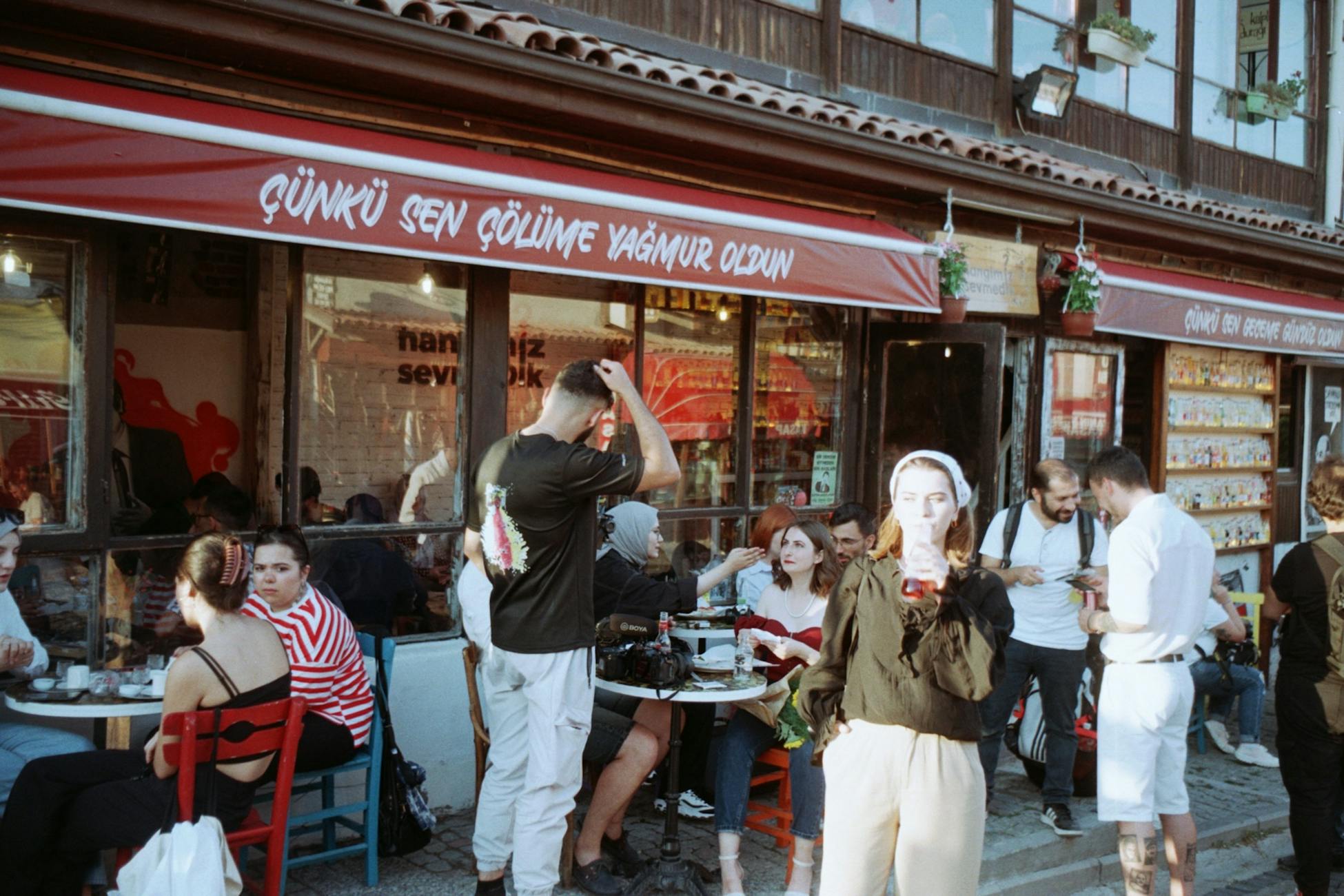
This is the performance the title refers to. And the cost is cumulative. Each interaction where someone walks away feeling known, while the performer walks away having revealed nothing, adds another thin layer of insulation. After years, the insulation becomes structural. Removing it would mean dismantling the whole personality.
Why Nobody Checks
The cruelest part of this dynamic is how invisible it remains to everyone involved. When someone's performance of togetherness is convincing enough, checking on them feels redundant. Even insulting. Why would you ask the happiest person in the room if they're okay? That question is reserved for people who look like they need it. And social groups are, at a basic level, economies of attention. Attention flows toward visible need. The person crying in the bathroom gets checked on. The person who just made everyone laugh does not.
I came across a piece in Healthline examining the broader loneliness epidemic, and one observation stuck: loneliness has become a significant public health concern in recent years. The article focused partly on men, but the mechanism applies more broadly. People surrounded by others can still experience a complete absence of emotional intimacy if the social structure they inhabit never asks for — or rewards — vulnerability.
The performer doesn't get asked because the performer trained everyone not to ask. That training happened slowly, over years, through thousands of micro-redirections. And by the time the performer wants someone to ask, the precedent is too established. Breaking it would require explaining the entire system from scratch. That explanation would itself be a vulnerability the performer has no infrastructure for.
The Childhood Rehearsal
Where does this pattern start? Often in a family system where the child's role was to manage the emotional temperature of a room. The child who learned to read a parent's mood before speaking. The child who figured out, at seven or eight, that being useful meant being safe. That being entertaining meant being loved, or at least tolerated.
These children grow into adults who can read a room with frightening accuracy. They know who's about to leave a conversation, who needs to be drawn out, who's performing fine and who actually is fine. They know because they've been running that calculus since before they had language for it.
The problem is that the skill works. It works extraordinarily well.
People like them. People seek them out. People describe them as easy to talk to, praise them as good listeners, treat them as essential to group cohesion. Every piece of feedback reinforces the architecture. Why would you dismantle something that everyone keeps praising? People who learned to need very little from others often carry the original wound so deeply that it no longer registers as a wound. It registers as personality. They rationalize their behavior as preferring privacy. They claim they simply prefer not to discuss themselves. They identify themselves as better suited to listening than sharing. Each of these statements may be true on the surface while hiding something much more costly underneath.

The Specific Exhaustion
Performing connection at a high level requires constant emotional computation. Who needs what, right now, in this room? What's the appropriate response to this disclosure? How much laughter is right for this joke? When should I touch someone's arm and when should I hold back?
None of this is conscious for the practiced performer. But all of it burns energy.
The exhaustion shows up in specific ways. Canceling plans at the last minute, not because they don't want to see people, but because the performance battery is drained. Preferring tasks over presence. Volunteering to cook, to clean, to organize, because producing something tangible is easier than navigating the unstructured openness of just sitting with people. Feeling emptied rather than filled after social events that everyone else describes as wonderful.
A therapist quoted in a Yahoo article on the emotional vocabulary deficit described a pattern where people lack the language to articulate what they're feeling even when they know something is wrong. The performers I'm describing often have sophisticated emotional vocabularies for everyone else's experience. They can name your grief before you can. They can articulate your ambivalence about your job in a sentence that makes you feel instantly understood. What they cannot do — what they have never been asked or required to do — is turn that same precision inward.
The result is a person who understands everyone else so clearly that the asymmetry becomes its own kind of isolation.
What Breaks the Pattern
This sounds clean on paper. It isn't.
The pattern usually cracks during a crisis the performer can't manage through their usual channels. A health scare. A relationship ending. The death of someone who saw through the performance. In these moments, the architecture fails because it was designed for output, not input. The performer discovers they have no mechanism for receiving care, and the people around them have no practice offering it. At least not to them.
I sat with this paradox for a long time. How the people who seem most connected can be the most alone. Eventually I realized it stems from something deeper: we've been taught that being special, being indispensable, being *needed* is the same as being loved, which I explored in a video about how the pressure to be special creates the very isolation we're trying to escape (https://www.youtube.com/watch?v=ftOGA32vc40).
What I've watched happen, in the aftermath, is one of two things. Either the performer rebuilds the walls faster and stronger, resolving never to be caught needing again. Or they let one person, sometimes just one, see what's actually behind the glass. That single act of allowing themselves to be the one who receives rather than gives can reorganize decades of relational architecture. Slowly. Painfully. But genuinely.
The distinction between loneliness that hollows you out and solitude that fills you up matters here. Genuine solitude is chosen, restful, self-aware. The performer's experience resembles solitude from the outside. They seem comfortable, self-contained, independent. But it runs on a completely different engine. The engine is hypervigilance. The fuel is other people's needs. The exhaust is a quiet, pervasive feeling that no one in the room actually knows them.
The Question That Changes Everything
If you recognize someone in your life who matches this description, the intervention is deceptively simple and genuinely difficult. Ask them something specific about themselves and then wait. Not "how are you." They'll deflect that in their sleep. Something precise. What's been keeping you up at night? When's the last time someone took care of you? What do you need that you haven't said out loud?
They will almost certainly deflect the first time. Probably the second. The deflection isn't rejection. The deflection is the machinery working exactly as designed. It takes repetition — patient, non-dramatic repetition — to signal that you're asking because you want to know, not because you want to feel helpful.
And if you recognize yourself in this description, the hardest realization isn't that you've been performing. Most people who do this already suspect it at some level. The hardest realization is that the performance costs you something specific: the chance to be known. And being known is the only antidote to the particular loneliness you carry. Not being liked. Not being needed. Not being admired for your warmth or your ability to hold a room together. Being known. The parts that don't perform well, the needs that don't make you useful, the version of you that exists when you stop calculating what the room requires.
People who became the person they were waiting for often can't stop being that person long enough to let someone else try. The giving feels necessary. Essential. Like stopping would mean the whole structure collapses.
So here's the uncomfortable part. You almost certainly know someone like this. You probably texted them this week. They probably asked about your life, remembered something you forgot you'd told them, and made you feel a little more held in the world. Now ask yourself: when's the last time you did any of that for them? Not because they seemed like they needed it. They never seem like they need it. That's the entire point.
The person in your life who never seems to need checking on is the person you should be checking on. And the fact that this feels counterintuitive is exactly how the performance keeps working.
If You Were a Healing Herb, Which Would You Be?
Each herb holds a unique kind of magic — soothing, awakening, grounding, or clarifying.
This 9-question quiz reveals the healing plant that mirrors your energy right now and what it says about your natural rhythm.
✨ Instant results. Deeply insightful.

Justin Brown
Justin Brown is a writer and media entrepreneur based in Singapore. He co-founded a digital media company that operates publications across psychology, sustainability, technology, and culture, reaching tens of millions of readers monthly. His background spans digital strategy, content development, and the intersection of behavioral science and everyday life.
At VegOut, Justin writes about plant-based living, food psychology, and the personal dimensions of changing how you eat. He is interested in the gap between knowing something is good for you and actually doing it, and his writing explores the behavioral and emotional forces that make lasting dietary change so difficult for most people.
Outside of publishing, Justin is an avid reader of psychology, philosophy, and business strategy. He believes that the best writing about food and lifestyle should challenge assumptions rather than confirm them, and that understanding why we resist change is more useful than being told to change.
More Articles by Justin