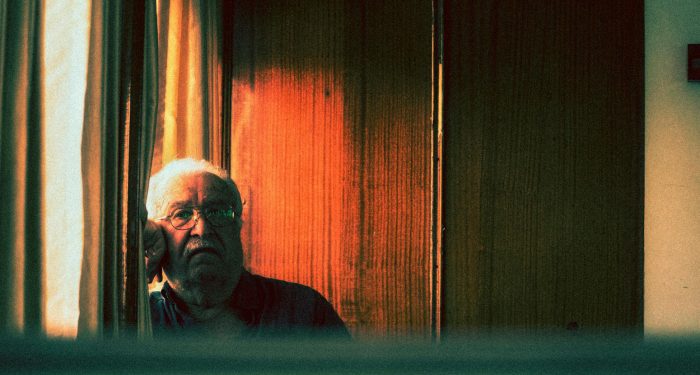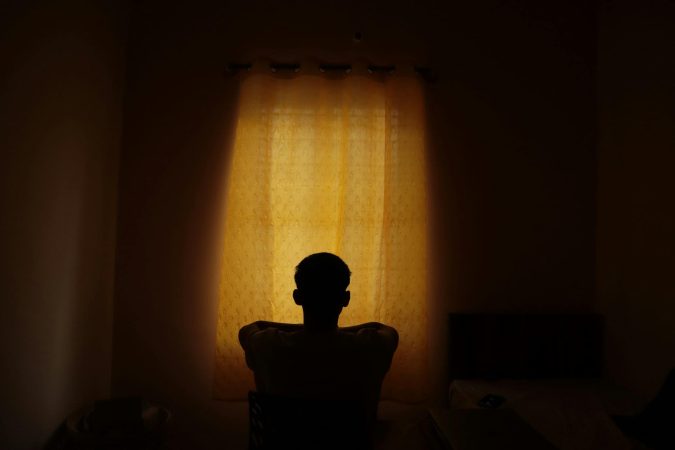
The friendlessness nobody warns you about doesn't arrive with a slammed door — it arrives so quietly you don't notice until you're scrolling through your phone looking for someone to call and realizing the list is made of ghosts.
I noticed it on a Sunday. I was scrolling through my phone looking for someone to call, not for any particular reason, just to talk, and I realized I'd been scrolling for a while. The group text from college hadn't been active in over a year. My calendar had nothing social on it for the next three weeks. I closed the phone and sat there with a feeling I couldn't immediately name.
It wasn't dramatic. Nobody had wronged me. There was no falling out to process, no betrayal to metabolize. Every friendship I'd had simply thinned over time, each one fading by such small degrees that I never registered any single loss. And because nothing specific happened, I had no way to talk about it. The cultural script for friendlessness requires a villain or a pivotal moment. Mine had neither. What I had was absence, spread across years, adding up to a reality I'd been avoiding: the word "friend" had started to feel like something I was borrowing from an earlier version of myself.
The kind of friendlessness that actually haunts people, the kind that sits in the chest like a low-grade fever for years, is uniquely damaging precisely because it has no shape at all. There was no fight. Nobody was cruel. Everyone just got busy, moved, had children, changed schedules. And because nothing dramatic happened, you can't grieve it, can't name it, can't even bring it up without sounding like you're complaining about nothing. That's the central cruelty: gradual disconnection strips you of the very language you'd need to ask for help with it.
The grief without a funeral
I started paying attention to this pattern a few years ago. Someone would mention a friend, and I'd feel a small internal flinch. Not jealousy exactly. More like confusion. The word "friend" had started to feel borrowed, like I was using vocabulary from a decade that no longer applied to me.
I still had people I knew. Colleagues I liked. Neighbors I waved to. But the kind of friendship where someone knows the thing you're most ashamed of, the kind where you could call at eleven at night needing to talk, that had evaporated without a specific moment of loss.
The trouble is that this kind of disappearance doesn't register as grief. Not to you, and not to anyone else. If you tell someone your best friend betrayed you, they lean in. They understand. But try saying you don't really have close friends anymore and you're not sure when that happened. The conversation stalls. People don't know what to do with that. There's no obvious wound to tend to.
So you don't say it. You carry it privately, which only compounds the problem. The loneliest part of gradual friendlessness is that it's too shapeless to share.
Why thinning connections disorient you
Psychologists who study nostalgia and self-identity have found something that explains why this particular brand of loss feels so destabilizing. When we remember our past selves fondly, those memories don't just comfort us. They anchor our identity. The person who had a tight circle at twenty-seven, who hosted dinners, who texted a group chat daily, that person still feels like "you." But the present doesn't match the memory. The gap between who you remember being and who you currently are creates a kind of disorientation that's hard to articulate to anyone who isn't experiencing it.
You're nostalgic for a version of yourself that existed inside those friendships. When those friendships thin out, you lose contact with the person you were when you had them. The word "friend" starts to feel like it belongs to that earlier self, not this one.

That's a specific kind of disconnect. You haven't changed your values. You haven't become antisocial. You've just drifted out of the relational context that made you feel like a full person, and nothing dramatic enough happened to explain why.
I think this is why people in their forties and fifties sometimes describe a strange hollowness they can't quite name. They have partners, careers, routines. They're not isolated in any clinical sense. But they've lost the context that made them feel seen. And the loss was so incremental that mourning it feels absurd.
The math of adult drift
Here's what I've come to understand about how friendships thin. Each individual change is tiny. One friend takes a new job with longer hours. Another moves to a different city. A third has a baby and enters the fog of early parenthood. You yourself shift schedules, pick up responsibilities, start going to bed earlier.
None of these changes feel final. Each one carries an implicit promise: we'll catch up soon. And you believe it, every time, because the intention is genuine. Both people mean it.
But soon accumulates. Twelve soons becomes a year. Three years of soons and now there's so much uncovered ground between you that the next conversation would require a kind of emotional archaeology neither of you has energy for. So you don't make the call. They don't either. And the friendship enters a permanent state of suspended animation, technically alive but functionally gone.
The cruelty of this process is that no single moment was wrong. Every decision along the way was reasonable. You weren't neglectful. They weren't dismissive. Life just happened in the direction of gradual separation, and neither of you resisted it hard enough because it never felt urgent enough to resist.
Some people who grew up reading others deeply while remaining unreadable themselves may find this drift particularly devastating. They spent decades being the attentive one, the listener, the person who noticed when someone else was struggling. When those relationships thin, they don't just lose companionship. They lose their role.
The silence that replaces friendship
What fills the space where friendships used to be? For most people, it's a particular kind of busyness that functions as camouflage.
You fill the hours. Work expands. Domestic tasks multiply. You develop solo routines: morning walks, podcasts, a show you watch alone. These are all fine things. Enjoyable, even. But at some point the solitude stops being chosen and starts being structural. You're alone not because you wanted space but because nobody's asking you to be anywhere.
That transition happens without announcement.
You cross a line you can't see. And once you're on the other side, reaching back feels impossibly vulnerable. What would you even say? That you miss having friends? The sentence sounds pathetic even in your own head. So you perform contentment. Fine. Everything's fine.

Writers on this site have explored how "I'm fine" repeated with enough conviction can become its own kind of emotional sedative. The same mechanism applies to friendlessness. You tell yourself you're fine with it. You're independent. You're introverted. You prefer it this way. And part of that is true, which is what makes the rest of the lie so hard to detect.
The shame compounds because our culture treats friendship as something that should be easy and natural. If you don't have close friends, the assumption is that something is wrong with you. You're too difficult, too closed off, too boring. But friendship requires specific structural conditions — proximity, repeated unplanned interaction, shared vulnerability over time — and adult life systematically dismantles every one of those conditions. That's not a narrative most people are working with, though. So instead of seeing a structural problem, you see a personal failure. You internalize the gap between your social life and everyone else's apparent ease, and you conclude that you are the variable that doesn't work. That conclusion is almost always wrong, but it's remarkably persistent, because every time you open social media or walk past a crowded restaurant or hear a coworker talk about their weekend plans, it gets a small reinforcement. The evidence, such as it is, keeps arriving.
People who've spent decades revising their own beliefs might have an advantage here, because they're practiced at sitting with uncomfortable truths without needing to resolve them immediately. But even that practice has limits when the uncomfortable truth is that you are lonely and have been for a while.
The borrowing
There's a specific moment that captures this kind of friendlessness perfectly. You're filling out a form, an emergency contact form, a wedding RSVP, a social media profile. And you hesitate before writing anything in the space that asks about friends or relationships. Who would you list? You have names. But you haven't spoken to those people in months. Maybe years. Would they be surprised to hear from you? Would they even pick up?
You write a name anyway. And you feel, quietly, that you're borrowing from the past. Using a word that described something real once but now functions more like a placeholder. The friendship existed. The person exists. But the living tissue of the relationship, the ongoing exchange of attention and care, that dissolved so long ago that calling it a friendship feels like an overstatement you're making to yourself.
I sat with this exact feeling for a long time before I recorded a video about why not having any friends turned out to be one of the most clarifying experiences of my life—not because I was trying to glorify loneliness, but because that empty space forced me to stop performing connection and start building something real.
That's the borrowing. You reference "my friend" in conversation and feel a flicker of dishonesty. You tell your partner you should really call so-and-so knowing you won't. You see a group of people laughing together at a restaurant and feel a pang that isn't envy. It's recognition. You remember being inside something like that. You can't remember when you stopped.
The real transition isn't from having friends to not having friends. It's from knowing yourself as someone who has them to standing in the open question of who you are without them.
What becomes possible after naming it
The answer to that question isn't reassuring or hopeful in any simple way. But it's honest. You're someone who still wants connection. Whose need for it didn't diminish just because the supply did. Who borrowed the word "friend" from an earlier version of yourself because the current version didn't have a word for what was left.
And honesty, it turns out, is where something can actually shift. Because the performance of contentment isn't just a coping mechanism. It's a wall. As long as you're saying "I'm fine," you're also refusing to do the one thing that might change your situation: admit to another human being that you're not.
I'm not suggesting the fix is simple. You can't recreate the structural conditions of college proximity or early-career camaraderie by willpower alone. But I've noticed something in the people I've talked to about this. The ones who started to rebuild didn't begin with grand gestures or new friend groups. They began by dropping the pretense with one person. A colleague they actually liked. A neighbor whose name they'd learned. A lapsed friend they called not with the pressure of picking up where they left off, but with the honesty of saying, roughly, I've been thinking about you and I realized I'm not great at keeping up with people I care about.
That sentence doesn't require a villain or a dramatic story. It doesn't require explaining the last three years of silence. It just requires the willingness to stop borrowing the word "friend" and start doing the small, unglamorous work of earning it back. Whether that works, whether the other person is in a place to reciprocate, whether the friendship can hold weight again after years of disuse — none of that is guaranteed. The structural conditions of adult friendship are genuinely worse than they were at twenty-five. That's real. And naming what happened doesn't undo it. You can see the pattern clearly and still be standing inside it. The difference is that now you know what you're standing in. What you do with that knowledge is a separate question, and it may not have a clean answer.
If You Were a Healing Herb, Which Would You Be?
Each herb holds a unique kind of magic — soothing, awakening, grounding, or clarifying.
This 9-question quiz reveals the healing plant that mirrors your energy right now and what it says about your natural rhythm.
✨ Instant results. Deeply insightful.

Justin Brown
Justin Brown is a writer and media entrepreneur based in Singapore. He co-founded a digital media company that operates publications across psychology, sustainability, technology, and culture, reaching tens of millions of readers monthly. His background spans digital strategy, content development, and the intersection of behavioral science and everyday life.
At VegOut, Justin writes about plant-based living, food psychology, and the personal dimensions of changing how you eat. He is interested in the gap between knowing something is good for you and actually doing it, and his writing explores the behavioral and emotional forces that make lasting dietary change so difficult for most people.
Outside of publishing, Justin is an avid reader of psychology, philosophy, and business strategy. He believes that the best writing about food and lifestyle should challenge assumptions rather than confirm them, and that understanding why we resist change is more useful than being told to change.
More Articles by Justin