The person who insists on doing everything alone isn't flexing — they're running a cost-benefit equation they learned before they had the language for it, and exhaustion always wins because it's predictable.
She was standing at the kitchen counter at midnight, sealing lunches for the next day, folding laundry between stirs of something on the stove, her phone open to a work email she was drafting with one thumb. Her partner had offered to help three hours earlier. She'd said no without looking up. Not sharply. Almost reflexively, the way you'd wave off a fly. By the time she sat down, her hands were shaking slightly from fatigue, but everything was done. Everything was always done. That was the point.
What looks like strength in moments like that is actually arithmetic. Somewhere early, probably before she could articulate it, she ran a calculation: the energy cost of doing everything alone versus the emotional cost of depending on someone who might not show up. Exhaustion won. Exhaustion has been winning ever since, because exhaustion is at least reliable.
The conventional reading of this behavior is control. People who can't delegate are micromanagers. People who refuse help have trust issues. People who white-knuckle their way through every crisis are martyrs who secretly enjoy the suffering. That framing is everywhere. In management seminars, in couples therapy shorthand, in the well-meaning friends often tell them they don't have to do everything themselves. And the person on the receiving end nods politely while thinking: you have no idea what happens when I don't.
Because they do know. They have data. The data is old, collected during a period when they had no control over sample size, but it's burned in deep enough that no amount of rational counter-evidence has overwritten it.
The Contract That Never Existed
The people who insist on doing everything themselves often grew up inside a contract where the other party wasn't a corporation. It was a parent, a caregiver, a family system. The terms were simple: if I need something, someone will provide it. If I'm struggling, someone will notice. If I ask, someone will help.
And the contract broke. Maybe not dramatically. Maybe not through abuse or abandonment in the obvious sense. Maybe just through chronic inconsistency. Help that arrived with resentment. Promises that dissolved. Needs that were met one day and mocked the next. The lesson landed the same way it lands on the loyal employee who gets laid off after thirty years: the deal was never guaranteed, and the cost of believing in it was humiliation. So they stopped believing. They started doing it themselves. And each time they succeeded alone, the evidence mounted that this was the only safe way to operate.
Effort Justification and the Trap of Earned Suffering
Psychological research on effort justification suggests that your brain increases the value of something in direct proportion to how much you suffered for it. People who endure difficult conditions often need to believe the suffering was meaningful. Otherwise the whole narrative collapses.
The same mechanism operates in compulsive self-reliance. Every time you power through alone, every time you handle the crisis, fix the problem, stay up all night because asking for help felt too dangerous, your brain files it as evidence that self-sufficiency works. The exhaustion becomes proof of competence. The isolation becomes proof of strength. And the longer the pattern runs, the harder it becomes to question, because questioning it means confronting a terrifying possibility: maybe all that suffering wasn't noble. Maybe it was just unnecessary pain you absorbed because you were too scared to test whether anyone would catch you.
That possibility is unbearable for most people who live this way. So they keep going.

People raised in a culture that treated emotional suppression as strength and vulnerability as weakness often process stress through avoidance. The coping strategy they pass down isn't wisdom. It's survival. And there's a difference.
That distinction matters here. The person who does everything themselves isn't following a philosophy. They're executing a survival protocol written in childhood and never updated.
The Attachment Math
Attachment theory gives this pattern a clinical skeleton. Children who experience inconsistent caregiving, where comfort is sometimes available and sometimes withdrawn without warning, may develop what researchers describe as fearful avoidant attachment. They want closeness. They're terrified of it. They develop a simultaneous craving for and defense against dependency.
The avoidant piece is what shows up as the tendency to just do it themselves. But underneath the avoidance is something more painful: a desire for help that has been punished enough times to go underground. The person isn't cold. They're not a control freak. They're someone who learned that the childhood environment they grew up in made dependency feel like a trap rather than a resource.
And here's where it gets specific. The cost-benefit calculation isn't abstract. It runs through the body like a ledger. Option A: ask for help, experience the vulnerability of needing someone, risk being dismissed or forgotten, feel the old disappointment activate like a circuit you can't shut off. Option B: do it yourself, feel tired, feel lonely, but avoid the specific sting of being let down by someone you trusted enough to ask.
Option B wins every time. The exhaustion is a known quantity. The disappointment is not.
Research on risk aversion and decision-making under uncertainty shows that people consistently overweight potential losses compared to equivalent gains. When the "loss" in question is emotional, the gutting sensation of reaching out and being met with indifference, the aversion intensifies. The person running this math isn't irrational. They're applying a perfectly logical framework to an emotional problem. The logic just happens to be based on data from when they were seven.
The blueprint you were handed in childhood determines how you navigate dependency for the rest of your life. Unless you consciously rewrite it. And rewriting it requires the very vulnerability the blueprint was designed to prevent.
That's the bind. That's why people stay stuck in it for decades.
What the Exhaustion Actually Costs
The price tag of compulsive self-reliance isn't dramatic. It accumulates in the margins. The friendships that stay shallow because you never let anyone see you struggle. The partnerships that erode because the other person feels unnecessary. The quiet loneliness of giving endlessly while never being on the receiving end of care.
There's a particular hollowness that settles into people who are good at handling everything. They become the person everyone calls in a crisis but nobody checks on. They become the one who holds the logistics together while quietly wondering whether anyone would notice if they stopped. And they can't test that question, because stopping feels like free-falling without a net they ever trusted in the first place.
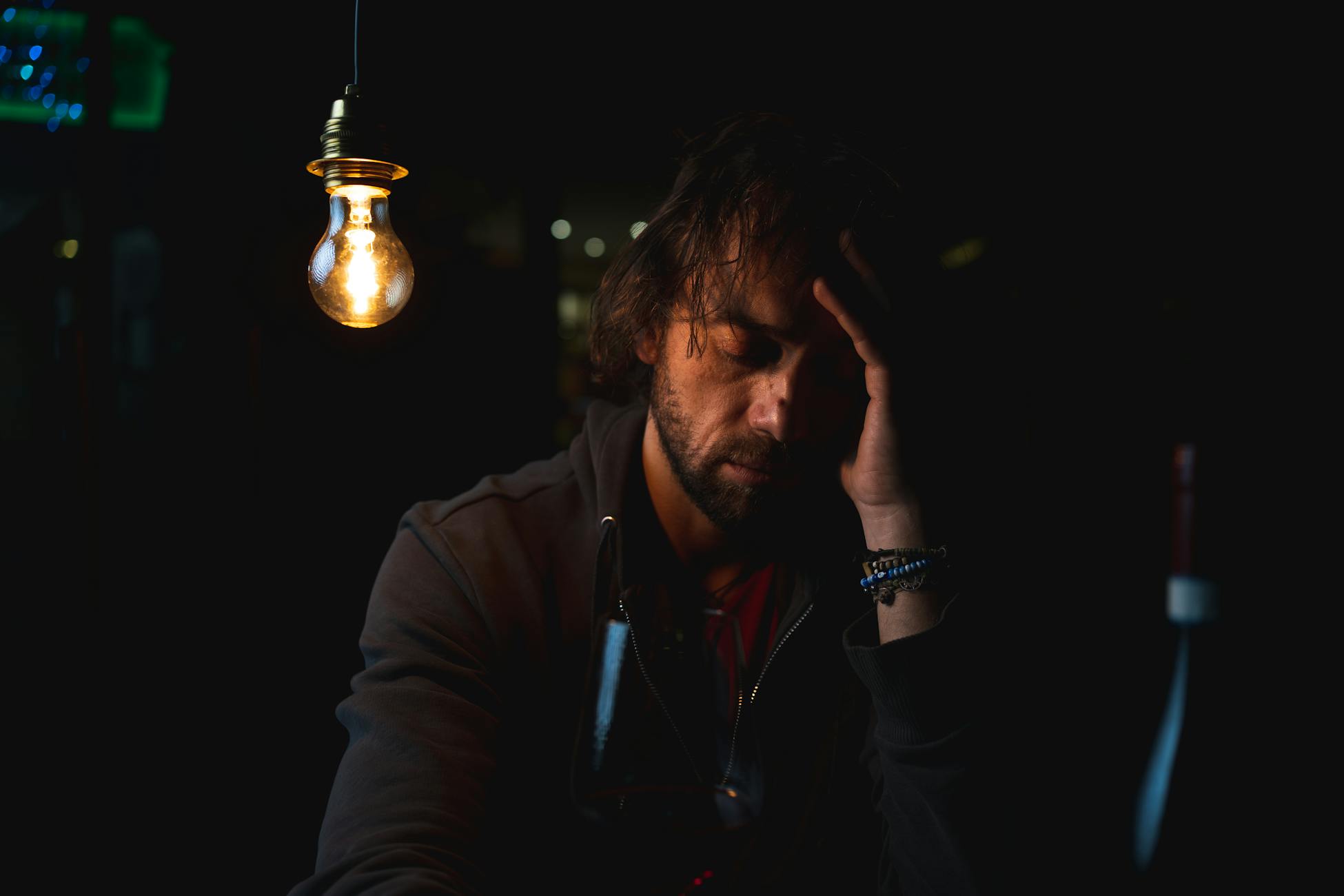
When people's identity is built on being self-sufficient, accepting help can trigger existential anxiety. Their identity was built on not needing anyone, and needing someone threatens to unravel who they think they are.
This is why the phrase about not having to do everything yourself lands so badly on people caught in this pattern. It sounds like an invitation. It registers as a threat. You're asking them to dismantle the only structure that has reliably protected them from a pain they remember in their bones.
The Pride That Becomes the Prison
There's a specific kind of pride that belongs to people who built their competence out of necessity. From the outside it looks like confidence. From the inside it functions as a wall, one constructed so carefully over so many years that the builder can't always find the door anymore.
I've watched this play out in subtle ways. Someone offers to carry a box and the self-reliant person physically flinches. A colleague volunteers to take over a project and the response comes fast, almost rehearsed, insisting they've got it handled. A partner asks what they need and the silence stretches long enough to become its own answer. The need is there. The language for it has atrophied from disuse.
Clinical work with adult children who carry patterns from difficult upbringings reveals a recurring set of self-defeating thoughts. Among them, the belief that asking for help signals weakness, and the assumption that others will inevitably disappoint. These aren't personality traits. They're adaptations. They made sense once. They persist because the nervous system doesn't update as fast as the rational mind.
The compulsively self-reliant person carries a hand-me-down instruction set that says pushing through is the only coping strategy available. Not wisdom, but survival. Push through. Handle it. Don't need anyone. And when someone finally offers support and tells them they can lean on them, the response is a polite version of panic.
Here's where the psychological scaffolding behind all of this becomes clear — how suffering becomes currency, how identity fuses with endurance, and how people build their sense of self around contracts that were never guaranteed:
Updating the Equation
The math can change. That's the part that's hard to believe when you're inside the pattern, but it's true.
Changing it doesn't look like a dramatic breakthrough. It looks like letting someone bring you soup when you're sick and sitting with the discomfort of receiving. It looks like delegating one task, just one, and tolerating the anxiety of not controlling the outcome. It looks like noticing, in real time, that the person you asked for help actually followed through, and letting that data point register instead of dismissing it as a fluke.
The equation was built on incomplete information. You were a child gathering evidence in a system you couldn't escape. The sample was biased. The conclusions were rational given the data, but the data was collected under duress. Adult life offers a different dataset, if you let it in.
That "if" carries the weight of the whole thing. Because the most watchful children grow into the most careful adults, and careful adults don't update their priors easily. They've been right about people too many times to trust easily.
That child did what they had to do. The exhaustion kept them safe. The self-reliance kept them sane. And now they're an adult who knows, intellectually, that the old math no longer applies. Knowing doesn't seem to matter. The numbers still run themselves, every morning, without permission, and the answer comes back the same.
What’s Your Plant-Powered Archetype?
Ever wonder what your everyday habits say about your deeper purpose—and how they ripple out to impact the planet?
This 90-second quiz reveals the plant-powered role you’re here to play, and the tiny shift that makes it even more powerful.
12 fun questions. Instant results. Surprisingly accurate.