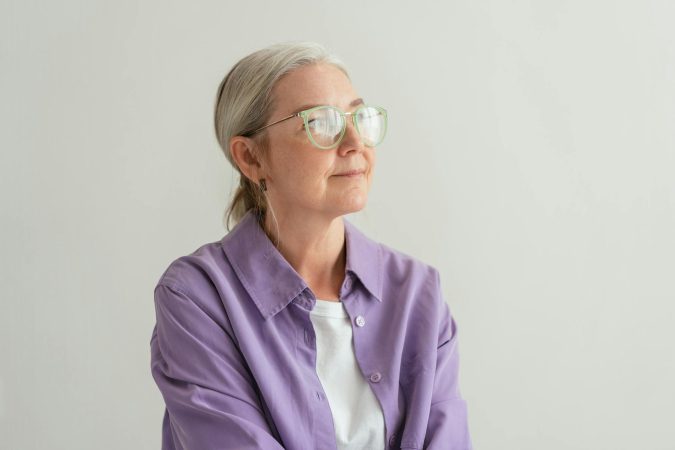
Gentleness in old age isn't naivety or luck — it's a scar that decided to become a door.

Add VegOut to your Google News feed. 
Gentleness that deepens with age is one of the most misunderstood qualities a person can carry. Most people read it as softness, as evidence of a sheltered life, as proof that someone got lucky and avoided the machinery that grinds the rest of us down. That reading is almost always wrong.
The conventional assumption runs deep: bitterness is the rational response to accumulated loss, and anyone who isn't bitter by seventy simply hasn't been paying attention. We treat cynicism as sophistication. We treat hardness as proof of experience. The person at the dinner table who says something generous about human nature gets a particular kind of smile from the rest of the room — indulgent, faintly pitying, as if they've revealed a charming naivety rather than a considered position.
But what I've observed, over decades of watching people age in very different directions, is that the gentle ones usually have a specific kind of backstory. They didn't coast. They hit walls. They lost things they couldn't replace. And at some particular juncture, they made a decision that most people don't even realize is available to them. They decided that whatever the world had already taken, it wasn't getting their warmth too.
The Fork Nobody Talks About
There's a moment — and you can almost pinpoint it if you talk to someone long enough — where a person's trajectory splits. Something happened. A betrayal, a loss, an accumulation of small cruelties that reached a threshold. And in that moment, two paths opened. One path leads toward protective hardening: fewer people allowed in, less trust extended, more cynicism wielded as armor. The other path involves something far more difficult. A conscious choice to remain open anyway.
That second path requires extraordinary internal negotiation. You have to acknowledge the damage without letting it author the rest of your story. You have to grieve what you lost while refusing to let the grief become your organizing principle. Most people don't choose this path because most people don't even see it as a choice. They experience bitterness as an inevitable consequence of experience, the way gravity is an inevitable consequence of mass.
But it's a choice. A hard one.
Psychologists who study personality change across the lifespan have found that people can and do shift their traits deliberately — including agreeableness, openness, and emotional stability. The shifts don't happen passively. They require what researchers describe as sustained effort. You don't drift into gentleness. You build it, the way someone builds stillness around an inner world that was anything but calm.
What Post-Traumatic Growth Actually Looks Like
There's a popular narrative about suffering that I find genuinely dangerous in its oversimplification. The narrative says: bad things happen, you learn from them, you grow. Neat. Clean. Almost inspirational. The reality, as research on post-traumatic growth has shown, is far messier. Not everyone who suffers grows from it. The growth, when it happens, is rarely linear and frequently comes with significant ongoing distress attached. You can grow and hurt at the same time. Most people who become gentler after difficulty are doing exactly that.
The person who lost a spouse and still asks about your children with genuine interest hasn't moved on. They carry it. They've just decided that carrying it doesn't require them to withdraw from the people still standing in front of them.
The person who endured years at a job that slowly hollowed them out and emerged without resentment didn't forget. They remember every indignity. They simply concluded that bitterness costs more than it pays.

This is the mechanism that gets lost in the inspirational framing: gentleness after hardship is not transcendence. It's accounting. The gentle person ran the numbers and decided that the emotional tax of staying angry exceeded the cost of remaining kind. That calculation looks simple from the outside. From the inside, it can take years.
The Economy of Emotional Energy
By mid-life, if you've been paying any attention at all, you start to notice that anger takes something from you. Not metaphorically. Physiologically. Bitterness toward someone who wronged you in 2003 doesn't cost them a single thing. It costs you sleep, cortisol, rumination time, and the particular kind of mental real estate that could have been used for something else entirely.
People who become gentler with age have usually figured this out through experience rather than philosophy. They held onto a grudge long enough to feel what it actually does to a body. Then they set it down. Not because the offense wasn't real. Because the carrying was killing them.
I spent years carrying things I didn't need to carry. Resentments toward people who had long since stopped thinking about me. I suspect many of us have. Writers on this site have explored how major decisions get shaped by people who forgot about us the moment we left the room. The gentleness that comes with age often starts with the recognition that resentment operates on the same principle: you're maintaining an emotional relationship with someone who left the conversation decades ago.
That recognition alone can be liberating. Also infuriating.
The Difference Between Gentle and Passive
There's a critical distinction that the bitterness-as-wisdom crowd misses. Gentleness is not passivity. Passivity is what happens when someone gives up. Gentleness is what happens when someone who could be hard chooses not to be. The difference is agency.
A passive person absorbs cruelty because they don't believe they can push back. A gentle person absorbs it because they've decided that the cruelty stops here, with them, and goes no further. One posture is collapse. The other is a wall that happens to be soft on the outside.
I've known people who could destroy you with what they know about human weakness. They have the pattern recognition, the years of observation, the accumulated evidence of exactly where to press to make someone fold. And they choose not to use any of it. That restraint doesn't come from ignorance. It comes from having been on the receiving end and deciding they won't replicate it.
Studies suggest that people who successfully shift toward greater warmth and emotional stability tend to do so through deliberate practice, not passive maturation. They set specific goals for how they want to respond in situations that previously triggered their worst impulses. They rehearse the version of themselves they want to become until it starts to feel less like performance and more like identity.
This is work. Daily, unglamorous, frequently invisible work.

What Gets Protected
Here's what took me a long time to understand: the decision to remain gentle is fundamentally a decision about what you're willing to let go of and what you refuse to surrender.
Most people who've been through significant difficulty lose things. Trust. Optimism. The assumption that effort will be rewarded. The belief that people mean what they say. These losses are real and they accumulate. By sixty, by seventy, the pile of things that didn't work out the way you planned can be substantial enough to furnish a house.
The bitter person looks at that pile and concludes that the world is a particular kind of place. Cold, transactional, unforgiving. They aren't wrong, exactly. They're just working from an incomplete dataset.
The gentle person looks at the same pile and makes a different calculation. They decide that kindness, specifically, is the thing they're going to protect. Everything else can go. The career ambitions, the need to be right, the expectation that life will be fair. All of it can burn. But the capacity to be warm with another human being — that stays.
That's the conscious decision the title refers to. And it usually happens not in a moment of peace, but in a moment of crisis. The very bottom of something. The place where it would be entirely reasonable to become permanently hard.
Something in the person says no. Not this. You can have the rest, but not this.
The Quiet Radicalism of Staying Warm
In a culture that treats cynicism as intelligence, gentleness becomes a form of rebellion. The older person who still gets excited about a good meal, who still asks genuine questions about your life, who still assumes good faith until proven otherwise — that person is operating against the current of nearly everything our emotional environment teaches them to do.
Every loss they survived argued for withdrawal. Every betrayal argued for suspicion. Every disappointment argued for lowered expectations enforced through emotional distance. And they listened to all of those arguments, understood them completely, and then chose differently anyway.
I sat with this question for months before recording a video about the life lessons I've learned in my 40s, and one thing kept coming up: the people who'd been through the most were often the ones who'd consciously decided not to let their pain turn them hard.
That's not naivety. That's the most expensive form of courage I know.
I think about the people in my life who carry this quality. None of them had easy paths. One lost a child. One survived a marriage that slowly dismantled their sense of self. One spent decades executing someone else's blueprint before realizing, very late, that none of it had been their idea. All of them could justify being sharp and closed off. None of them are.
When you ask them why, you don't get a tidy answer. You get something closer to a shrug. Something like: I tried being angry. It didn't help. So I stopped.
As if it were simple. As if the decision to stop being angry after years of legitimate grievance is something that just happens, rather than something you have to recommit to every morning when you remember what was taken from you.
What This Costs
I don't want to romanticize this. The gentle older person pays for their gentleness. Not publicly, not dramatically, but in the private moments where the old patterns try to reassert themselves. In the flash of rage they swallow when someone is careless with them. In the grief that surfaces at unexpected hours because they've kept the channels open rather than sealing them shut.
Bitterness, for all its costs, does provide one genuine benefit: insulation. If you've decided the world is cruel and people are disappointing, you've protected yourself from the specific pain of being surprised by cruelty and disappointment. You've traded the possibility of being touched for the certainty of not being wounded.
The gentle person has refused that trade. They've said: I would rather be wounded again than stop feeling altogether. That's a staggering wager to make when you already know what the wounds feel like.
And they make it every day. Quietly. Without applause.
The world did take from them. It took a lot. The remarkable thing, the thing that deserves more recognition than it gets, is that they looked at what was left and decided it was enough to keep giving from. They drew a line, not in anger but in clarity. And on their side of that line, they kept the one thing that mattered.
Not optimism. Not innocence. Kindness. The deliberate, hard-won, fully informed kind.